Streets curve, split, reconnect. Corners appear unexpectedly. Pathways narrow to the point...
Read MoreA familiar image, seen differently

Before arriving in Paris, the image is already there.
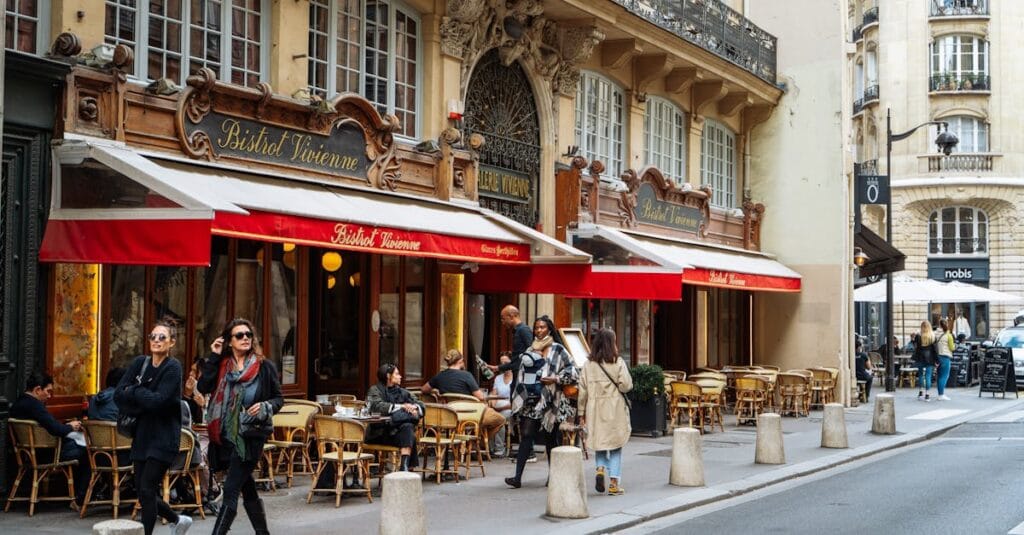
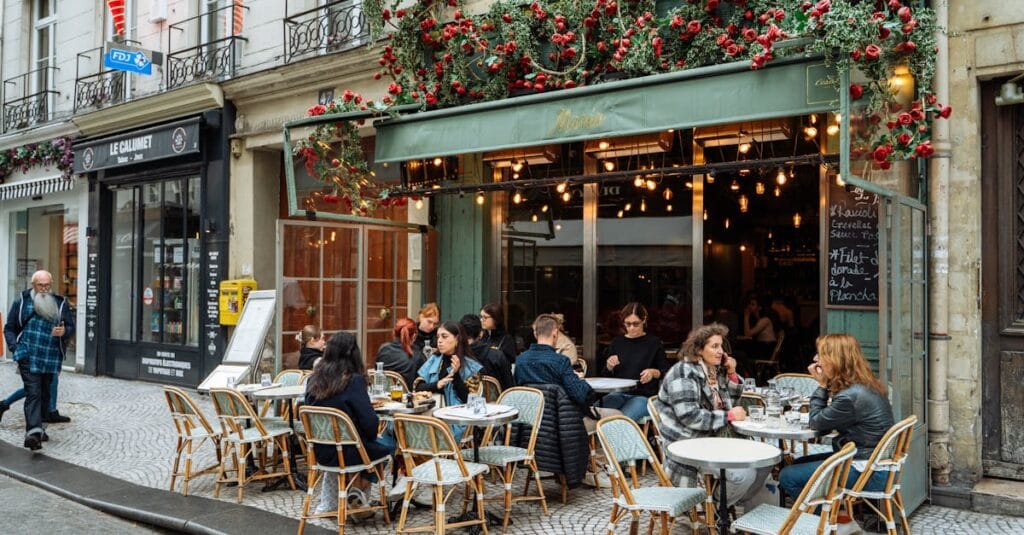
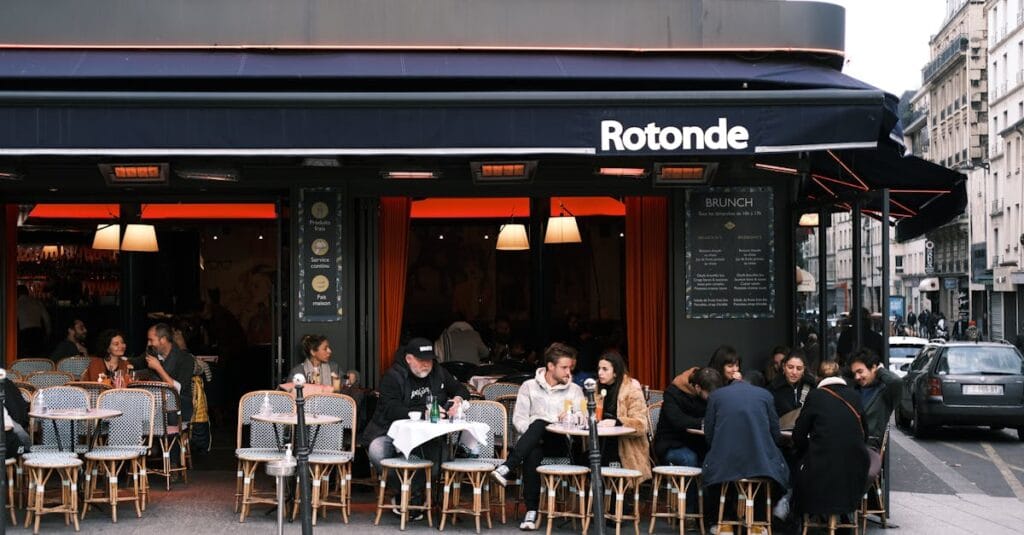
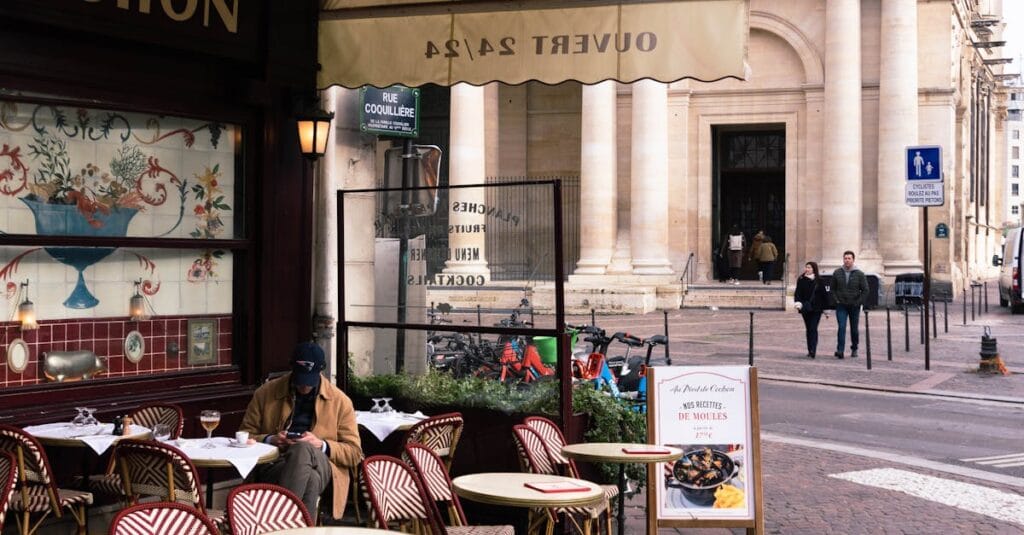
Cafés lined along narrow streets. Small round tables. Chairs turned outward, facing the city instead of each other. A coffee, a croissant, maybe a glass of wine later in the day.
It’s one of the most recognizable images of the city — repeated in films, postcards, and social media so many times that it almost stops feeling real.
And yet, when you sit down at one of those tables, something shifts.
At first, it looks exactly like you imagined. But if you stay a little longer — longer than just a quick coffee — you start to notice that this isn’t just a setting.
It’s a rhythm.
People aren’t rushing in and out. They’re not checking their phones constantly or ordering quickly before moving on. They sit, they talk, they watch, they pause.
The café isn’t just a place to drink coffee.
It’s a place to exist.
Coffee is just the beginning
The first thing you notice — or maybe the first thing you expect to notice — is the coffee.
But the truth is, the coffee isn’t the highlight.
It’s good, sometimes very good, but rarely unforgettable. What matters isn’t what’s in the cup, but what happens around it.
A single espresso can last far longer than it would anywhere else. No one rushes you. No one brings the bill unless you ask. There’s no subtle pressure to finish and leave.
You’re allowed to stay as long as you want.
And that small detail changes everything.
Instead of thinking about what comes next, you start paying attention to what’s happening now.
A conversation at the next table.
The sound of plates and glasses.
The way the light hits the buildings across the street.
The coffee becomes secondary.
Lunch that doesn’t feel rushed
If coffee introduces you to the pace of Paris, lunch is where you really feel it.
In many places, lunch is something practical. You fit it into your day, eat quickly, and move on. It’s often shaped by schedules, deadlines, and the idea that time should be used efficiently.
In Paris, it feels different.
People sit down without urgency. Orders are taken slowly. Meals arrive in a rhythm that feels natural, not rushed. A simple lunch can stretch into an hour, sometimes longer, without anyone seeming concerned about it.
Even the food reflects this approach.
Dishes are often simple — a salad, a piece of meat, bread, a glass of wine — but they’re treated with care. There’s an attention to detail, but not in a way that feels performative. It’s just how things are done.
More than anything, lunch becomes a pause.
Not a break from the day, but a part of it.
The social side of the table
What stands out isn’t just how long people stay — it’s how they spend that time.
Tables aren’t dominated by phones. Conversations feel present, uninterrupted. There’s eye contact, pauses, laughter, even silence that doesn’t feel uncomfortable.
You start to notice small details.
Someone explaining something with their hands.
A group of friends leaning in closer as the conversation deepens.
A couple sitting quietly, not speaking, but not needing to.
The table becomes more than a place to eat.
It becomes a space for connection.
And that connection feels intentional.
Sitting still while the city moves
One of the most interesting parts of café culture in Paris has nothing to do with food at all.
It’s the act of watching.
Because of the way chairs are positioned — facing outward — you’re not just sitting at a table. You’re positioned to observe the city.
And the city gives you plenty to notice.
People walking quickly, others moving slowly.
Someone stopping to check a map.
A waiter navigating between tables with practiced ease.
A cyclist passing by, weaving through traffic.
Time seems to stretch.
You’re not participating in the rush — you’re watching it happen.
And in that moment, sitting still becomes an experience of its own.
Architecture, atmosphere, and everyday life
It’s impossible to separate café culture from the city itself.
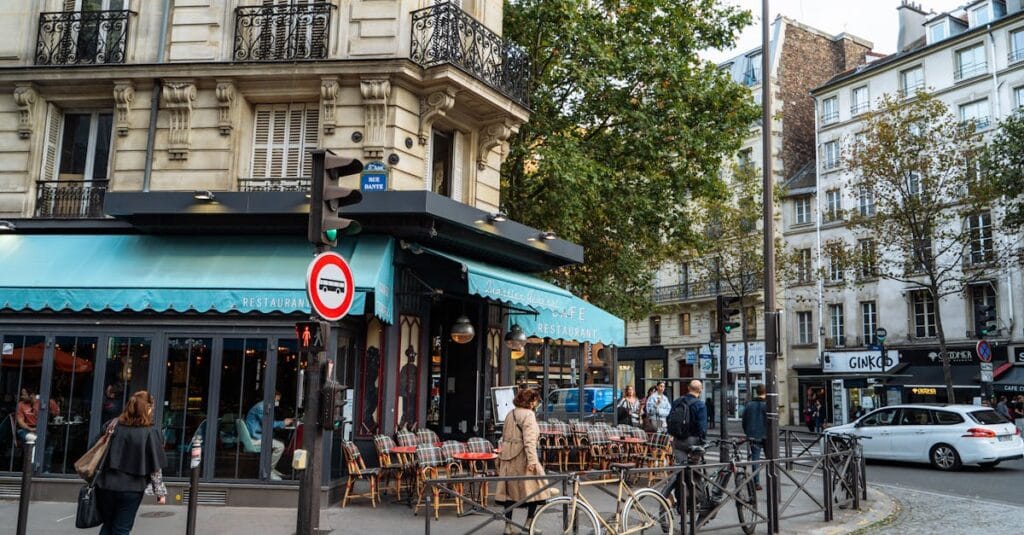
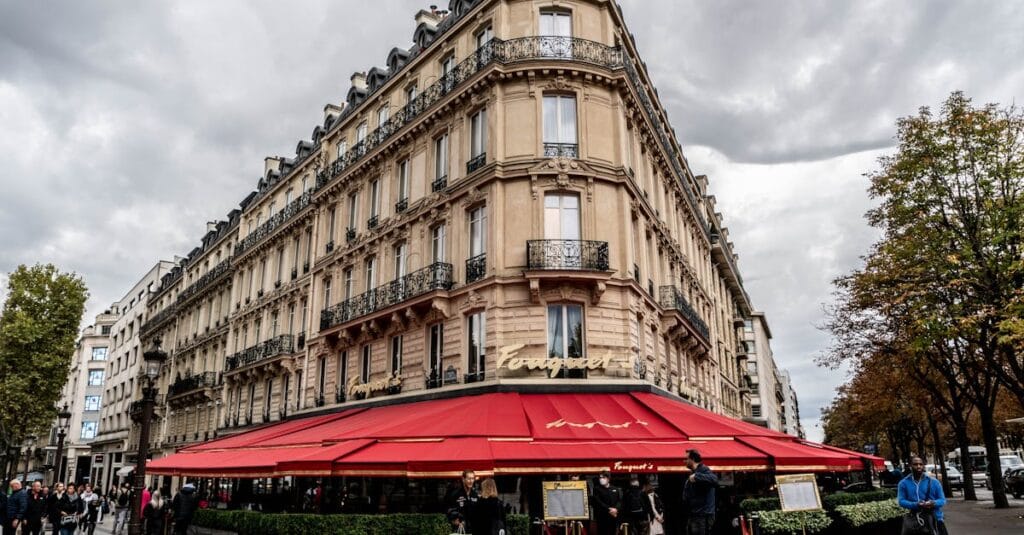
The architecture plays a role. The wide boulevards, the uniform buildings, the balconies, the way streets open and close — all of it shapes how these spaces feel.
Cafés don’t exist in isolation.
They blend into the city.
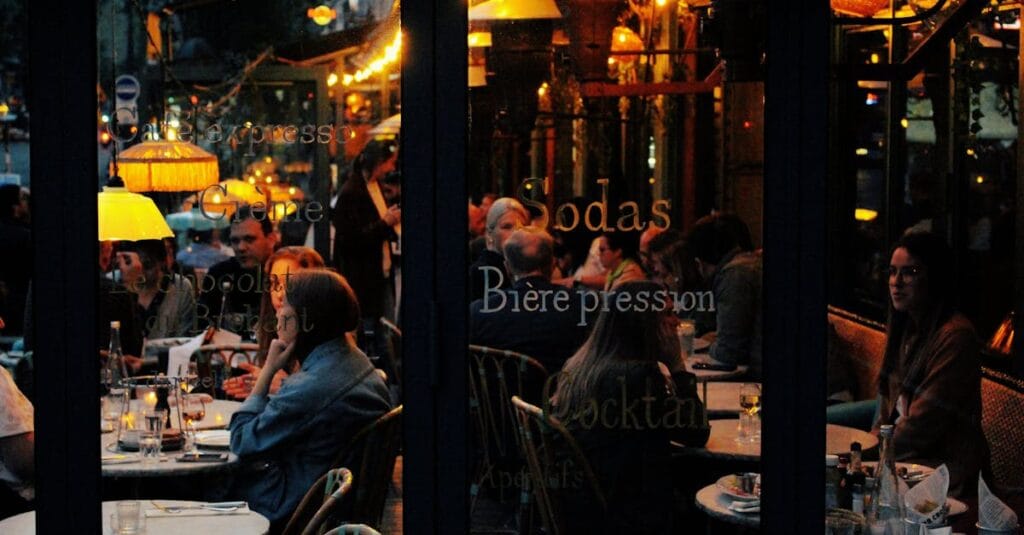
A table placed on the sidewalk becomes part of the street. Conversations mix with the sounds of traffic, footsteps, and distant music. There’s no clear boundary between inside and outside.
Everything overlaps.
And that creates a feeling that’s hard to define, but easy to recognize once you experience it.
More than an aesthetic
From the outside, it’s easy to see Parisian cafés as aesthetic.
They photograph well. They look effortless. They fit perfectly into a certain idea of what the city should be.
But spending time in them changes that perception.
What seems like an image is actually a habit.
What looks curated is simply part of daily life.
People aren’t sitting at cafés to recreate a scene.
They’re there because that’s where life happens — between work, between plans, between moments.
And that difference matters.
What we started to understand
At some point, without realizing it, the experience shifts.
You stop thinking about the café as something “Parisian” and start seeing it as something more universal — a different way of approaching time, space, and attention.
It’s not about doing something extraordinary.
It’s about doing something ordinary, differently.
Taking time without feeling guilty about it.
Staying longer than necessary.
Letting a moment unfold instead of rushing through it.
What we took with us
We came to Paris expecting cafés.
We left thinking about how we spend our time.
About how often we rush through meals.
How quickly we move from one thing to the next.
How rarely we allow ourselves to simply sit and observe.
There was nothing dramatic about the experience.
No single moment that defined it.
Just a series of small, quiet realizations — shaped by time, conversation, food, and the simple act of staying in one place a little longer than usual.
And maybe that’s what Paris, beyond the cafés, really offers.
Not something to see.
But something to feel — if you give it enough time.
Read More Stories
Food as Identity in India: Spices, Meals, and Meaning
A meal reflects where you are, who prepared it, and the traditions...
Read MoreLife on the Road: Moving Through the United States

Driving through the United States feels like entering a space where distance...
Read More