
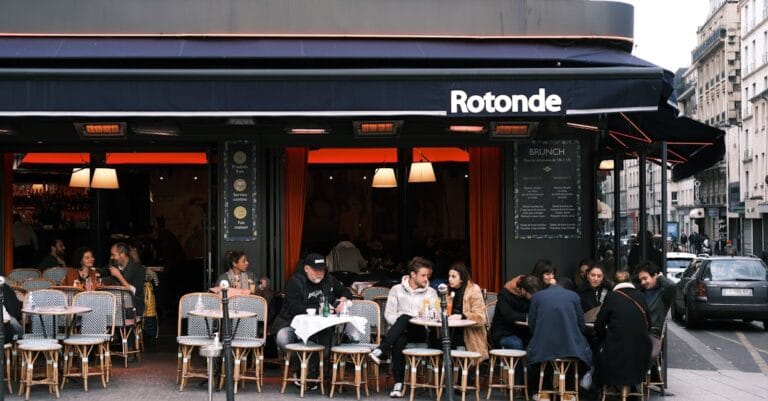
Exploring café culture, long lunches, and what dining actually means in daily Parisian...
Read More
Where food fills the street
In Bangkok, food doesn’t stay contained.
It spreads.
Along sidewalks, at intersections, inside markets, outside shops — food appears wherever there’s space for it.
Sometimes that space is small.
A cart. A grill. A table set up just for the day.
But once it’s there, it becomes part of the street.
You don’t step away from the city to eat.
You eat inside it.
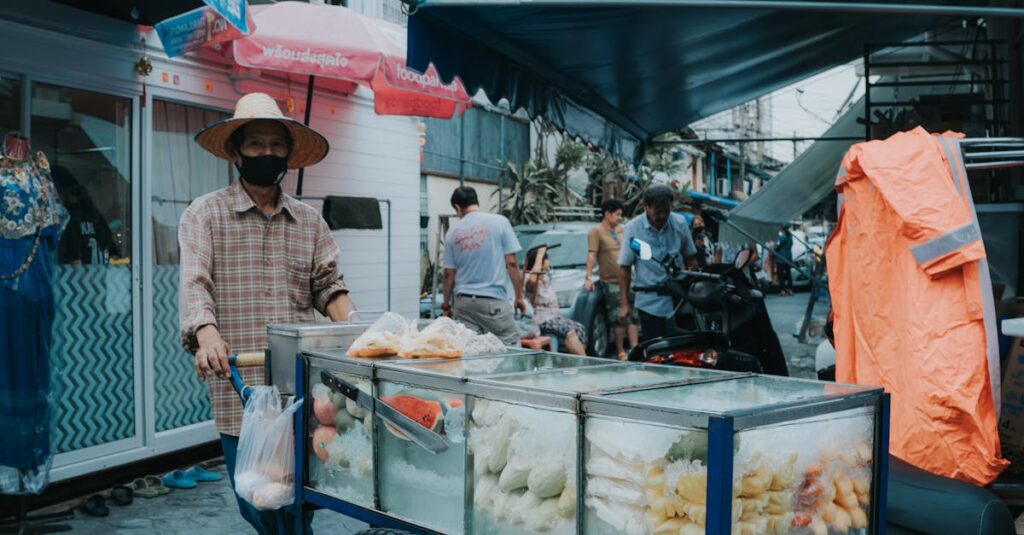
Cooking in constant motion
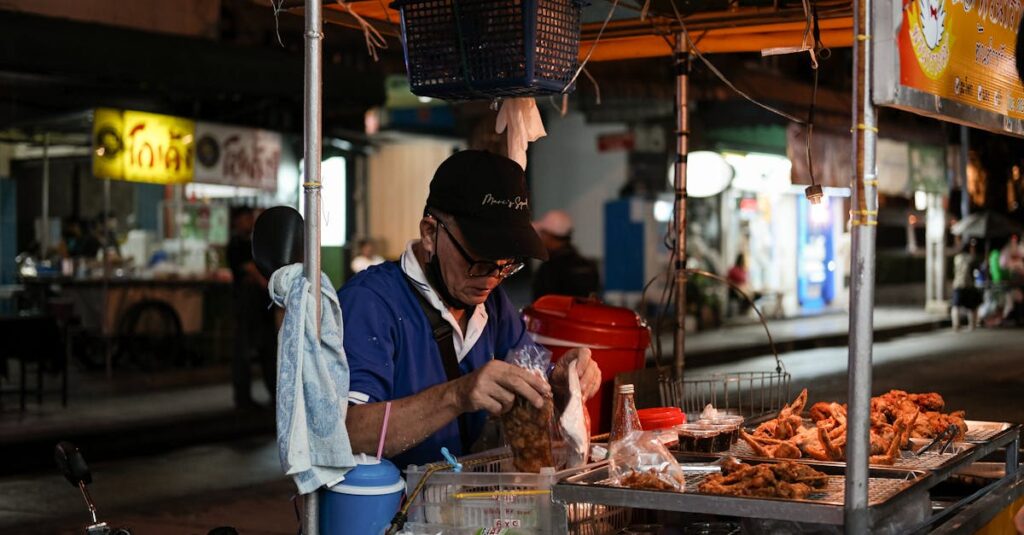
Food is prepared in real time.
Nothing feels distant.
You see the ingredients, the process, the speed at which everything comes together.
Woks move quickly. Flames rise. Hands repeat the same actions with precision.
There’s no pause between orders.
Just a continuous flow.
And that flow becomes part of the atmosphere.
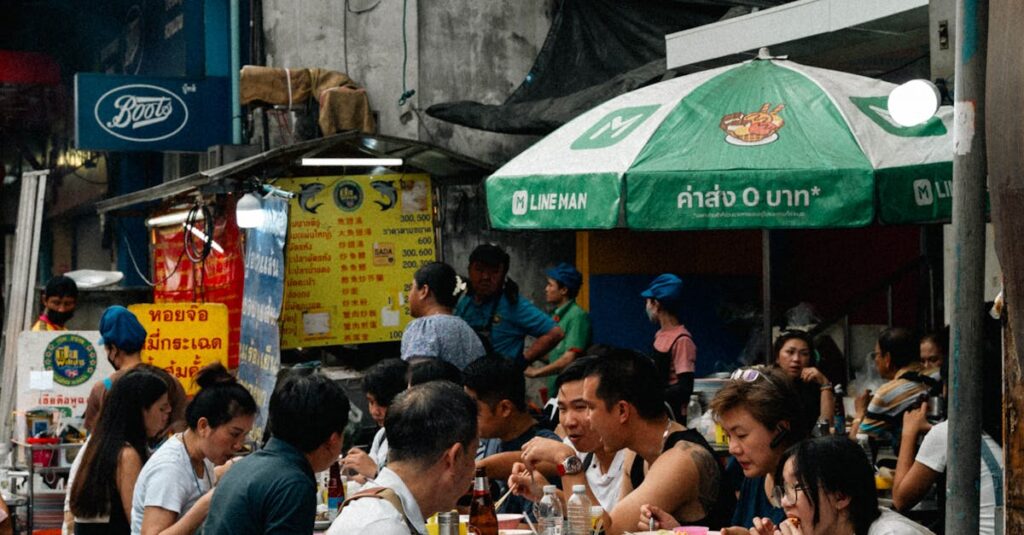
Eating wherever you can
You don’t look for a perfect place to sit.
You take what’s available.
A plastic stool. A shared table. A corner of space that opens for a moment.
Sometimes you stand.
Sometimes you sit close to strangers.
And none of it feels unusual.
Because the experience isn’t about the setting.
It’s about the moment.
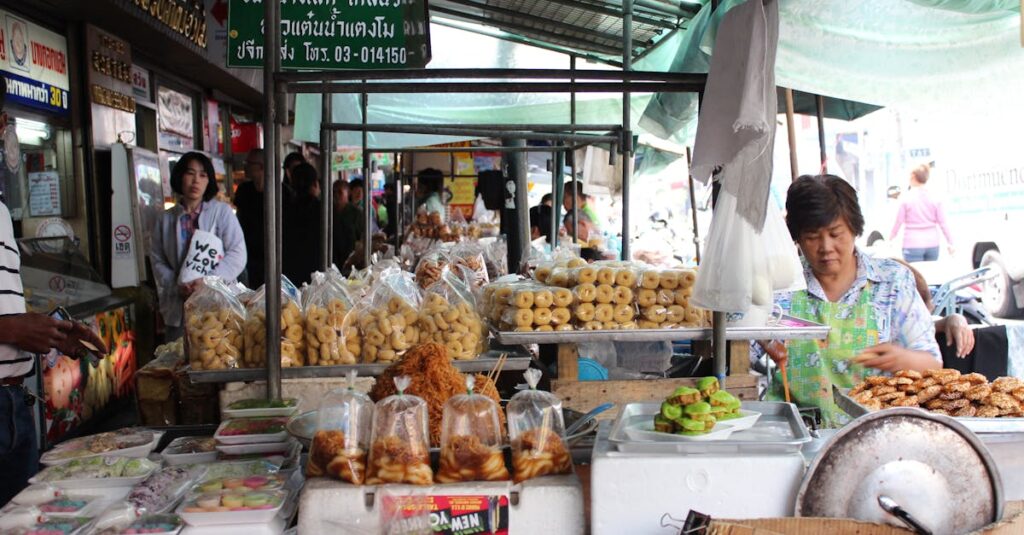
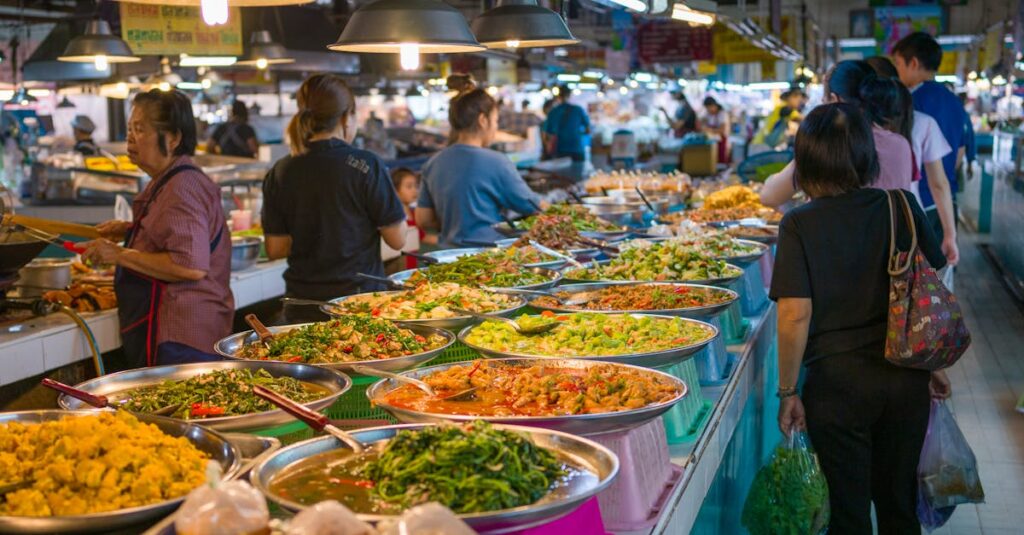
Markets as a living system
Markets intensify everything.
More food. More people. More movement.
You walk through, and every few steps something changes — a different dish, a different smell, a different sound.
There’s no single direction.
You move, stop, look, choose, continue.
And within that, the market becomes its own system.
Constant, but always shifting.
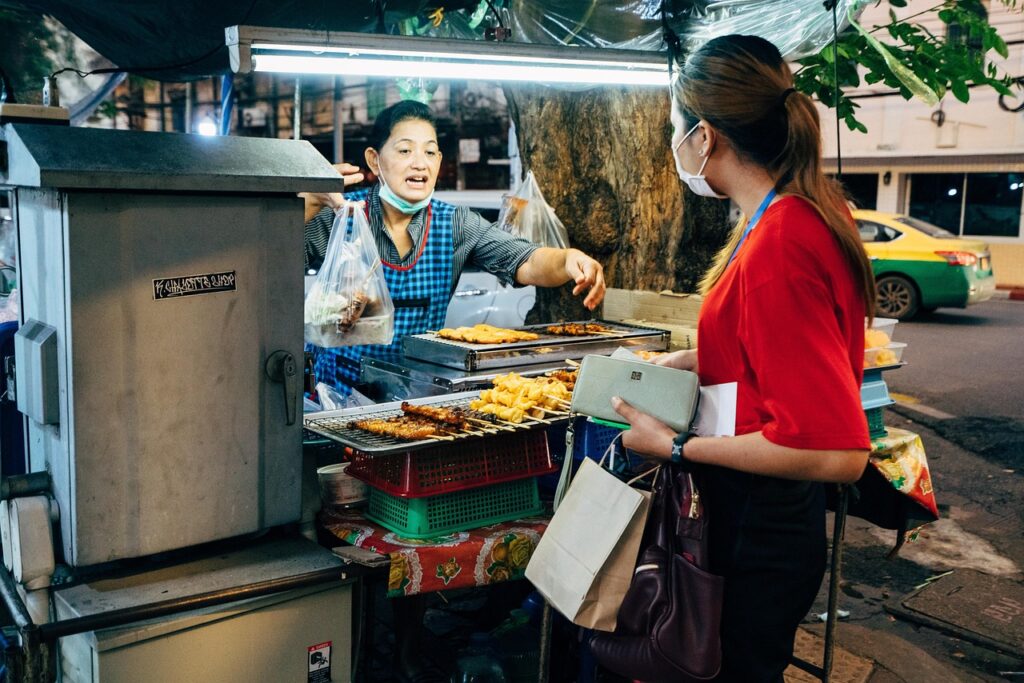
Conversations that happen quickly
Interaction is part of the process.
A quick question. A gesture. A recommendation.
Sometimes there are only a few words.
Sometimes just a look, a nod, an understanding of what’s being asked.
These moments don’t last.
But they happen constantly.
And they make the experience feel connected.
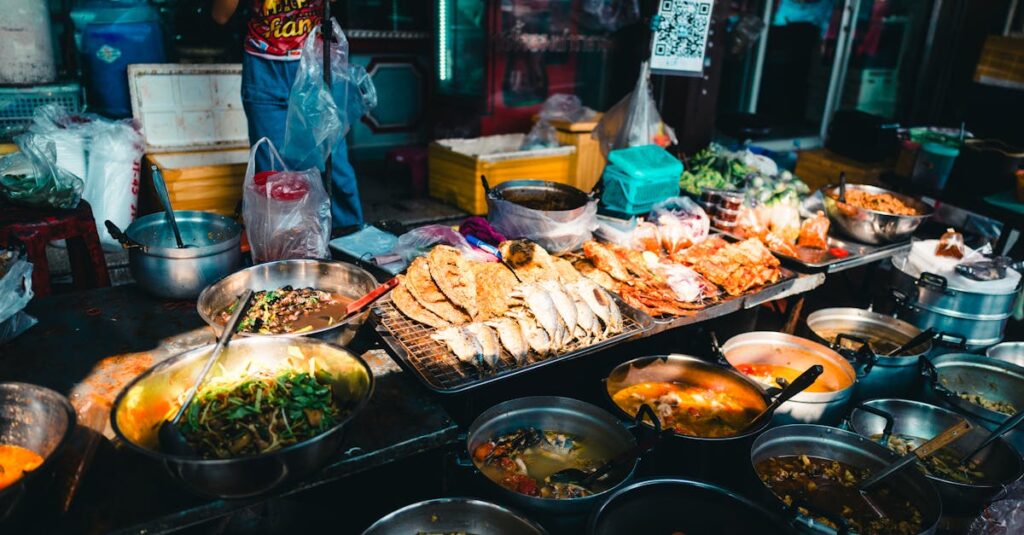
Food that reflects movement
The food itself reflects the city.
Varied. Fast. Layered.
Sweet, spicy, sour, salty — often all at once.
You don’t analyze it too much.
You taste it, move on, try something else.
And each dish feels like part of a larger whole.
No clear beginning or end
Street food in Bangkok doesn’t follow a strict schedule.
It starts early. Continues through the day. Expands at night.
There’s no single moment where it feels like it begins or ends.
It just… continues.
And you enter it at whatever point you happen to be there.
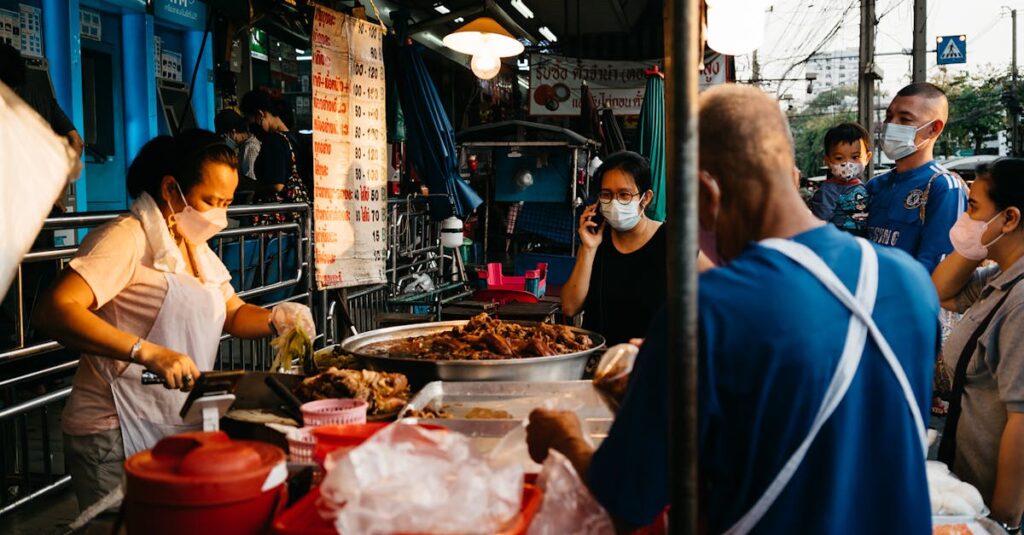
Not about perfection
Nothing feels overly refined.
Spaces are tight. Setups are practical. Conditions aren’t always ideal.
But that’s part of what makes it feel real.
The focus isn’t on presentation.
It’s on the food, the speed, the interaction.
And everything works within that.
Moments within the movement
Even in the middle of everything, there are small moments that feel still.
Someone focused on their food.
A brief pause between movements.
A moment that feels personal, even in a crowded space.
And those moments stand out.
What we took with us
Street food in Bangkok isn’t just about what you eat.
It’s about how you experience it.
In motion.
In shared space.
In constant interaction with everything around you.
There’s no separation between food and life.
They happen together.
And maybe that’s what stays with you.
Not a specific dish.
But the feeling of eating in a city that never stops moving
Read More Stories
Cairo Beyond the Pyramids: Daily Life, Chaos, and Rhythm
Cairo isn’t defined by its landmarks. It’s defined by its movement. By the...
Read More
Rome Between Ruins and Routine: Living With History Every Day
It doesn’t sit behind glass or stay confined to museums. It’s not something...
Read More