
Driving through the United States feels like entering a space where distance...
Read MoreMeals that begin before the food

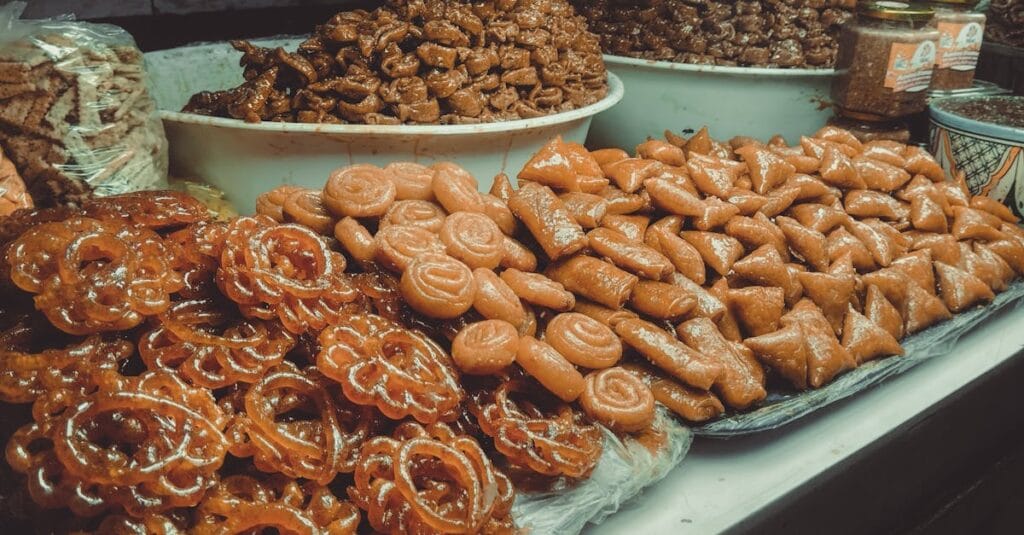
In Marrakech, food doesn’t begin with the first bite.
It begins earlier.
With the setting of the table.
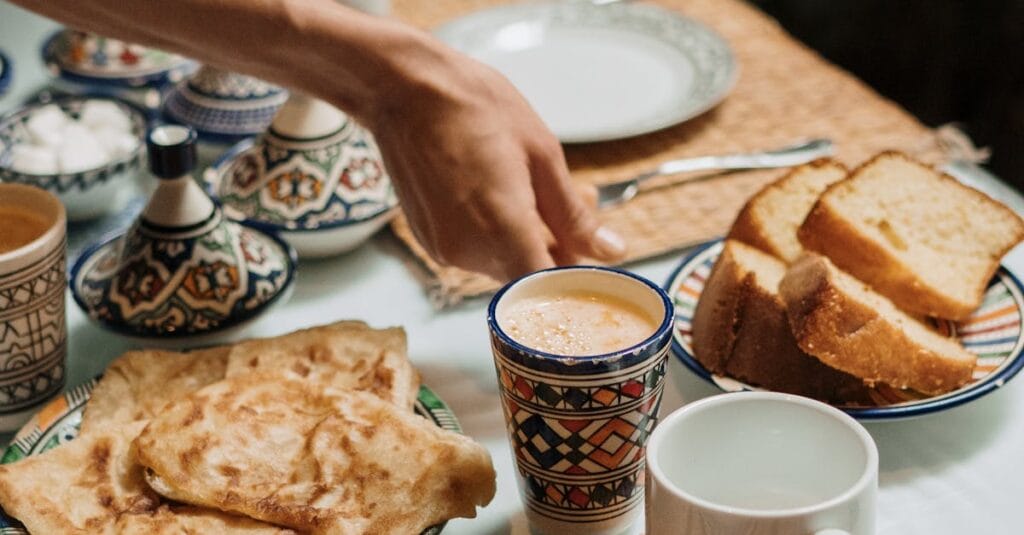
With the arrival of bread.
With small gestures that signal that something is about to unfold.
There’s no rush to start.
The meal builds gradually, almost quietly.
And by the time the food arrives, the experience has already begun.
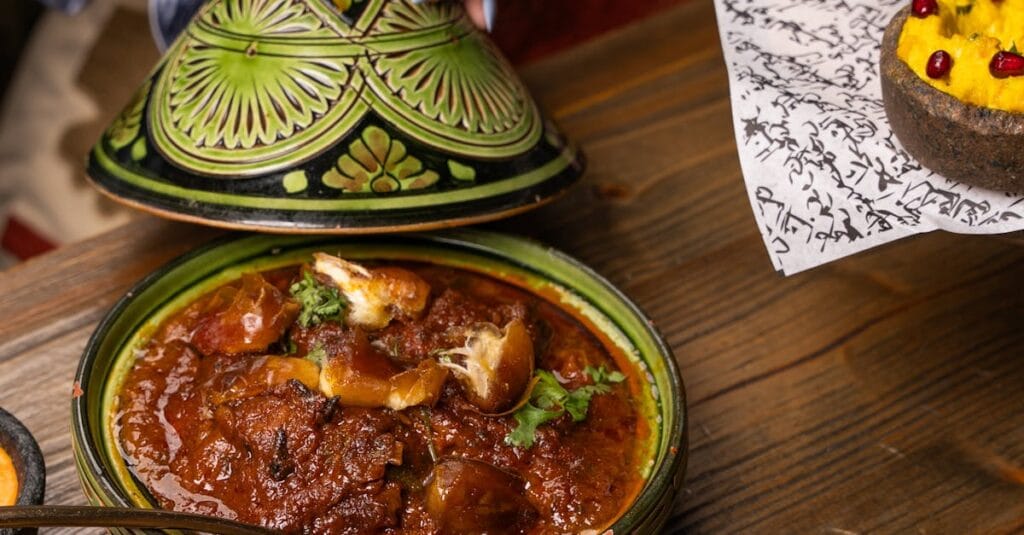
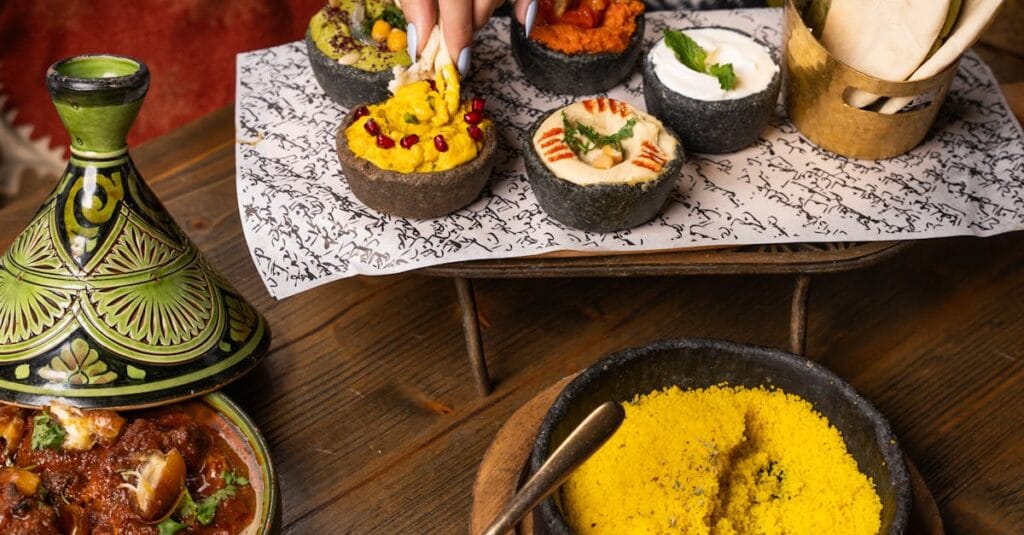
The tagine as a way of cooking
The tagine is both a dish and a method.
A clay pot, placed over heat, cooking slowly.
Ingredients are layered — meat, vegetables, spices — and left to transform over time.
Nothing happens quickly.
Flavors develop gradually.
And when the lid is lifted, what’s inside feels complete in a way that doesn’t need adjustment.
It’s not about complexity.
It’s about patience.
Eating together, not individually
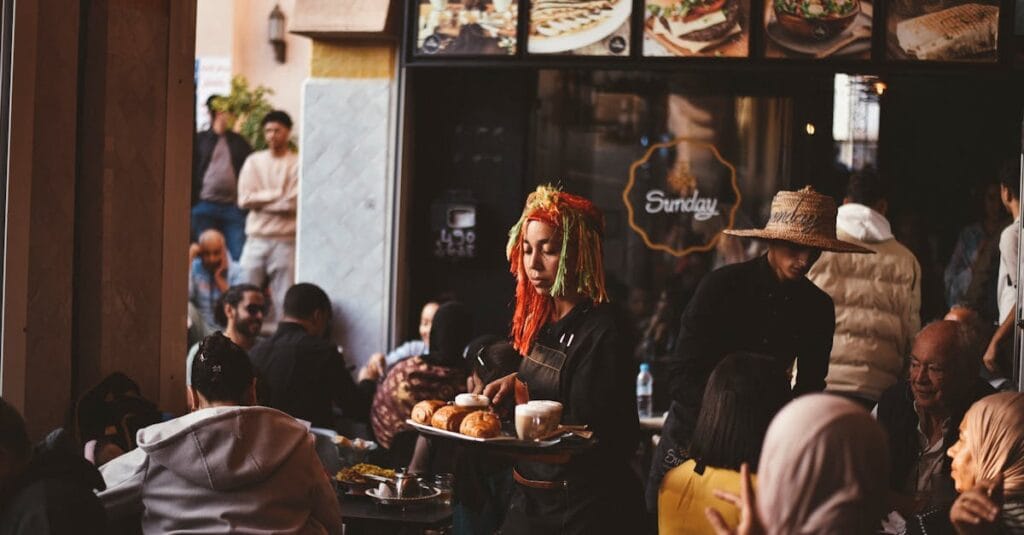
Meals are shared.
A single dish placed in the center. Bread used instead of utensils. Everyone eating from the same space.
There’s no separation.
No individual plates defining boundaries.
You take what’s in front of you. You pass, you adjust, you follow the rhythm of the table.
And through that, the meal becomes collective.
Bread as part of everything
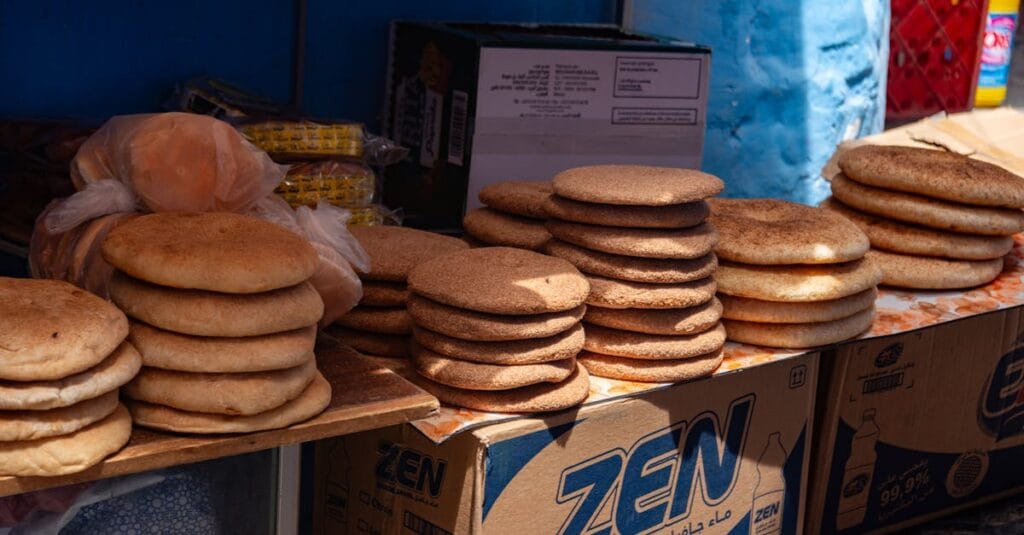
Bread is constant.
It’s not an addition.
It’s essential.
Used to scoop, to share, to connect everything on the table.
You don’t think about it separately.
It’s part of every movement.
And without it, the meal would feel incomplete.
Tea as ritual, not just a drink
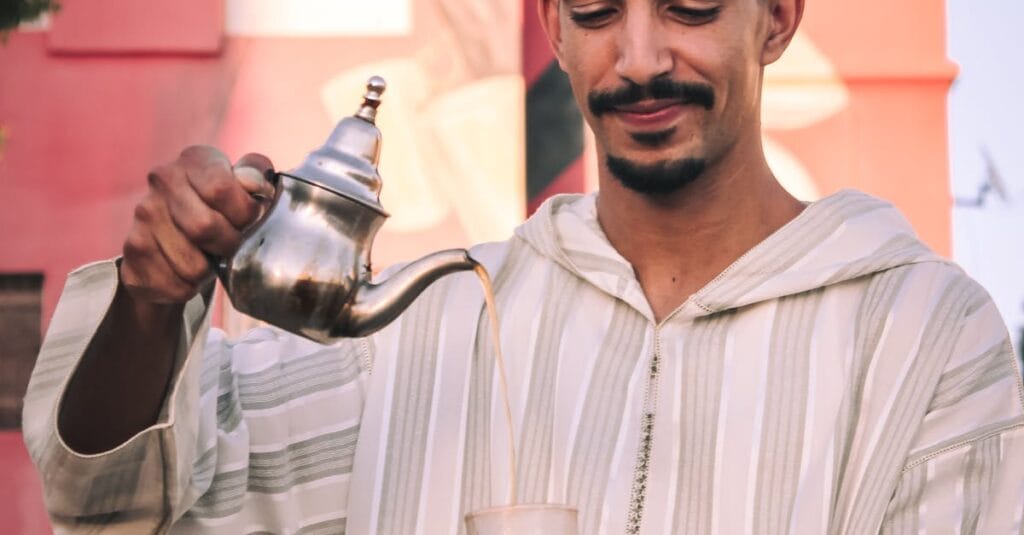
Tea in Marrakech isn’t just something you drink.
It’s something you prepare, serve, and repeat.
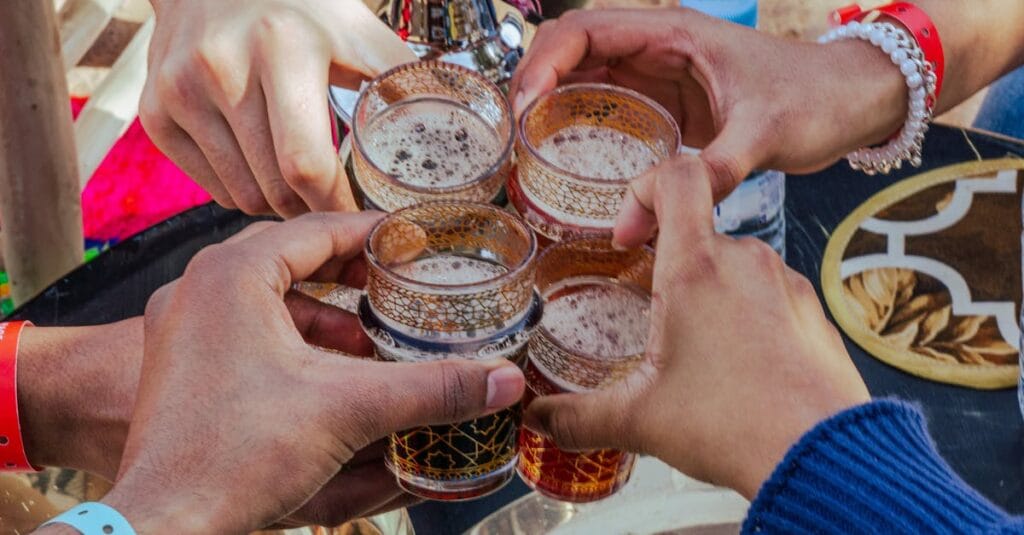
Mint tea, poured from a height, creating a light foam at the top. Glasses arranged carefully. The process done with attention.
It’s not rushed.
And it’s not done once.
Tea appears throughout the day.
Each time, it feels like a small pause.
A moment that separates one part of the day from another.
Time moves differently at the table
Meals don’t follow strict timing.
They unfold.
People sit. Talk. Pause. Continue eating. Return to conversation.
There’s no sense of needing to finish quickly.
Time stretches.
Not in a way that feels long, but in a way that feels open.
And that openness changes the experience.
Flavors that reflect place
The flavors are distinct, but not overwhelming.
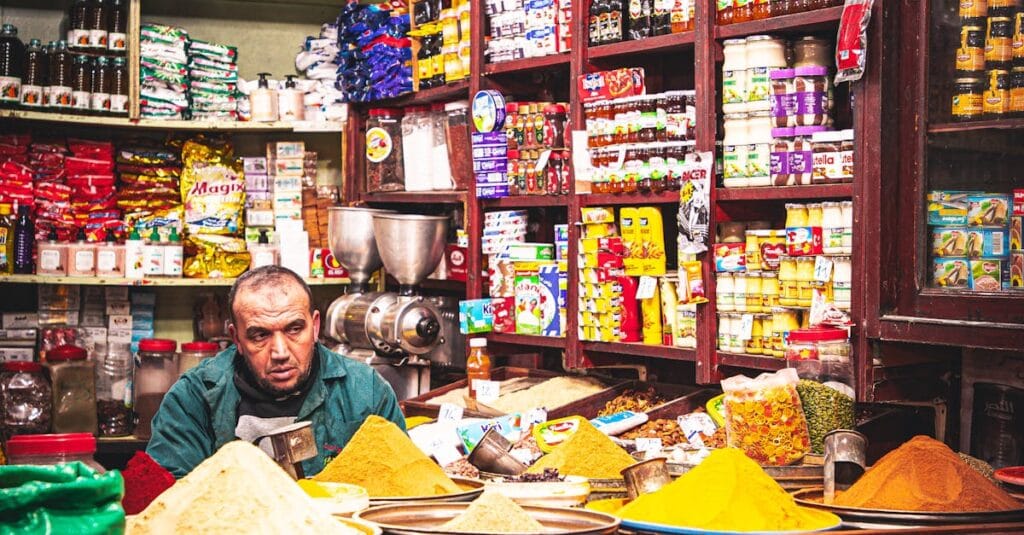
Spices are present — cumin, saffron, cinnamon — but used in balance.
Nothing dominates.
Everything works together.
And over time, those flavors become familiar.
Not because they’re simple.
But because they’re consistent.
Hospitality as part of the experience
Hospitality feels natural.
You’re offered more than you expect.
More food. More tea. More time.
But it doesn’t feel excessive.
It feels like part of how things are done.
You’re there, so you’re included.
And that inclusion doesn’t need to be explained.
Not about presentation
The meal isn’t designed to look perfect.
It’s not styled or arranged for appearance.
It’s placed on the table, shared, experienced.
And that’s enough.
Because the focus isn’t on how it looks.
It’s on how it feels.
What the ritual reveals
At some point, you realize that the meal is more than just food.
It’s a structure.
A way of organizing time.
A way of connecting with others.
A way of creating moments that repeat, but never feel identical.
And that repetition is what gives it meaning.
What we took with us
In Marrakech, food isn’t separate from daily life.
It’s part of it.
Structured through rituals.
Shaped by time.
Shared between people without needing to be defined.
We didn’t leave thinking about a specific dish.
We left thinking about the rhythm of it all.
The way meals begin, unfold, and end without feeling rushed.
And how something as simple as tea and bread can carry more meaning than expected.
Read More Stories
Tango Beyond the Performance: What It Means in Buenos Aires
You’ve seen it — on stages, in videos, in carefully framed performances...
Read MoreFood, Landscape, and Identity: Eating Across South Africa
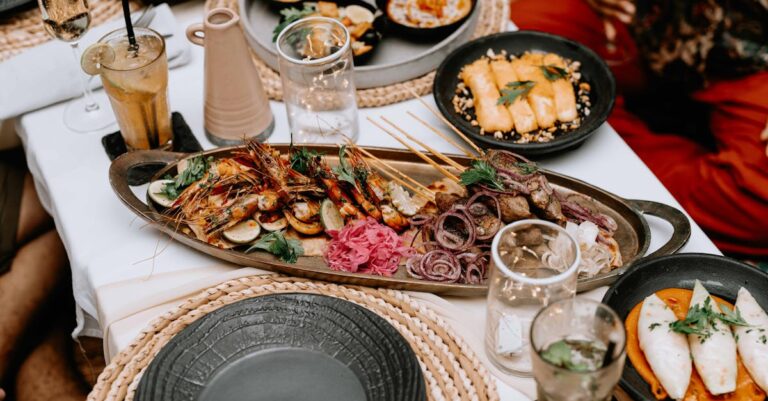
Mountains, coastline, open land, vineyards each environment brings something different.
Read More