
Rome Between Ruins and Routine: Living With History Every Day

A city where the past doesn’t stay in the past

In Rome, history doesn’t feel distant.

It doesn’t sit behind glass or stay confined to museums. It’s not something you visit for a few hours and then leave behind.

It’s everywhere.

You walk past ancient walls on your way to buy coffee.
You cross streets where ruins stand just a few meters away.
You sit in a square that has existed, in one form or another, for centuries.

At first, it feels overwhelming — like the city is too full of meaning to fully take in.

But after a while, something unexpected happens.

It starts to feel normal.

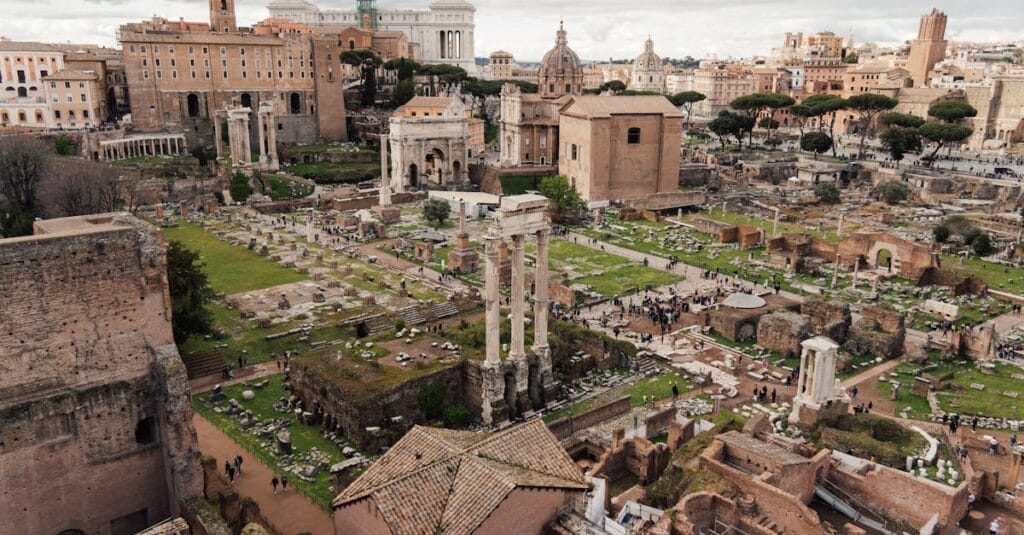
Explore the majestic ruins of the Roman Forum from above, showcasing ancient history and iconic Roman architecture.

Ruins as part of the everyday

In many places, ruins are isolated.

They’re preserved, protected, separated from daily life. You visit them, observe them, and then return to the present.

In Rome, there’s no clear separation.

Ancient structures stand next to busy roads.
Columns rise behind cafés.
Fragments of the past appear in spaces that are still actively used.

And people move around them without hesitation.

Someone walks by while talking on the phone.
A scooter passes between old stone walls.
A group of friends sits nearby, focused on their conversation, not the history surrounding them.

The ruins are still there — but they’re no longer the center of attention.

They’ve become part of the background.

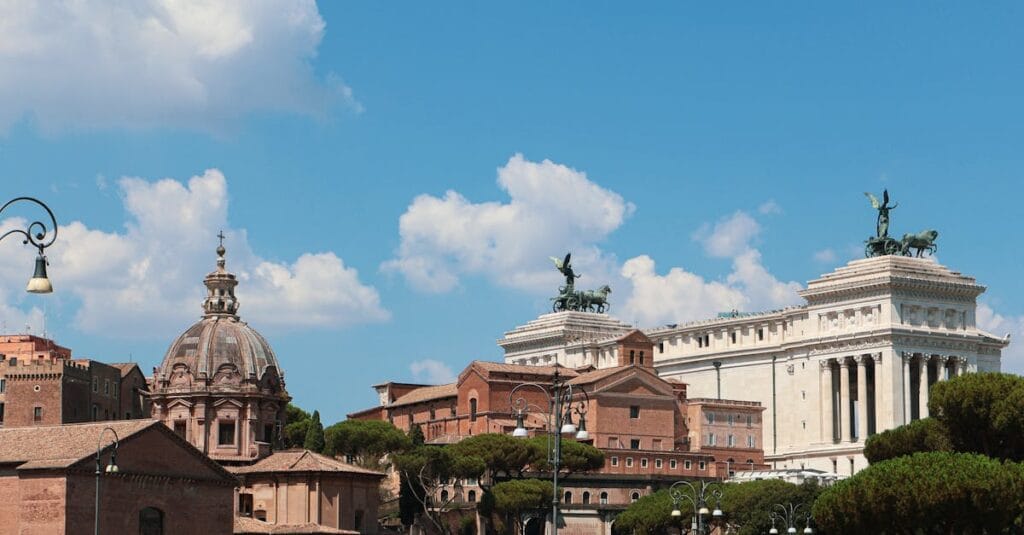
Experience the classic beauty of Rome's iconic buildings against a clear blue sky.

Layers built on top of each other

Rome doesn’t hide its layers.

In fact, it almost seems to expose them.

A wall from one period supports a building from another.
A church stands on top of something older.
Streets reveal fragments of different times, all existing at once.

You start to notice that the city wasn’t built in a straight line.

It was built on top of itself.

Each generation adding something new, without fully erasing what came before.

And instead of feeling chaotic, it creates a kind of continuity.

The past isn’t replaced.

It’s absorbed.

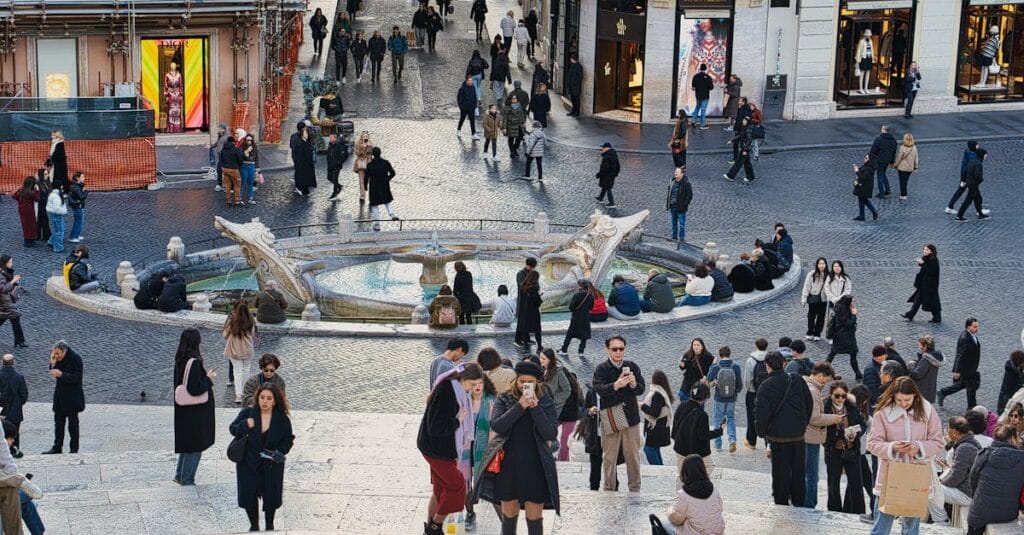
Bustling crowd at Piazza di Spagna, Rome, showcasing vibrant city life around the Barcaccia Fountain.

Daily life continues anyway

What’s most interesting isn’t the presence of history.

It’s how little it interrupts daily life.

People still go to work.
They shop, talk, wait, walk, sit, and move through the city just like anywhere else.

There’s no sense of constant awe.

No one stops every few steps to admire what’s around them.

Because for the people who live here, this isn’t extraordinary.

It’s familiar.

And that familiarity changes how the city feels.

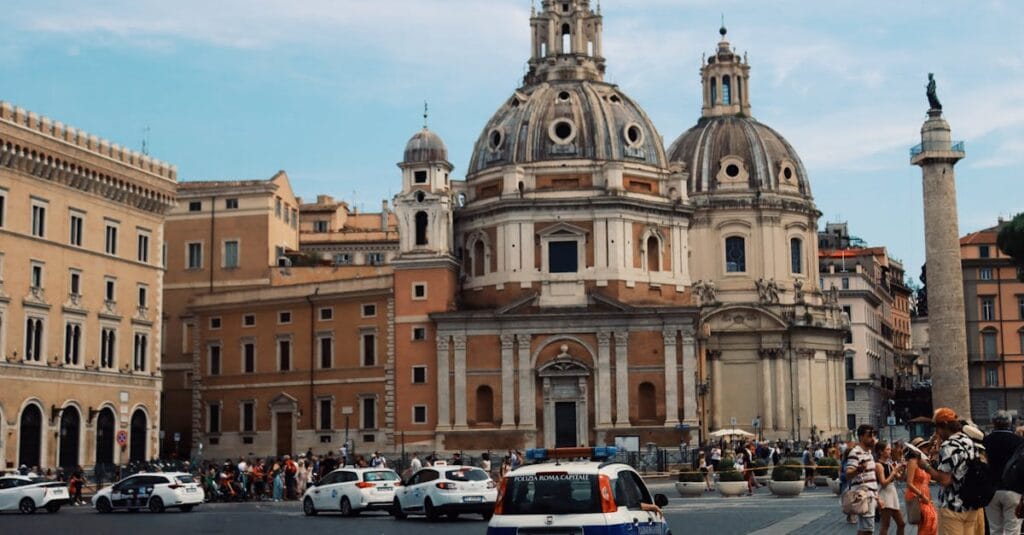
View of the churches of Santa Maria di Loreto and Trajan's Column in bustling Rome, Italy.

Architecture that shapes movement

Rome isn’t organized in a way that feels predictable.

Streets curve, narrow, open into wide squares, then tighten again. There’s no consistent grid, no clear logic that guides your movement.

You don’t walk through Rome efficiently.

You wander.

And that wandering is shaped by the architecture itself.

A narrow street slows you down.
A sudden open piazza makes you pause.
A small passage invites you to explore without knowing where it leads.

The city doesn’t guide you in a straight line.

It pulls you in different directions.

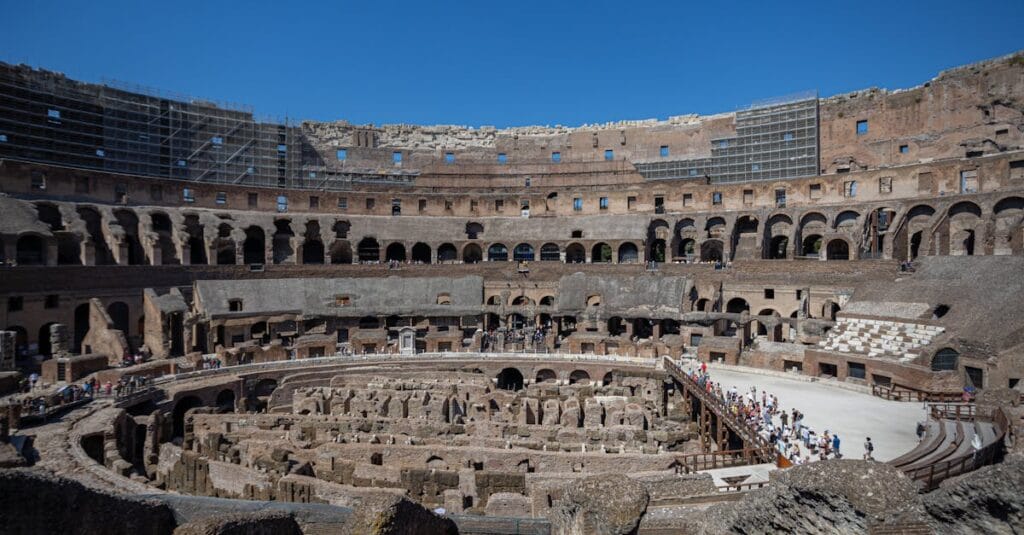
Explore the historic Colosseum in Rome, Italy, showcasing ancient architecture and sunlight in summer.

Time feels different here

Spending time in Rome changes your sense of time.

Not in a dramatic way, but gradually.

You stop thinking in terms of schedules and start noticing how long things have been there. How many people have passed through the same spaces. How many lives have unfolded in the same streets.

It’s not something you can measure.

Just something you feel.

And it creates a quiet awareness that the present moment is only one small part of a much longer story.

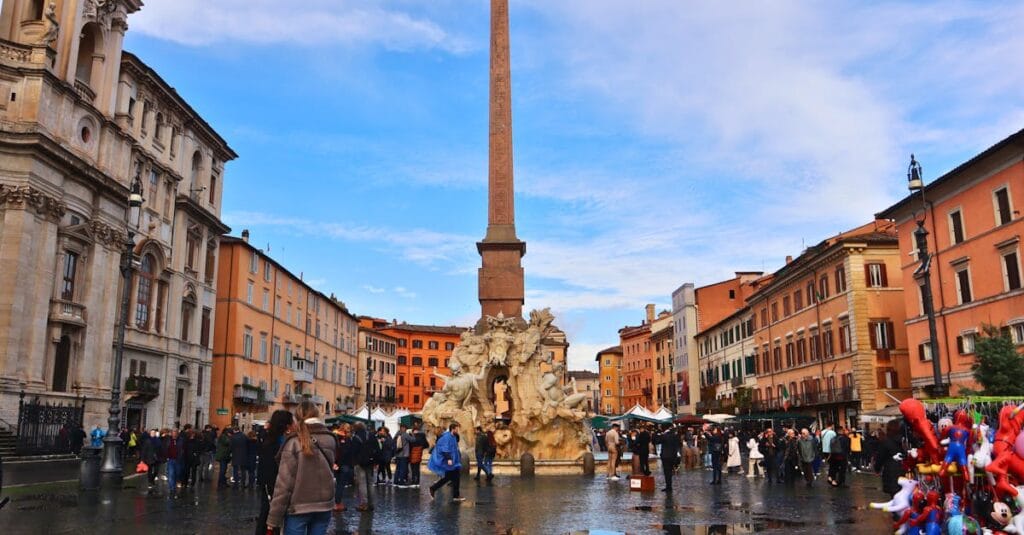
A bustling scene of Piazza Navona with the iconic Fountain of the Four Rivers in Rome, Italy.

Imperfection as part of the city

Rome isn’t polished.

Not in the way some cities are.

Walls show wear. Buildings carry marks of time. Streets feel uneven, sometimes chaotic.

But instead of taking away from the experience, it adds something to it.

It makes the city feel lived in.

Not preserved, not frozen, not curated for appearance.

Just… real.

Living with history, not around it

At some point, the contrast between past and present stops feeling like a contrast.

It becomes something else.

A coexistence.

People don’t live around history in Rome.

They live with it.

It doesn’t define every moment, but it’s always there — quietly present, shaping the space without dominating it.

And that balance is what makes the city feel different.

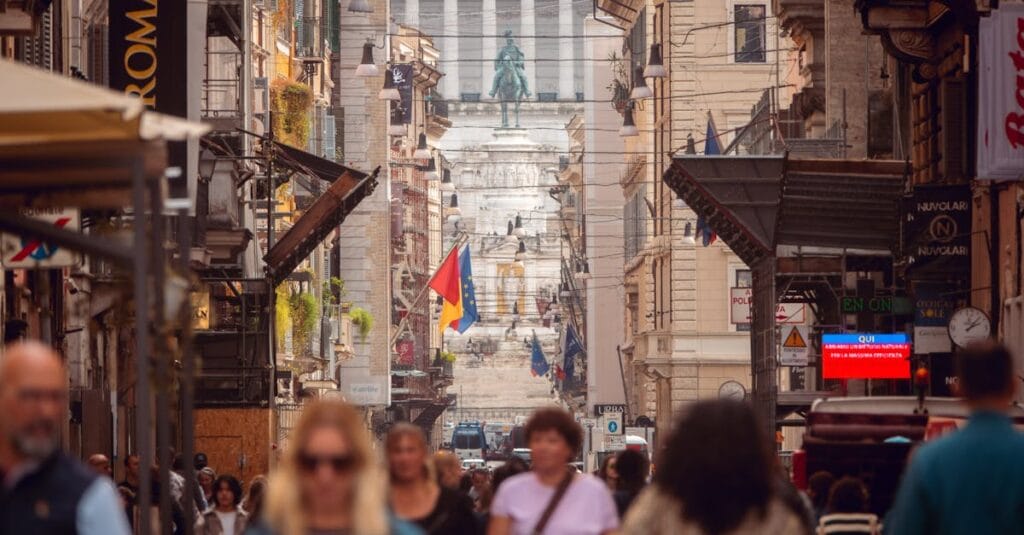
Bustling street in Rome with a view of the Altare della Patria and vibrant city life.

What we took with us

Rome isn’t just a place where history exists.

It’s a place where history continues — not through events, but through everyday life.

Through routines, movement, conversations, and the way people interact with the spaces around them.

The ruins are still there.

The past is still visible.

But what gives it meaning is everything that happens in between.

And maybe that’s what makes Rome feel the way it does.

Not like a city that remembers the past.

But like a city that never fully left it behind.

Read More Stories