
From Gaudí’s organic forms to the structured grid of the Eixample, to...
Read More
Istanbul Between Continents: Where East and West Meet
- Turkey
- Architecture
- Culture
- January 12, 2026
A city defined by its position
Istanbul is often described as a bridge.
Between Europe and Asia. Between East and West.
But that idea feels too simple once you’re there.
Because the city doesn’t just connect two places.
It exists in between them.
And that “in-between” isn’t a transition.
It’s an identity.
Architecture that carries multiple histories
Walking through Istanbul, history isn’t hidden.
It’s layered.
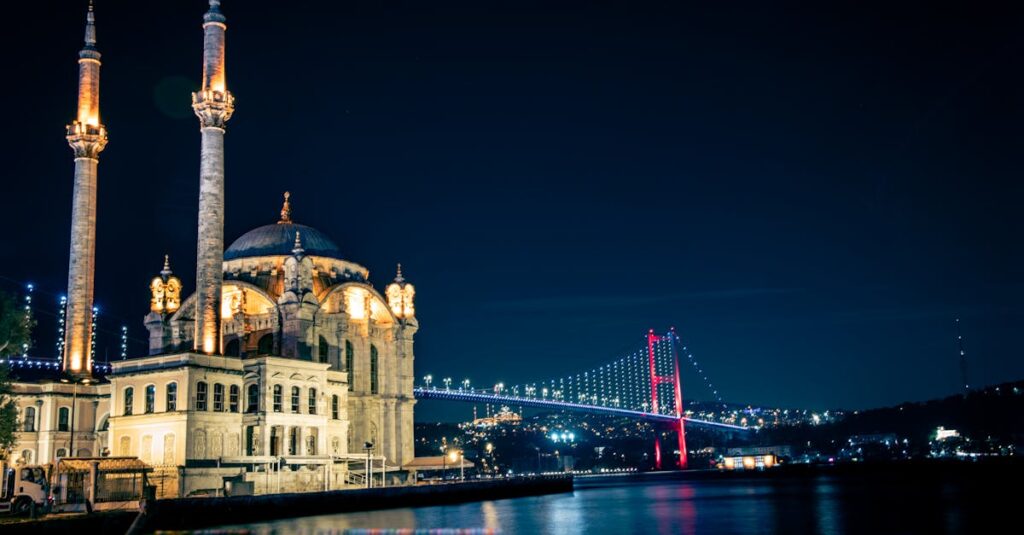
Byzantine structures. Ottoman mosques. Modern buildings rising alongside them.
Each period has left something behind.
And instead of replacing one another, these layers remain visible.
Domes and minarets define the skyline, but they exist within a city that continues to evolve.
Nothing feels isolated.
Everything feels connected through time.
Spaces shaped by contrast
Istanbul shifts constantly.
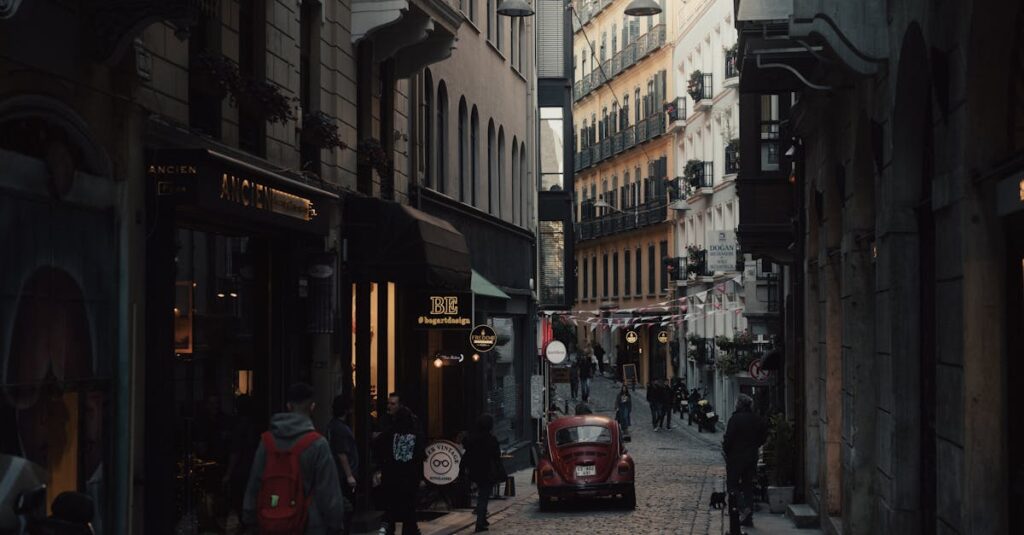
One street feels traditional — narrow, textured, filled with markets and movement.
Another feels more European — cafés, open spaces, a different kind of rhythm.
These contrasts don’t feel forced.
They feel natural.
Because the city doesn’t choose one identity over the other.
It holds both.
Culture as a blend, not a division
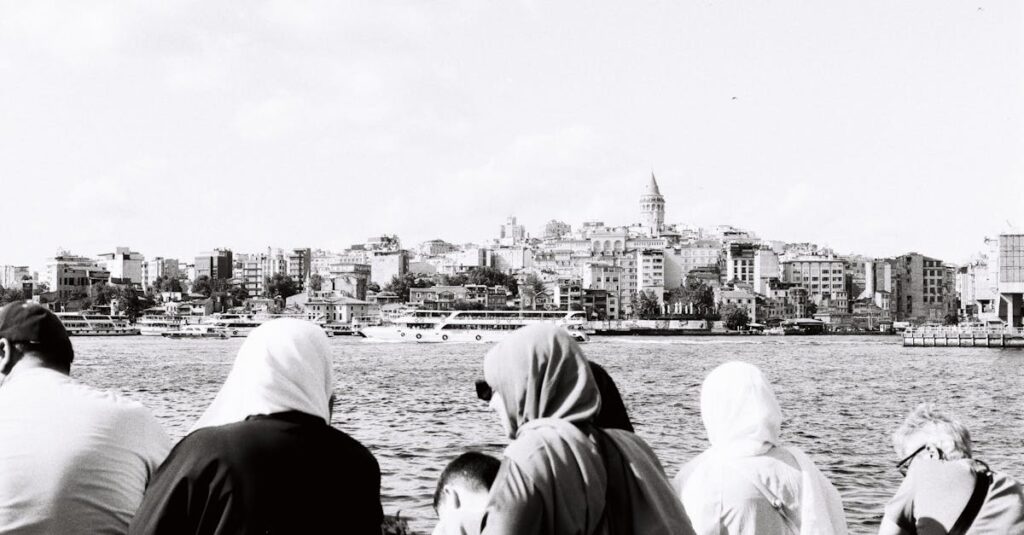
The idea of East and West becomes less meaningful when you focus on daily life.
People move through routines that don’t feel divided.
Drinking tea. Talking. Working. Gathering.
Cultural influences exist, but they don’t separate people into categories.
They blend.
And that blending creates something unique.
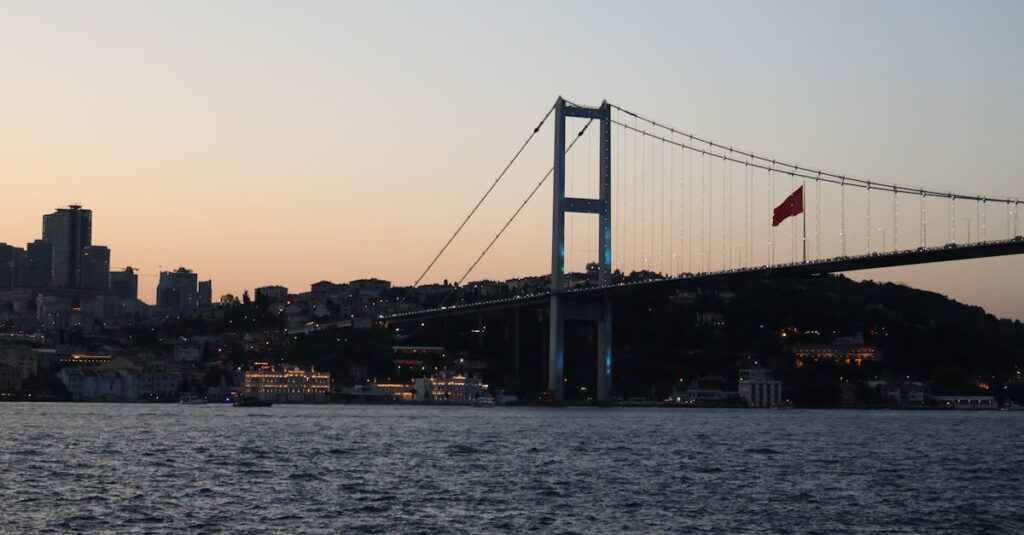
Movement across the Bosphorus
The Bosphorus isn’t just a geographical feature.
It’s part of daily life.
People cross it regularly — not as something symbolic, but as something practical.
A commute. A routine.
And in doing so, they move between continents without thinking about it as a boundary.
It’s just part of the city.
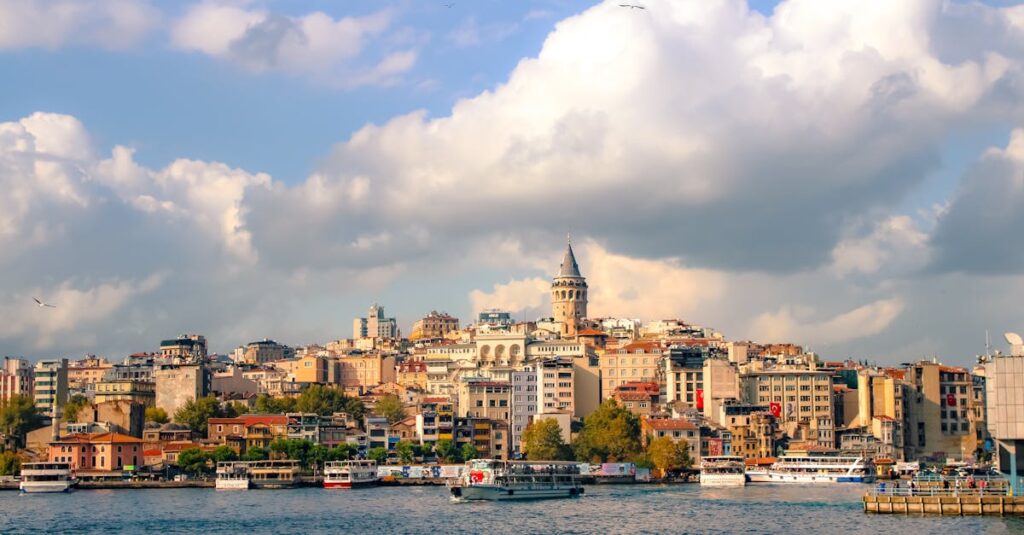
Not everything resolves into one identity
Istanbul doesn’t resolve into a single idea.
It’s not fully Eastern.
Not fully Western.
And trying to define it that way misses something important.
Because the city isn’t about choosing between identities.
It’s about existing within multiple ones at the same time.
A balance that feels natural
What stands out isn’t the contrast itself.
It’s how natural it feels.
Nothing seems forced.
Nothing seems out of place.
The different elements don’t compete.
They coexist.
And over time, that coexistence becomes the defining feature.
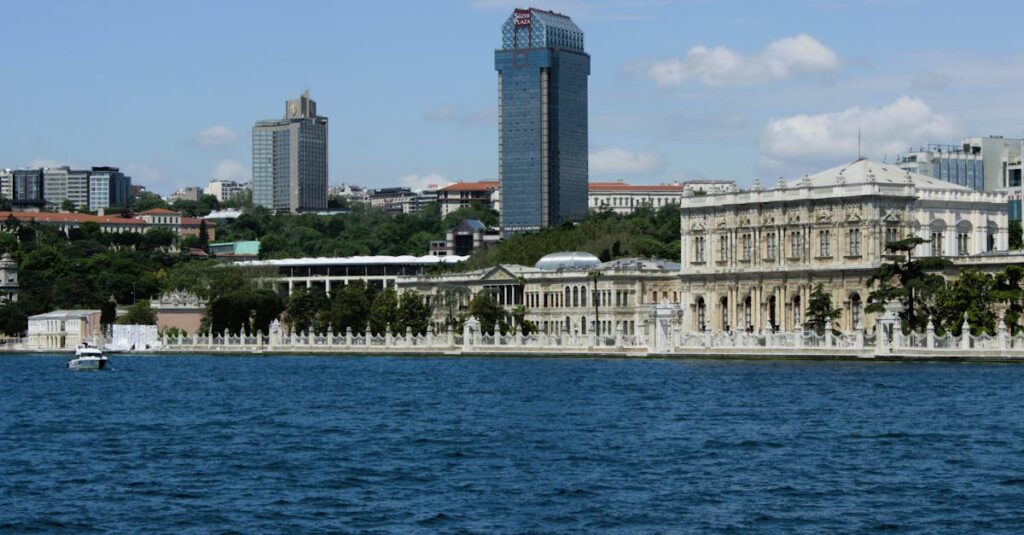
What we took with us
Istanbul isn’t a city that fits into one category.
It exists between them.
Between continents.
Between histories.
Between cultural influences.
But instead of feeling divided, it feels whole.
Because it doesn’t try to simplify itself.
It allows everything to exist together.
And maybe that’s what stays with you.
Not the idea of East meeting West.
But the experience of a place that has become something entirely its own
Read More Stories
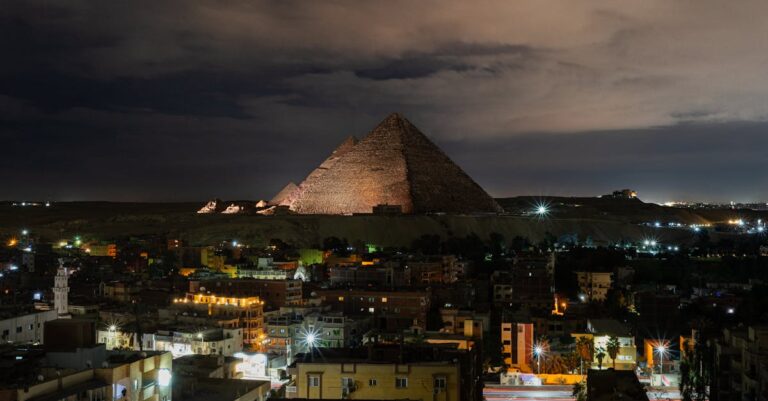
Living in Cairo: Where the Past and Present Share the Same Space
The pyramids sit just beyond the movement of the city. Mosques rise...
Read More
Bangkok in Motion: Street Life, Energy, and Everyday Flow
Traffic fills the streets — cars, tuk-tuks, motorbikes weaving through spaces that...
Read More