At the Table in Lisbon: What Food Reveals About the City

Sitting down without expectations

Food in Lisbon doesn’t try to impress you.

At least not in the way you might expect.

There’s no immediate sense of performance, no pressure to find the “best” place or the most talked-about dish. Meals don’t feel like events.

They feel like part of the day.

You sit down without expectations.
Order something simple.
And let the experience unfold without trying to define it too quickly.

And somehow, that makes everything feel more real.

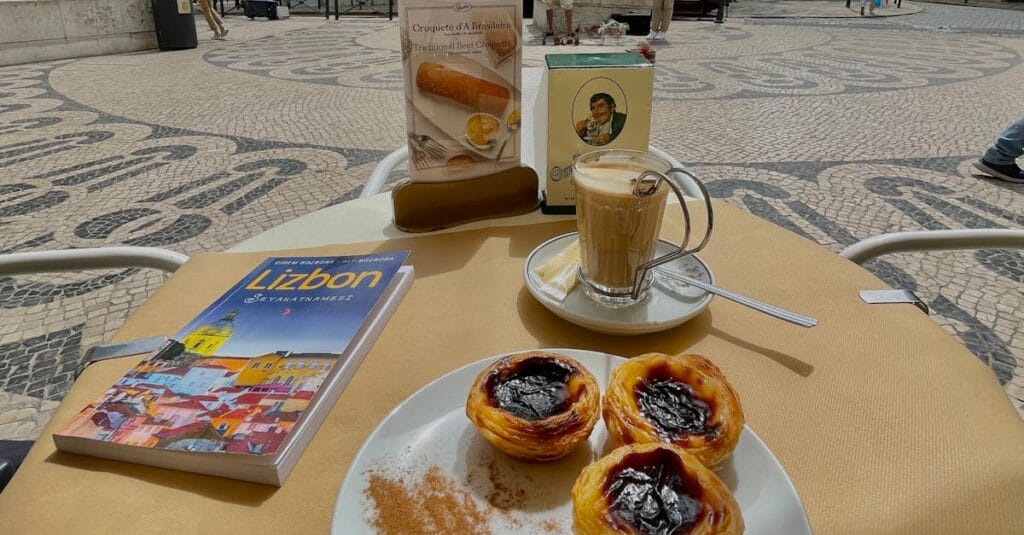
Savoring Pastéis de Nata with coffee in a Lisbon café, with iconic tram in the backdrop.

Mornings begin with something small

Breakfast in Lisbon is rarely elaborate.

A coffee. A pastry. Maybe both taken standing at the counter or sitting briefly at a table near the window.

The pastel de nata appears everywhere.

Golden, slightly crisp on the outside, soft inside, with just enough sweetness to feel complete without being heavy.

It’s not treated as something special.

It’s just… part of the routine.

And that says a lot.

Food here doesn’t need to be reserved for occasions.

It belongs to everyday life.

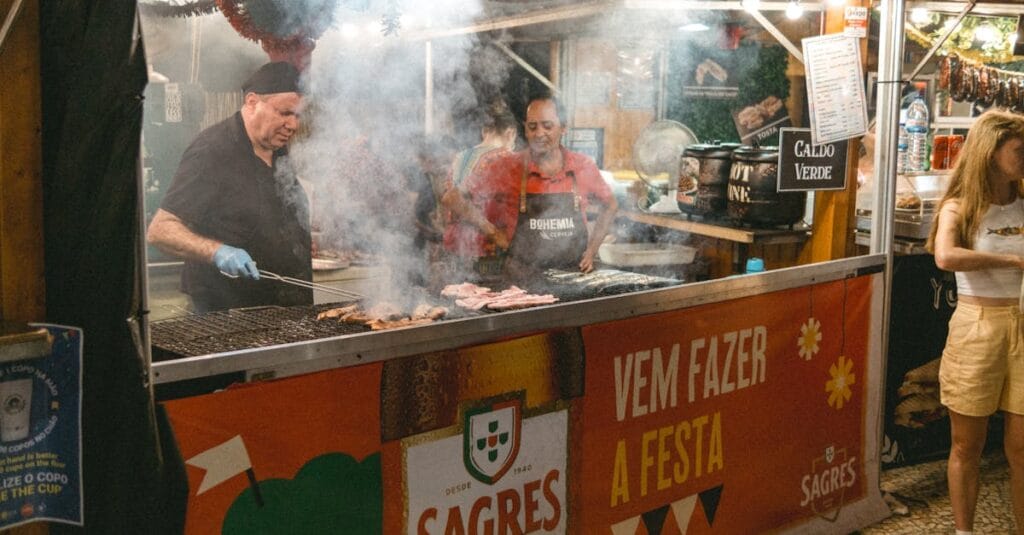
Street food vendors grilling meats at a lively night market in Lisbon, Portugal. A vibrant evening scene.

Markets and the presence of the sea

At some point, you start to notice how present the sea is in Lisbon’s food.

Even without seeing it directly.

Fish markets reflect it clearly.

Fresh seafood laid out in simple displays. Nothing overly styled, nothing arranged for effect — just what’s available, what’s fresh, what will likely be eaten that same day.

There’s a sense of immediacy.

Food isn’t distant from its source.

It’s close, visible, part of a daily cycle that feels grounded and consistent.

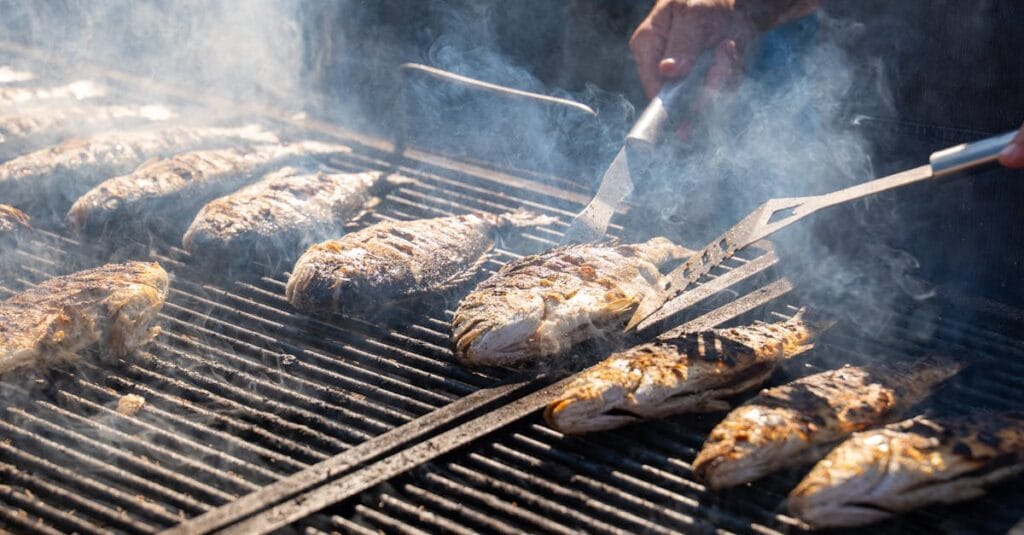
Smoky and flavorful grilled fish sizzling on a barbecue grill, captured outdoors in Ivanić-Grad, Croatia.

Lunch that feels unforced

Lunch doesn’t feel structured in a rigid way.

You find a place that feels right — often small, often understated — and sit down.

Menus are simple.

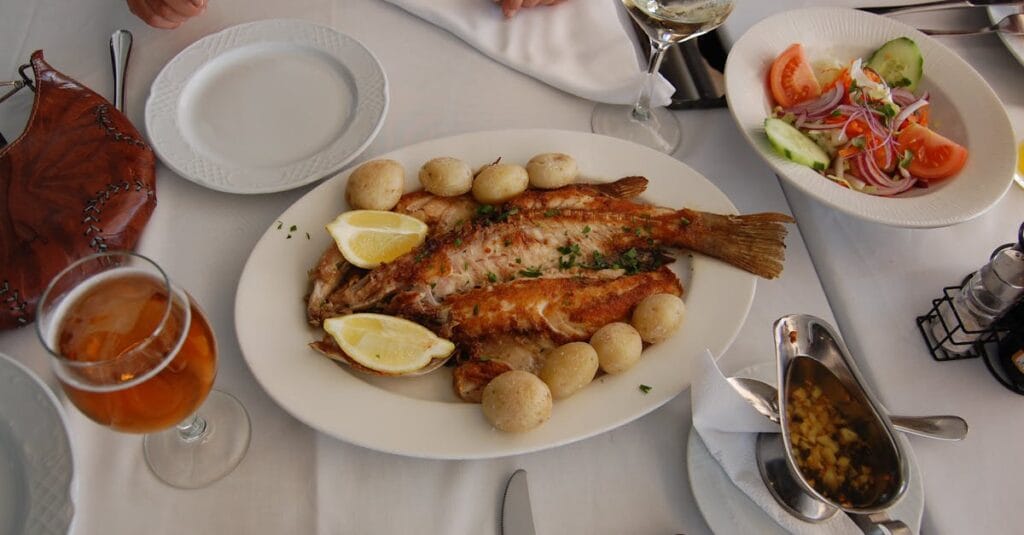
Grilled fish. Potatoes. Vegetables. Olive oil.

Nothing complicated.

But everything feels intentional.

There’s no need to reinvent anything.

What’s there works.

And people seem to trust that.

Meals are eaten slowly, but not ceremoniously. Conversation flows, pauses, resumes. Plates are cleared without urgency.

It all feels natural.

A tempting seafood platter with fish, potatoes, salad, and drinks on a dining table.

Simplicity as a way of doing things

One of the most noticeable things about food in Lisbon is how little it tries to do.

Ingredients are few. Preparation is straightforward. Presentation is minimal.

But none of that feels like a limitation.

It feels like a choice.

There’s a quiet confidence in keeping things simple.

Letting the ingredients speak for themselves. Not adding more than necessary.

And over time, you realize that this simplicity isn’t about doing less.

It’s about knowing what doesn’t need to be changed.

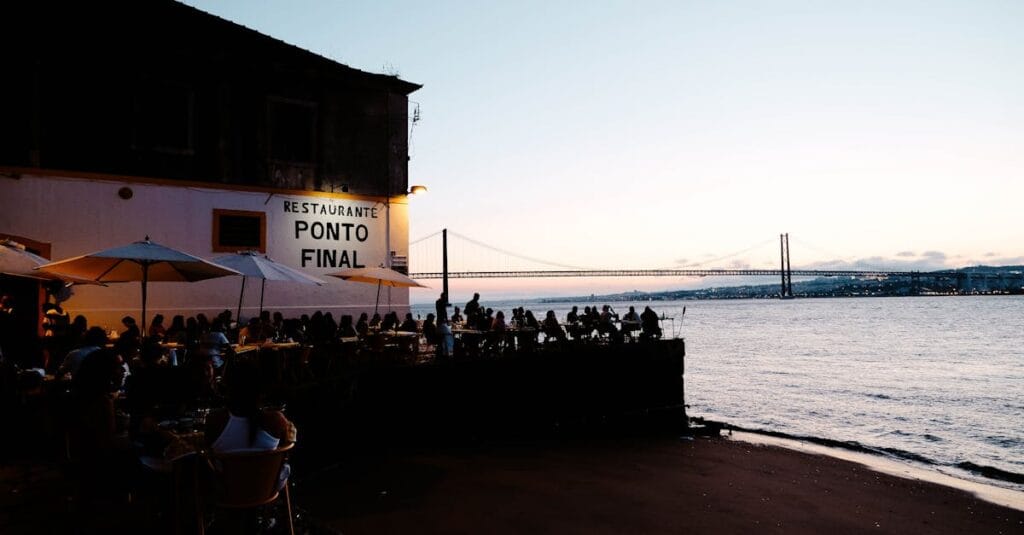
Scenic view of people dining outdoors at Restaurante Ponto Final with Lisbon's sunset and bridge in the background.

The social side of the table

Meals in Lisbon are rarely isolated experiences.

Even when people eat alone, there’s a sense of connection to the space around them.

Tables are close. Conversations overlap. The atmosphere feels shared.

When people eat together, that connection becomes more visible.

Meals stretch. Plates are shared. Conversations move between topics without structure.

There’s no clear beginning or end.

Just a flow that continues as long as it needs to.

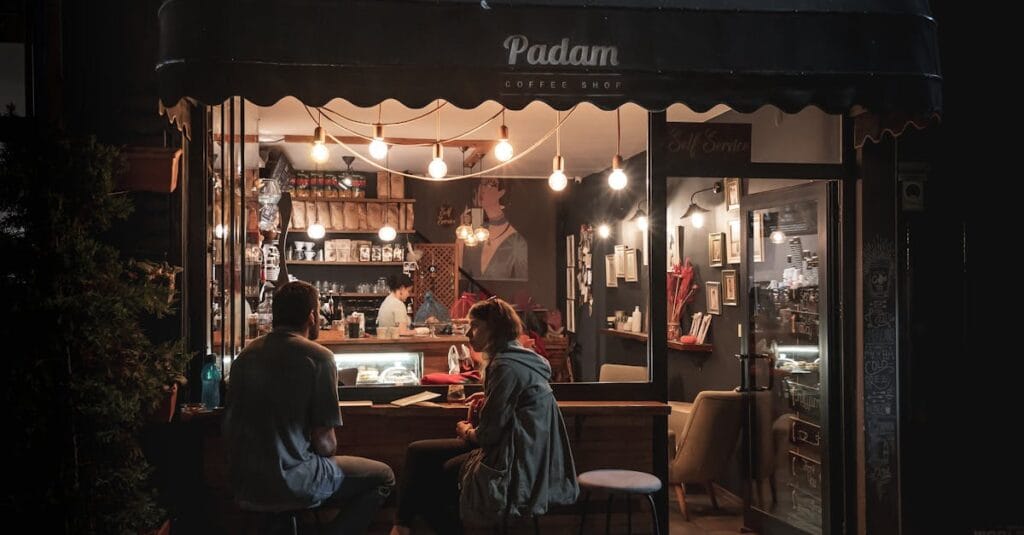
Charming night scene at Padam Coffee Shop with people enjoying a warm atmosphere in Ankara, Turkey.

Afternoon pauses and small rituals

Afternoons bring another kind of pause.

Coffee again. Maybe something small to eat.

Not out of necessity, but out of habit.

A short break that doesn’t feel rushed or scheduled.

Just something that fits naturally into the day.

And even these small moments carry the same tone as everything else.

Unforced. Uncomplicated. Present.

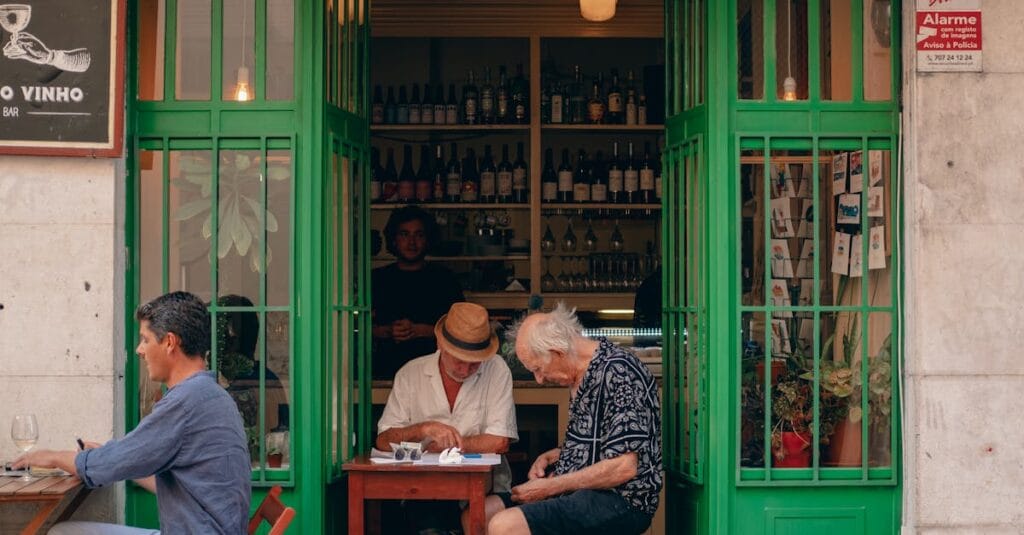
Elderly men enjoying drinks at a cozy Lisbon wine bar. Perfect street ambience.

Not about perfection

What stands out isn’t perfection.

Meals aren’t styled. Spaces aren’t curated for appearance. There’s no sense that everything needs to look a certain way.

And yet, nothing feels lacking.

Because the focus isn’t on presentation.

It’s on the experience.

The food, the time, the people, the space — all of it comes together without needing to be refined or elevated.

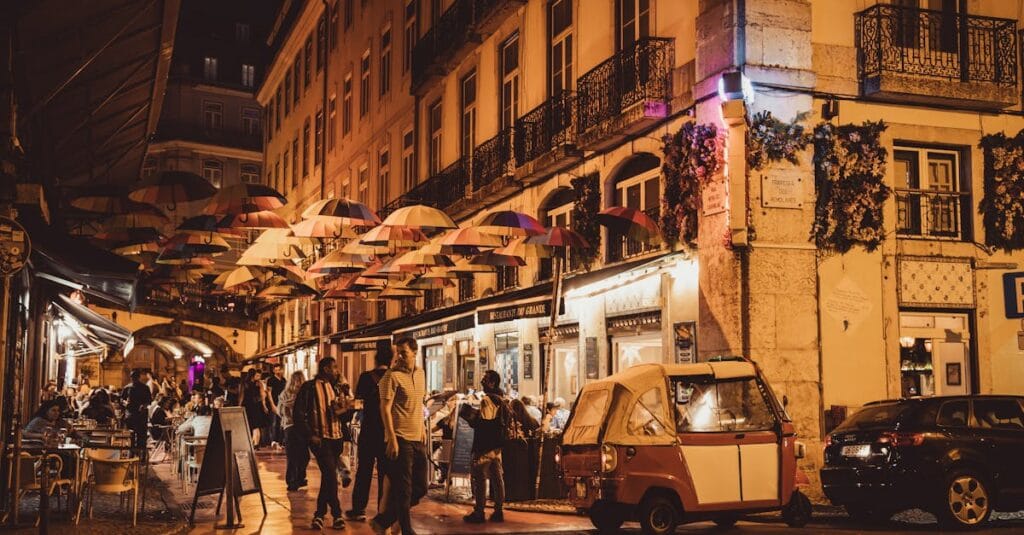
Charming street scene with umbrellas and cafes in Lisbon at night.

Evening without urgency

Dinner doesn’t feel like a conclusion.

It feels like a continuation.

The day slows again, but not in a way that suggests it’s ending.

People sit, talk, eat, and stay.

Time stretches, just like it did earlier.

There’s no clear signal to move on.

And no real reason to.

What the table reveals

At some point, the food itself becomes less of the focus.

Not because it’s unimportant.

But because it’s part of something larger.

A way of structuring the day.
A way of connecting with others.
A way of experiencing time differently.

The table becomes a place where all of this comes together.

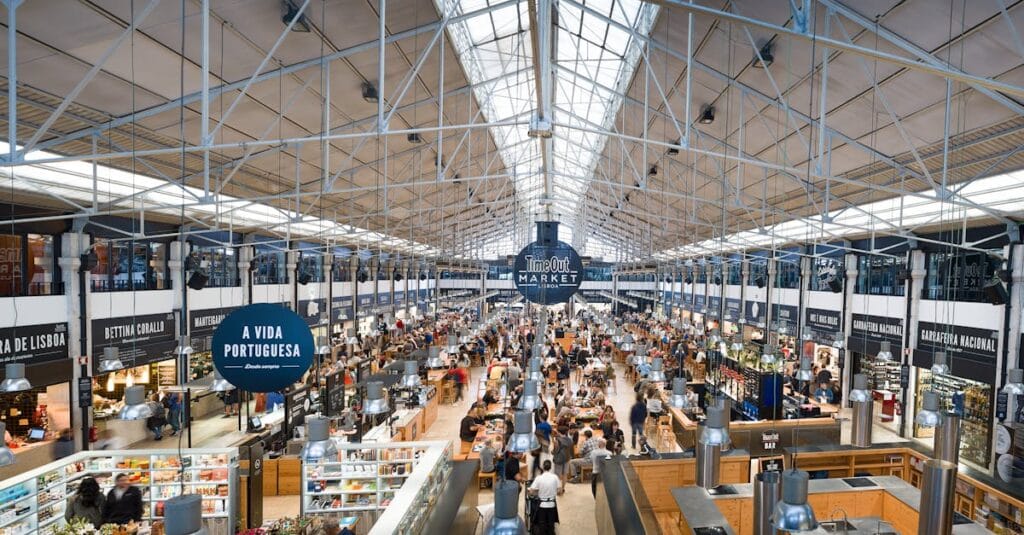
Vibrant view of Lisbon's Time Out Market featuring diverse food stalls and visitors.

What we took with us

Lisbon didn’t feel like a place defined by its food alone.

It felt like a place where food reflects something deeper.

A certain way of living.
A certain relationship with time.
A certain comfort with simplicity.

Nothing felt exaggerated.

Nothing felt rushed.

And maybe that’s what stayed with us.

Not a specific dish.
Not a specific place.

Just the feeling of sitting at a table, without urgency, and letting the moment be enough.

Read More Stories