
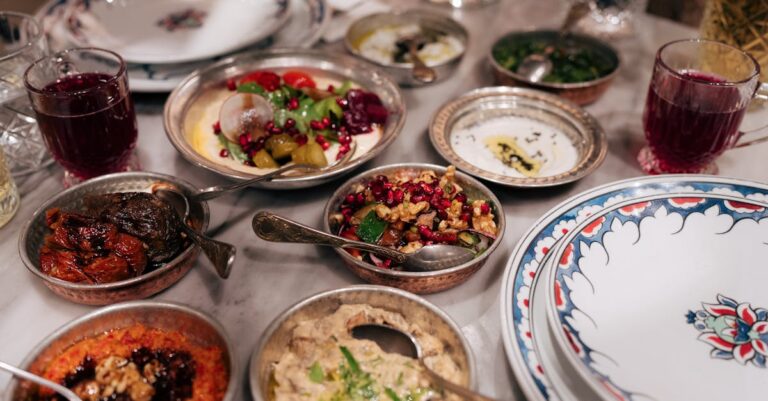
In Istanbul, food doesn’t begin with a single dish. It begins with a table....
Read More
Starting early, without a plan
There’s no real plan for the day.
Just a general idea: to move through the city slowly, stopping where it feels right, eating what looks good, and seeing what unfolds along the way.
Morning in Barcelona starts quietly.
Not empty, but softer. Streets are still waking up. Cafés open gradually. People move with purpose, but without urgency.
A small café becomes the first stop.
Coffee. Something simple — maybe a pastry, maybe toast. Nothing elaborate.
No one stays too long, but no one rushes either.
It’s just enough to begin.
The market as a starting point
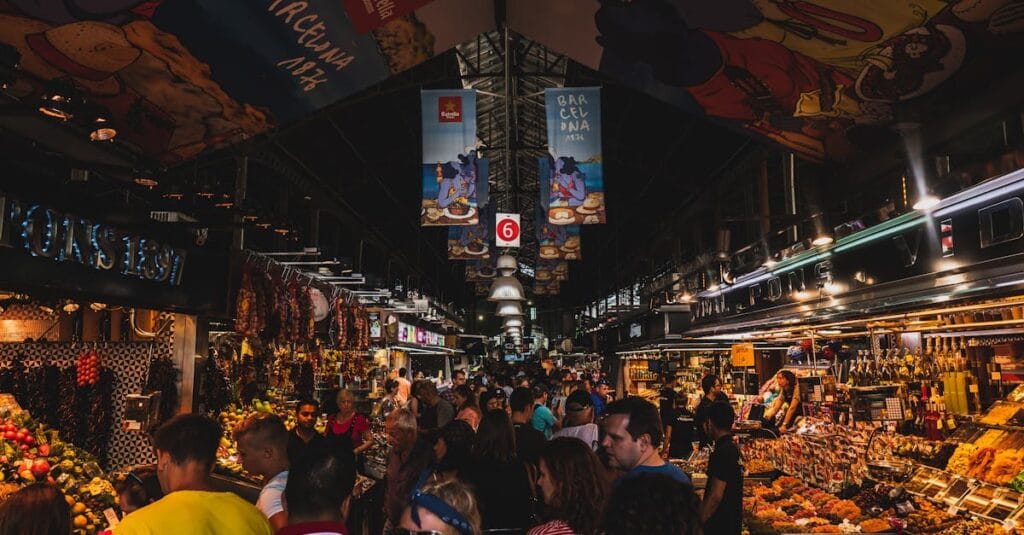
Markets feel like the center of everything.
Not in a formal sense, but in the way people move through them — with familiarity, with intention.
Stalls filled with vegetables, seafood, meats, spices. Colors that feel almost too vivid to be arranged, but somehow natural in this setting.
Some people are shopping for the day. Others are just passing through.
There’s a rhythm here too.
Short conversations. Quick decisions. Small exchanges that repeat over and over.
You don’t need to understand everything to feel it.
Eating without overthinking
By midday, the city shifts.
More people outside. More movement. More noise.
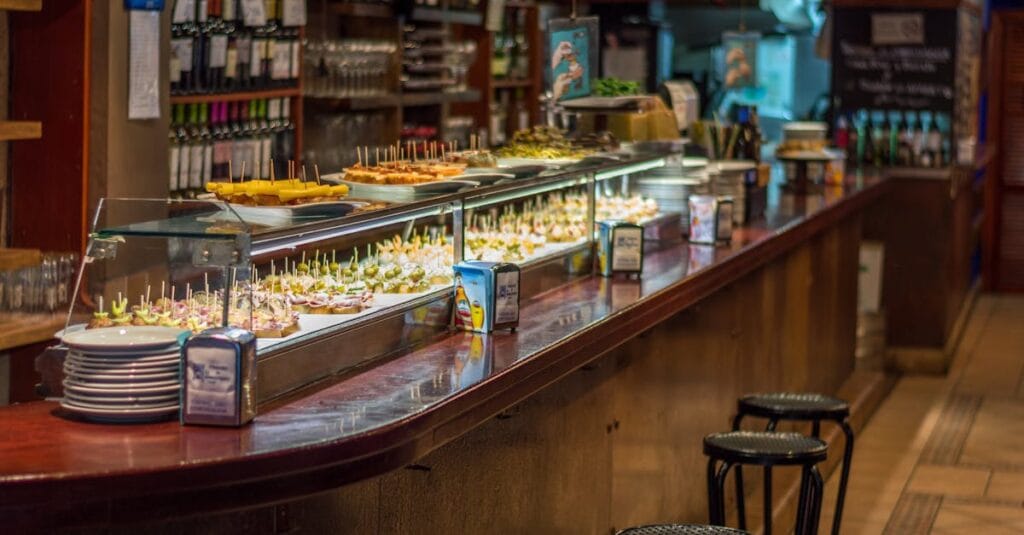
A small restaurant, not far from where you are, becomes the next stop.
No research, no planning — just a place that feels right.
A few dishes are ordered without much thought.
Something familiar. Something not.
The table fills slowly.
Small plates. Shared. Passed around without much structure.
There’s no rush to finish, no sense that the meal needs to follow a strict order.
It unfolds naturally.
Conversations that stay simple
At some point, conversation becomes part of the experience.
Sometimes it’s just a few words.
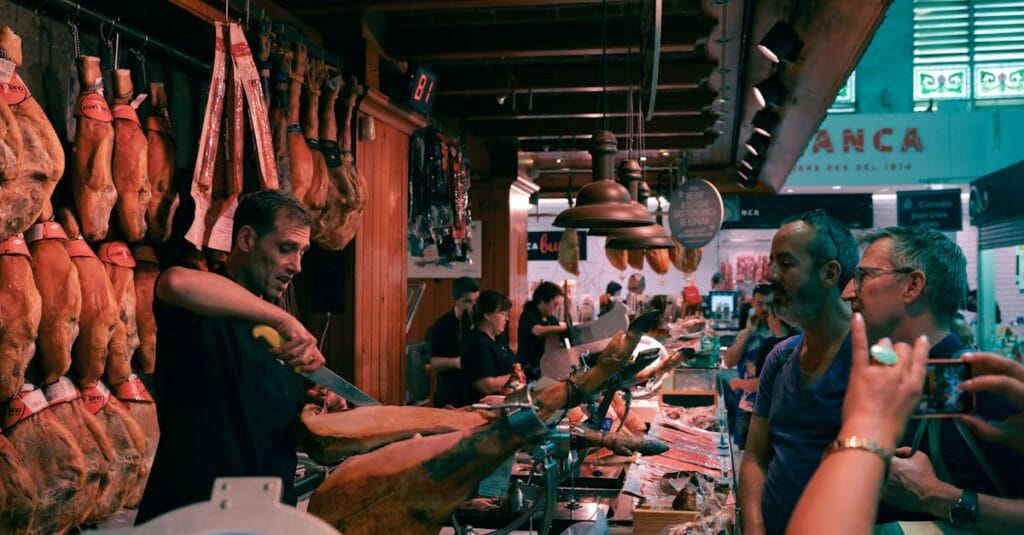
An exchange with the person serving the food. A question about a dish. A short comment that leads to something slightly longer.
Nothing deep. Nothing planned.
But enough to feel connected to the place in a different way.
You start to notice how people talk. The pace, the tone, the small gestures that accompany even simple conversations.
And slowly, the meal becomes more than just food.
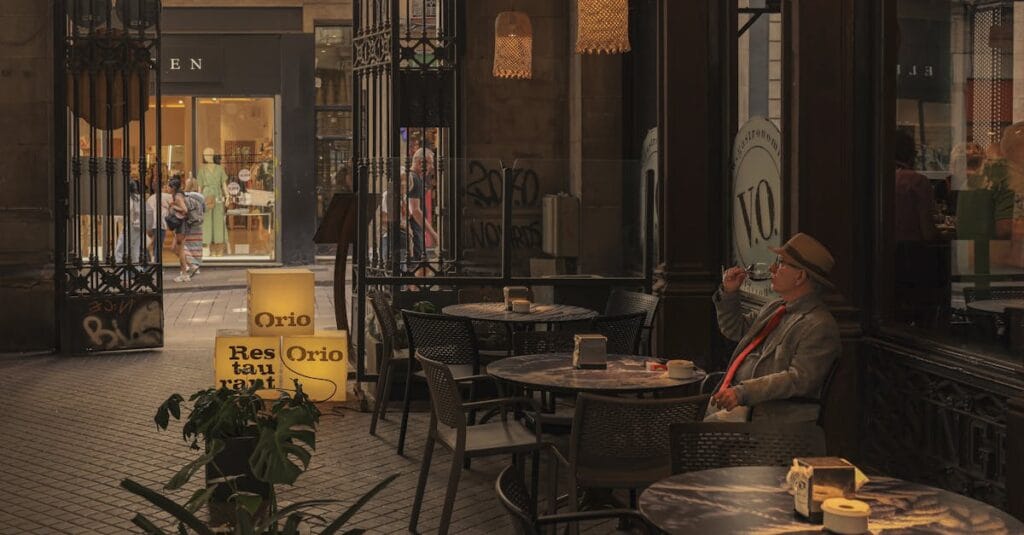
Afternoon slows everything down
After lunch, the pace shifts again.
Things slow down.
Some places close. Others remain open but quieter. The energy of the city softens, almost as if it’s taking a break.
This is where time stretches.
A drink, maybe something small again, but without urgency.
Sitting becomes the activity.
Watching, thinking, not doing much — but not feeling like you should be doing more.
Food as something shared
Evening brings everything back.
More people. More movement. More sound.
Dinner feels different from lunch.
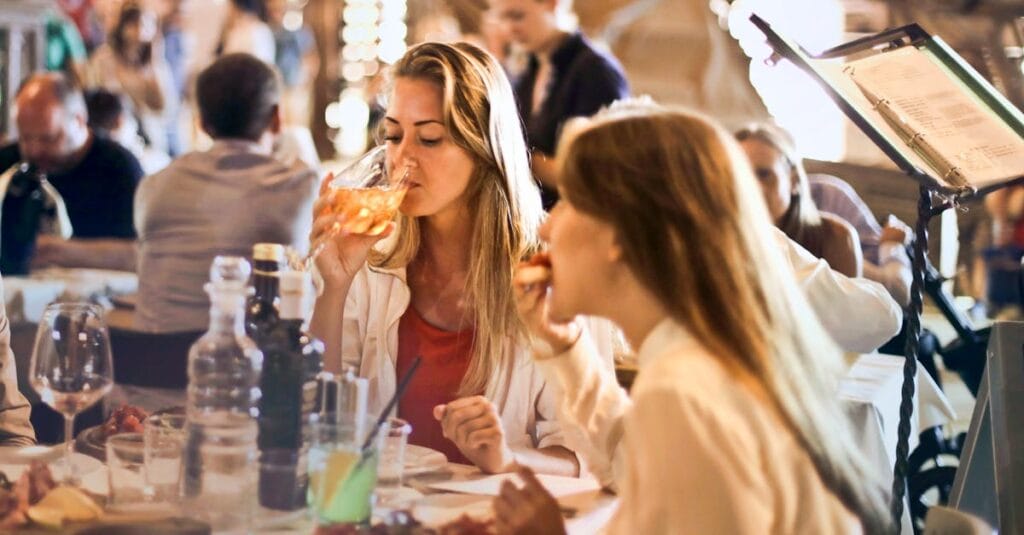
It’s slower, but also more social. Tables fill with groups. Food arrives in waves. Conversations overlap.
Nothing feels isolated.
Everything is shared.
Plates move from one person to another. Opinions are exchanged. Laughter rises and fades.
The meal becomes something collective.

The role of simplicity
What stands out, more than anything, is how simple most of the food is.
Bread. Tomatoes. Olive oil. Seafood. A few ingredients combined in ways that don’t feel complicated.
And yet, nothing feels lacking.
Because the focus isn’t on complexity.
It’s on quality. On familiarity. On doing simple things well, again and again.
Not about finding the “best” place
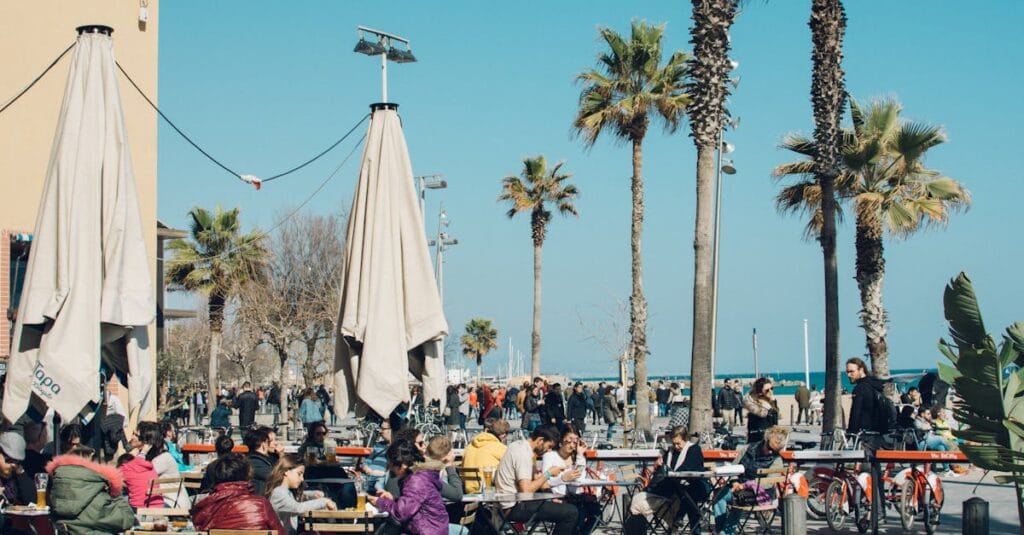
At some point, you realize that the day isn’t about finding the “best” food.
There’s no ranking, no comparison, no checklist.
It’s about moving through the city and letting the experience happen.
One place leads to another.
One meal leads to the next.
And what matters isn’t whether something is exceptional.
It’s whether it feels real.
Ending without a clear ending
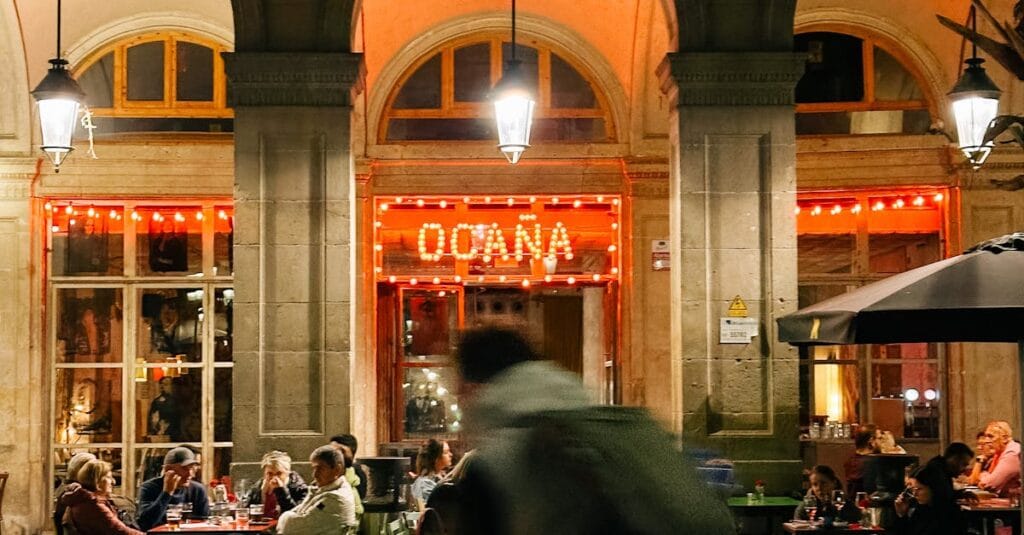
The day doesn’t end in a defined way.
There’s no final stop that feels like a conclusion.
Just a gradual slowing down.
A last drink. A quiet walk. The city still moving, but differently now.
And somewhere in that, the realization that the experience wasn’t about the food alone.
What we took with us
Barcelona didn’t feel like a place where food is something separate from life.
It felt like part of it.
Something that connects people. Structures the day. Creates moments that don’t need to be planned to be meaningful.
We didn’t find the “best” meal.
We just spent a day eating, moving, talking, and paying attention.
And somehow, that felt like enough.
Read More Stories
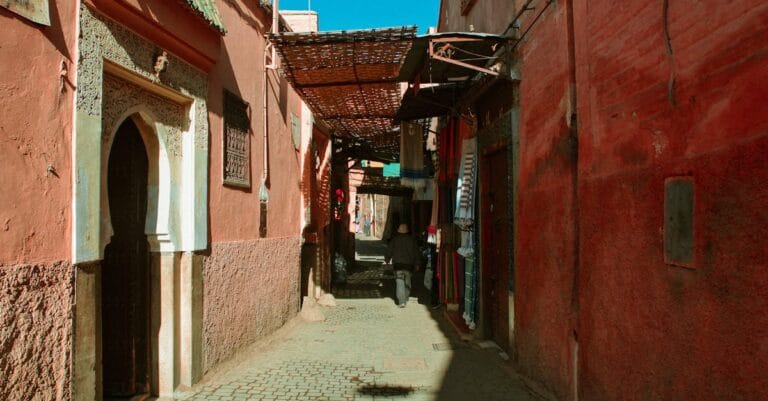
Inside the Medina: Navigating Morocco’s Living Labyrinth
Streets curve, split, reconnect. Corners appear unexpectedly. Pathways narrow to the point where two...
Read More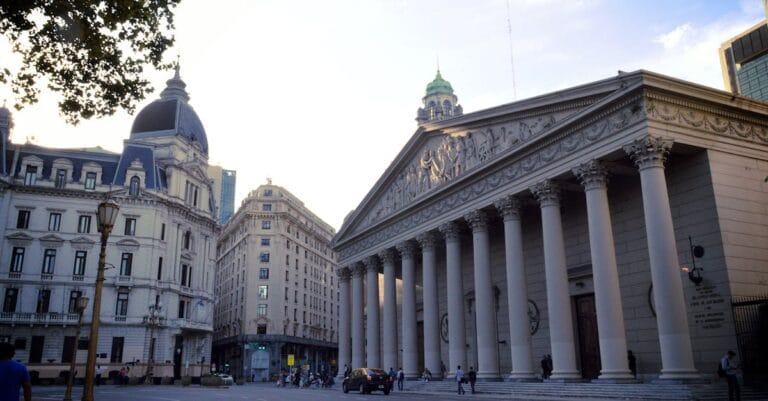
Buenos Aires: Between European and Local Influence
Wide avenues. Elegant façades. Balconies with iron details. Buildings that resemble something you might...
Read More