

In Istanbul, food doesn’t begin with a single dish. It begins with...
Read More
The Layers of Mexico City: Where History Meets Everyday Life
- Mexico
- Architecture
- Culture
- January 9, 2026
A city that doesn’t unfold all at once
Mexico City doesn’t reveal itself immediately.
It’s not a place you understand from a single viewpoint, or even from a single day.
It feels dense.
Not just in size or population, but in everything it carries — history, movement, sound, color, layers that don’t separate cleanly from one another.
You arrive, and at first it feels overwhelming.
Then, slowly, pieces begin to connect.
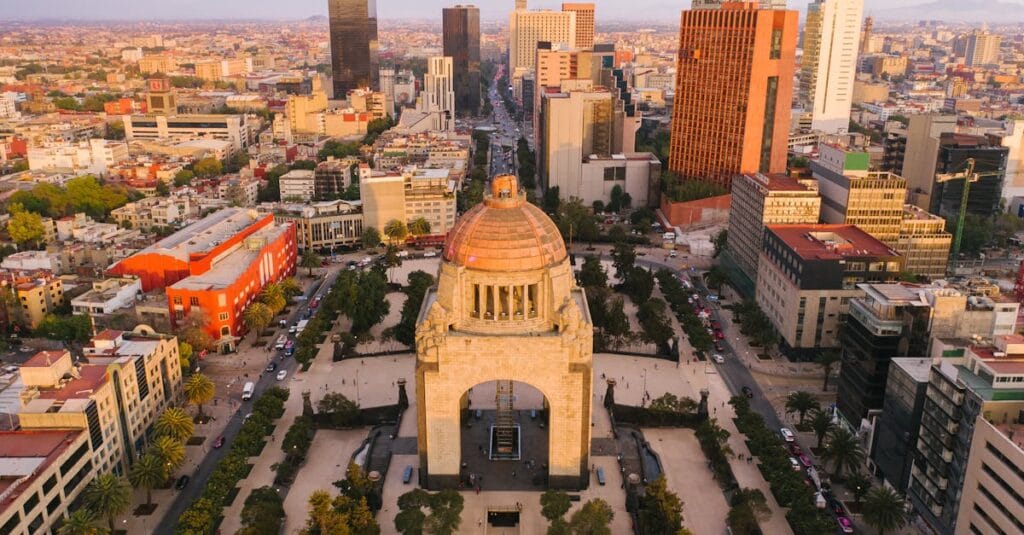
Built on top of itself
In Mexico City, history isn’t hidden.
It’s visible — sometimes literally beneath your feet.
Ancient ruins appear next to colonial buildings. Structures from different periods stand side by side, not always blending, but always present.
The Templo Mayor sits close to the Metropolitan Cathedral, both occupying the same space in different ways, representing different moments in time.
The city wasn’t built in phases that replaced each other.
It was built in layers.
And those layers remain.
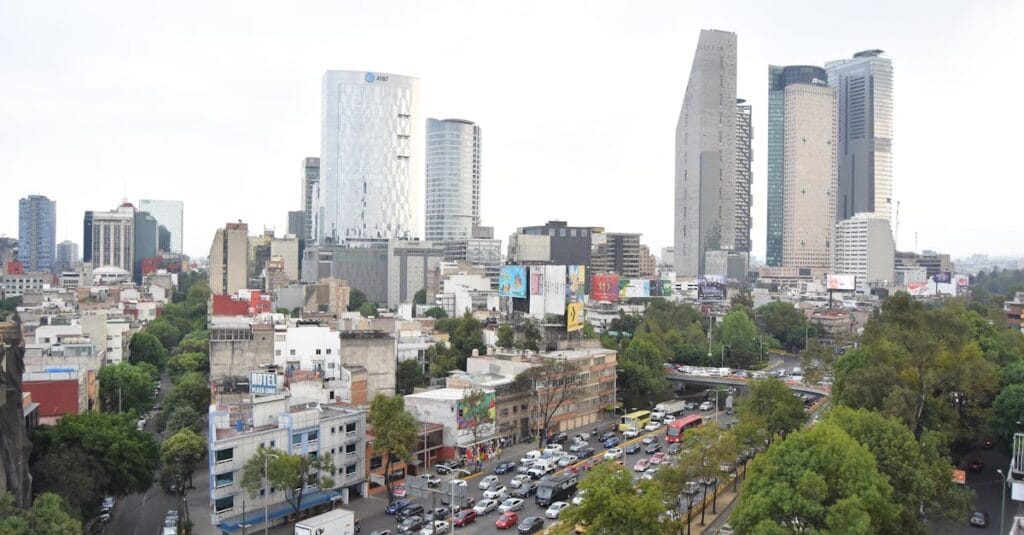
Architecture that reflects change
As you move through the city, architecture changes constantly.
One street might feel structured and formal. The next feels more spontaneous.
Modern buildings rise next to older ones. Colors shift. Materials change.
There’s no single style that defines the city.
Instead, there’s a constant transition.
And that transition reflects something deeper.
A city that continues to grow, adapt, and redefine itself without fully letting go of what came before.
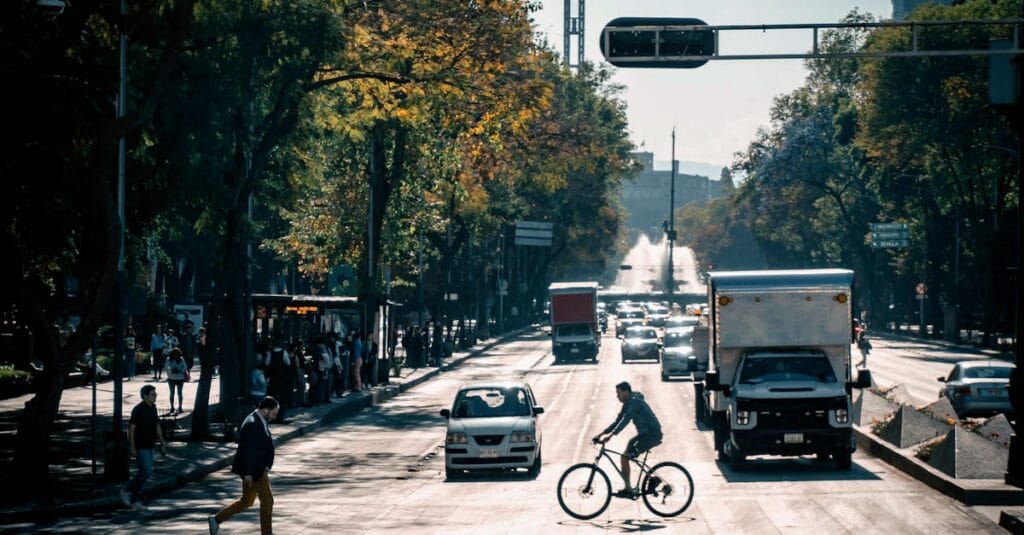
Streets that never feel still
Movement in Mexico City is constant.
People walking. Cars passing. Vendors setting up stalls. Conversations happening everywhere at once.
There’s a rhythm, but it’s not slow or predictable.
It’s dynamic.
Sometimes chaotic.
But within that, there’s a kind of order — one that you start to recognize after spending time in it.
The city doesn’t pause.
It continues.
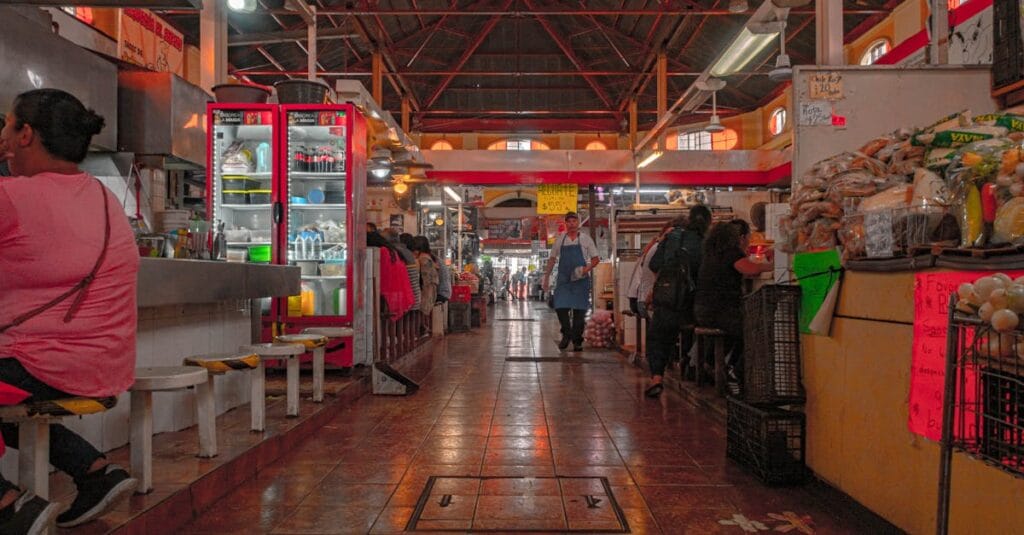
Markets and public spaces
Markets feel like a central part of the city’s life.
Not just places to buy things, but places where people gather, interact, and move through shared spaces.
Colors, sounds, textures — everything feels present at once.
You don’t just pass through.
You experience it.
And even if you don’t understand everything, you feel connected to the rhythm of what’s happening.
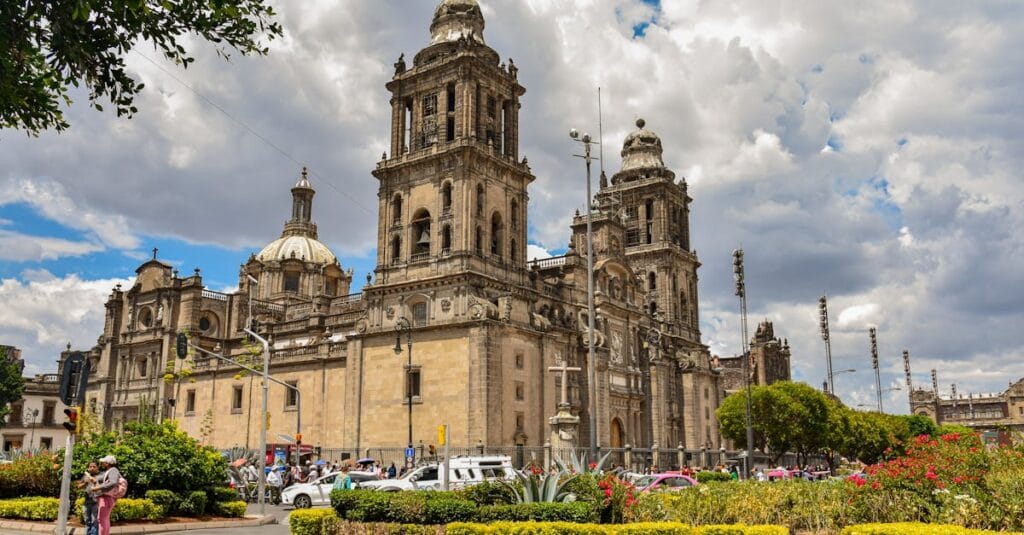
Everyday life within historical spaces
One of the most striking things is how everyday life continues within spaces that carry so much history.
People don’t stop to reflect on it constantly.
They move through it.
A street that has existed for centuries becomes part of someone’s daily route. A historic building becomes just another part of the background.
And that changes how the city feels.
History isn’t something separate.
It’s part of the present.
Highways connect everything.
But they also create their own environment.
Cars move at similar speeds. Trucks carry goods across long distances. People travel for different reasons, but share the same space for a while.
There’s a sense of coexistence.
You don’t know where others are going.
They don’t know where you’re coming from.
But for a moment, you’re all part of the same movement.
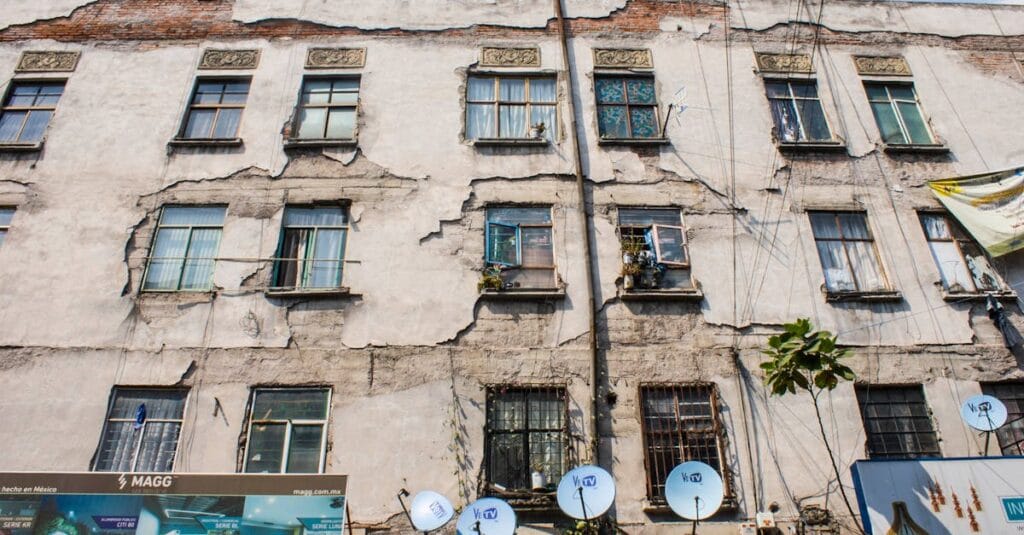
Contrast as a defining feature
Mexico City is full of contrasts.
Between old and new.
Between structured and informal.
Between different ways of living that exist side by side.
These contrasts don’t always resolve.
They remain visible.
And they shape the way you experience the city.
Not as something uniform.
But as something complex.
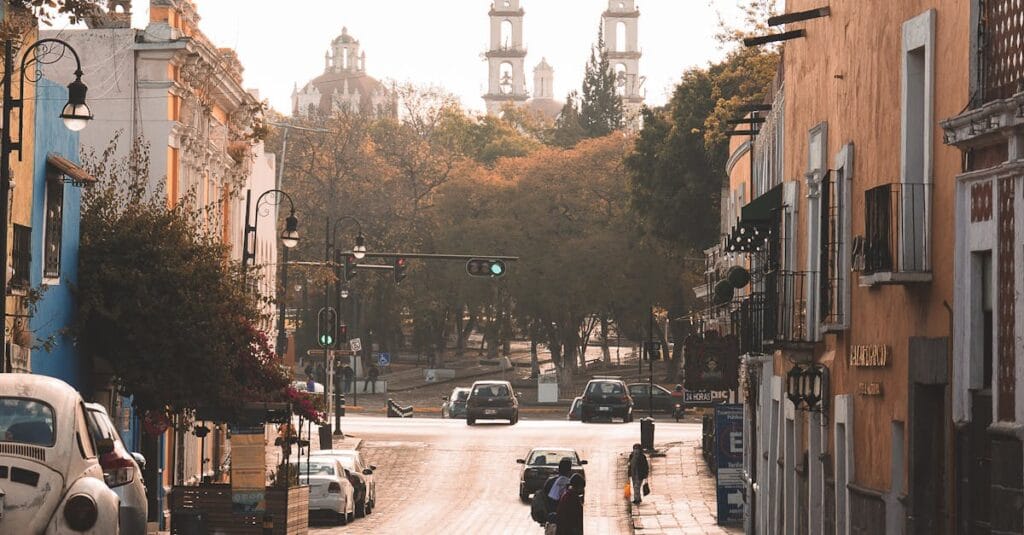
A city that demands attention
Mexico City isn’t passive.
It demands attention.
Through color. Through sound. Through movement.
You don’t just observe it.
You’re part of it — whether you want to be or not.
And that intensity becomes part of the experience.
Not everything needs to be understood
At some point, you stop trying to fully understand the city.
Because it doesn’t fully resolve.
It doesn’t simplify itself into something easy to define.
And maybe that’s part of its identity.
It exists in layers that don’t always align.
And that’s what makes it what it is.
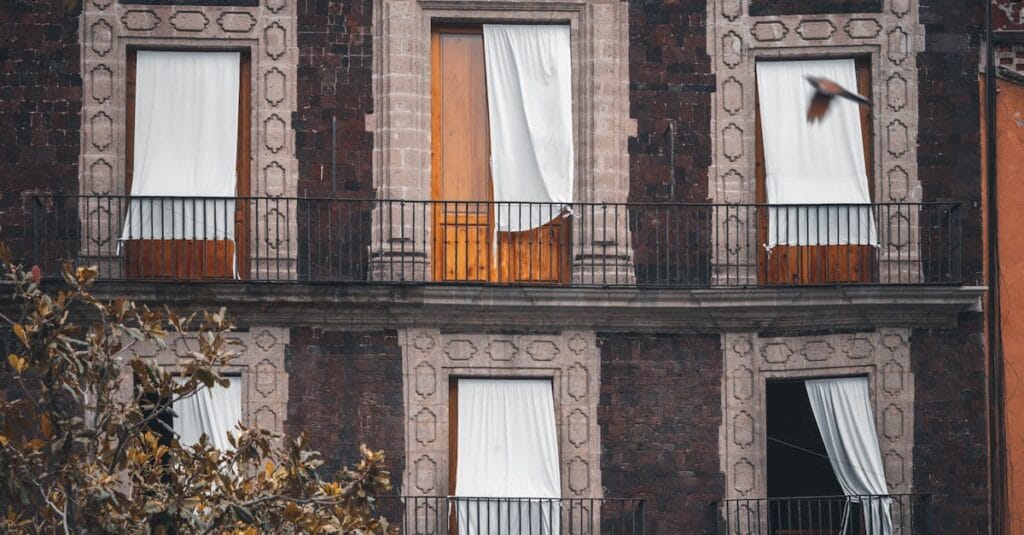
What we took with us
Mexico City isn’t a place you can reduce to one idea.
It’s built on history, shaped by change, and defined by the way those elements continue to exist together.
Nothing fully replaces what came before.
It adds to it.
Layer by layer.
And over time, you stop trying to separate those layers.
You start to experience them all at once.
Read More Stories

What Roman Food Is Really About: Beyond Pizza and Pasta
Pasta. Pizza. Maybe a few familiar names — carbonara, cacio e pepe,...
Read More
Cairo Beyond the Pyramids: Daily Life, Chaos, and Rhythm
Cairo isn’t defined by its landmarks. It’s defined by its movement. By...
Read More