Wine, Bread, and Conversations: Sitting Down in Tbilisi

It starts with sitting down

In Tbilisi, food doesn’t begin with a menu.

It begins with sitting down.

A table is set. Bread appears first, almost automatically. Wine is poured without much discussion. Plates arrive one after another, sometimes faster than you can keep track of.

There’s no clear structure at the beginning.

Just a sense that once you’re at the table, everything else will follow.

And it does.

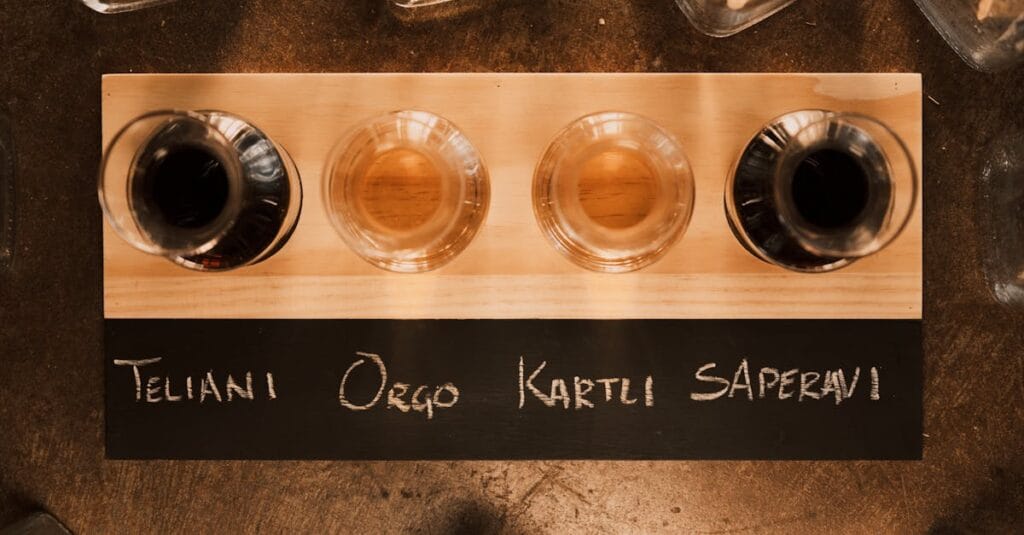
A wine flight featuring four Georgian wines on a wooden board in a restaurant setting.

Wine as something shared

Wine in Georgia isn’t just a drink.

It’s part of how people connect.

You see it immediately — not just in how often it appears, but in how it’s treated. It’s poured generously. Shared continuously. Rarely measured.

There’s history behind it, of course.

Georgia is often described as one of the oldest wine-producing regions in the world. The use of qvevri — clay vessels buried underground — is something you hear about early on.

But at the table, that history becomes something simpler.

It becomes part of the moment.

A glass is filled. Then another. Then another.

Not with urgency, but with consistency.

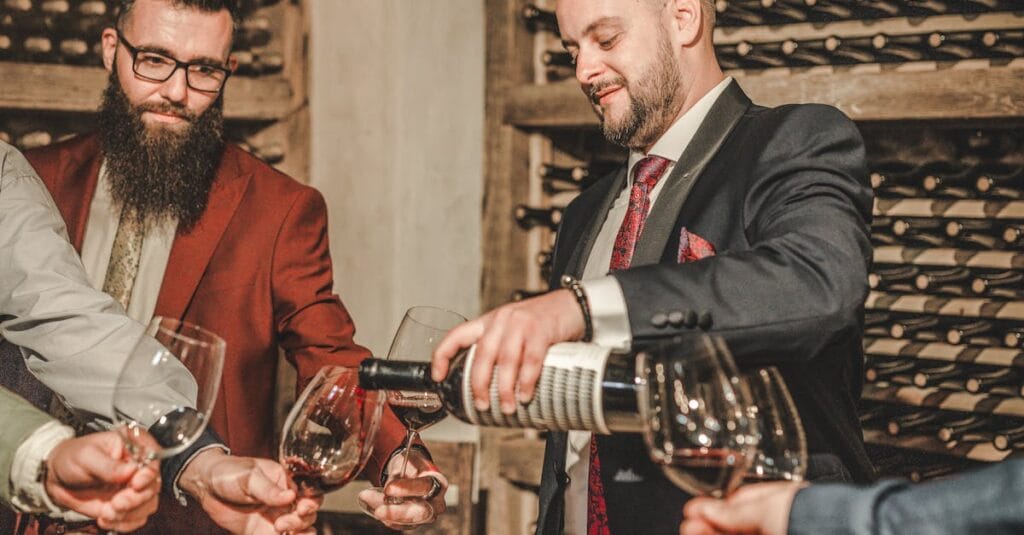
Two men in suits share wine at a stylish cellar gathering.

The role of the tamada

At some tables, especially in more traditional settings, there’s someone guiding the rhythm.

The tamada.

Not in a formal, rigid way, but in a way that shapes the flow of the gathering.

Toasts are made — not quickly, not casually, but with intention.

Each one has meaning.

To life.
To friendship.
To those who are present.
To those who aren’t.

And after each toast, everyone drinks.

Not because they have to.

But because that’s part of how the moment is shared.

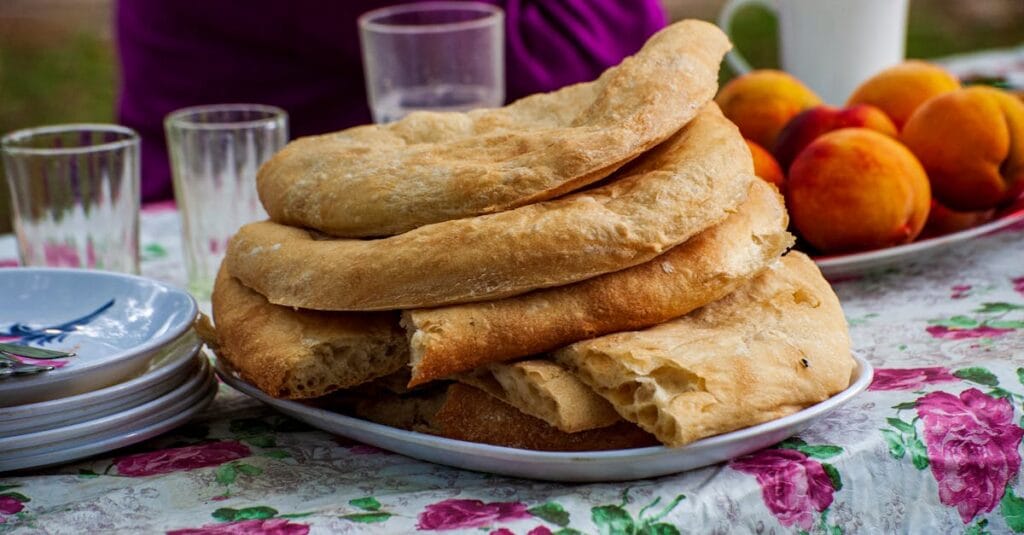
Platter of traditional Georgian bread with fresh peaches on a floral tablecloth, perfect for outdoor dining.

Bread as something constant

Bread is always there.

It doesn’t arrive as a highlight.

It’s just… present.

Warm, slightly crisp, often torn and passed around without much attention.

You don’t order it.

You don’t think about it.

But it becomes part of everything else.

It fills spaces between dishes, between conversations, between moments.

And over time, you realize how essential it is.

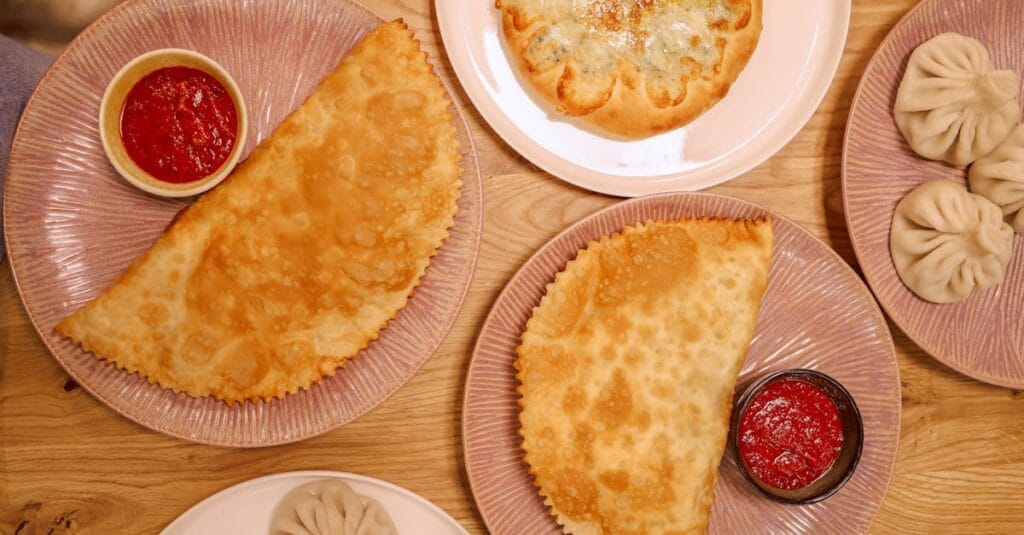
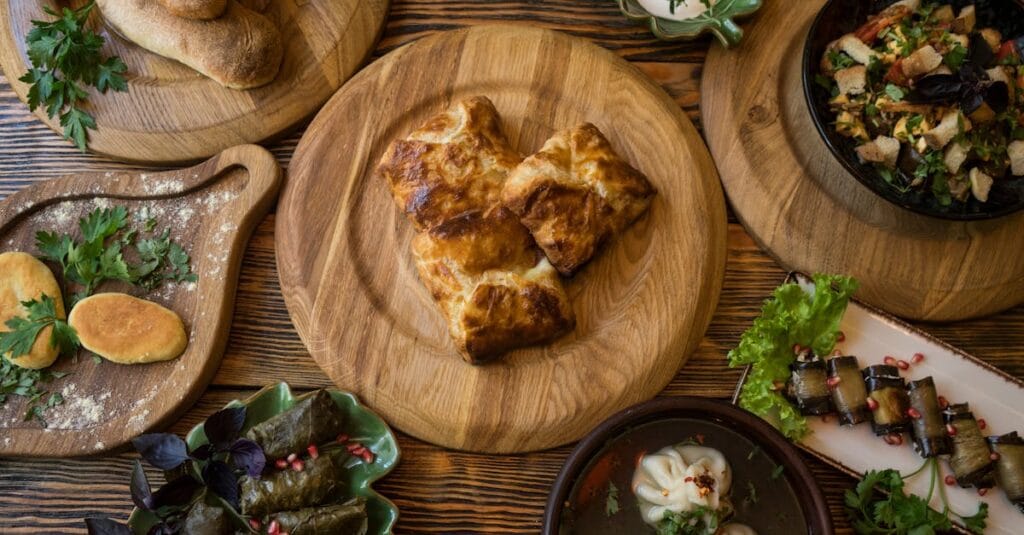
Flat lay featuring khinkali, fried pastry, and cheese bread with dips.

Food that brings people together

The dishes themselves are made for sharing.

Khachapuri, filled with cheese, placed in the center of the table.
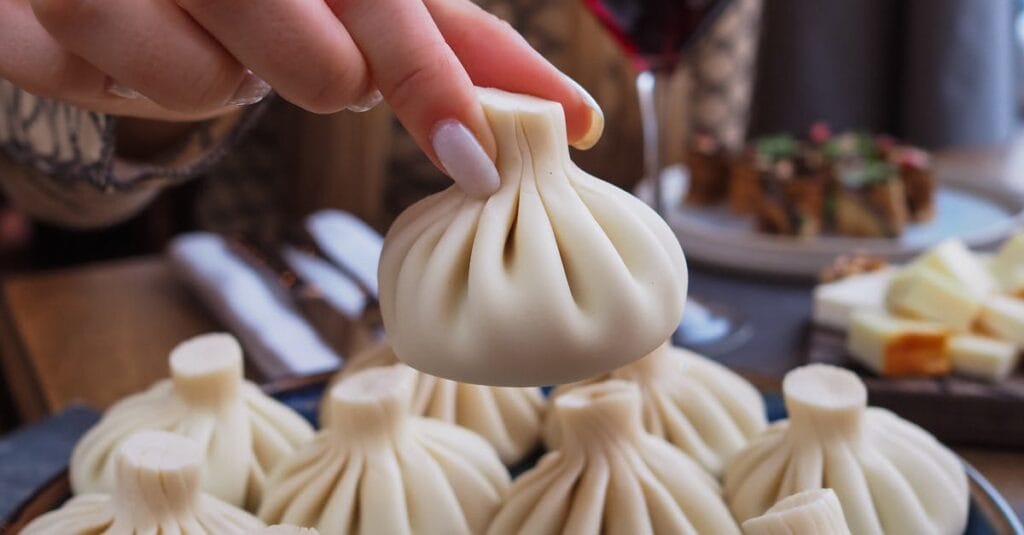
Khinkali, eaten by hand, passed from one person to another.
Plates that aren’t meant to belong to anyone individually.

Everything encourages interaction.

You reach across the table. You offer food. You try something new without fully knowing what it is.

There’s no strict order.

No separation between “mine” and “yours.”

Just a table that belongs to everyone sitting around it.

Close-up of a woman picking khinkali dumplings with a glass of red wine on the table.

Conversations that unfold slowly

At some point, the food becomes secondary.

Not because it’s unimportant, but because something else takes over.

Conversation.

It doesn’t follow a clear direction.

It moves from one topic to another, sometimes returning to the same idea, sometimes drifting somewhere completely different.

There are pauses. Moments of silence that don’t feel empty.

Laughter that comes unexpectedly.

Stories that take time to unfold.

And through it all, the table remains constant.

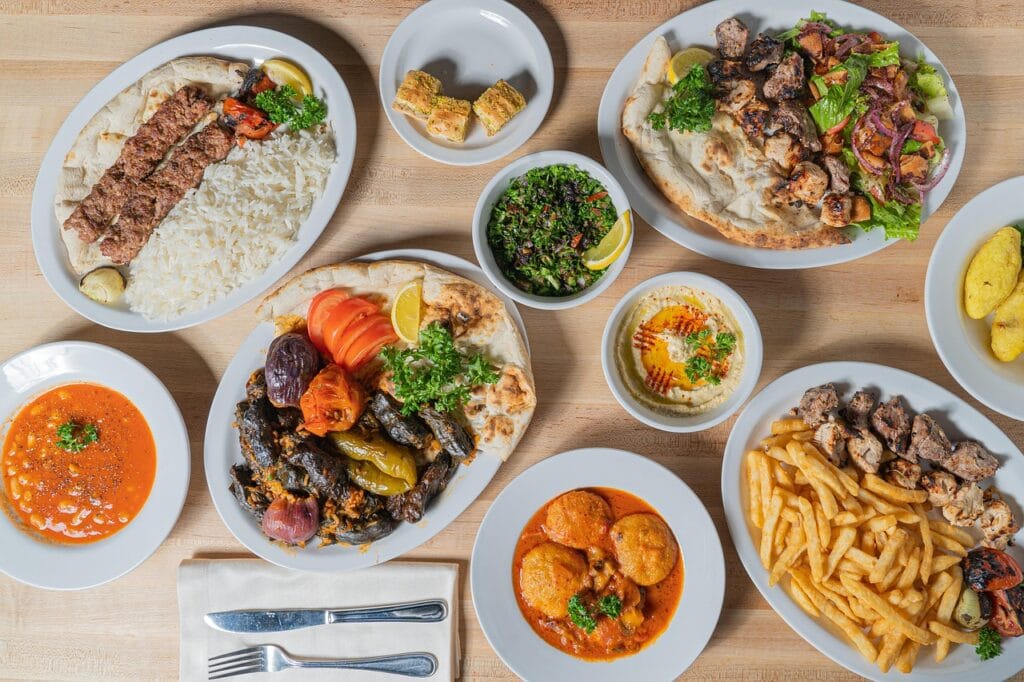
middle eastern food, kebab, turkish cuisine, flat lay, georgian cuisine, azerbaijani cuisine, kurdish cuisine, palestinian cuisine, kebab, kebab, kebab, kebab, kebab, turkish cuisine, turkish cuisine

Hospitality that feels natural

One of the most noticeable things is how natural hospitality feels.

You’re offered more food than you expected. More wine than you planned to drink. More time than you thought you would spend.

But it doesn’t feel excessive.

It feels genuine.

There’s no sense that it’s being done to impress.

It’s just how things are.

You’re there, so you’re included.

A variety of traditional Georgian dishes displayed on a wooden table with fresh herbs.

Time stretches without pressure

Meals don’t end quickly.

There’s no moment where everything stops.

People stay. Plates remain on the table. Wine continues to be poured.

Time stretches.

Not in a way that feels long, but in a way that feels open.

You’re not watching the clock.

You’re just there.

Savor the traditional Georgian khachapuri with an egg, served on a wooden plate, offering a taste of authentic Tbilisi cuisine.

Not about perfection

Nothing feels overly polished.

Tables aren’t styled. Dishes aren’t arranged for appearance. Spaces feel real, sometimes imperfect.

But none of that takes away from the experience.

If anything, it adds to it.

Because the focus isn’t on how things look.

It’s on how they feel.

What the table reveals

At some point, you realize that the table is more than just a place to eat.

It’s where everything comes together.

Food, conversation, tradition, time.

It reflects how people relate to each other. How they share space. How they experience moments together.

And that’s something you don’t fully understand at the beginning.

But you start to feel it as the evening unfolds.

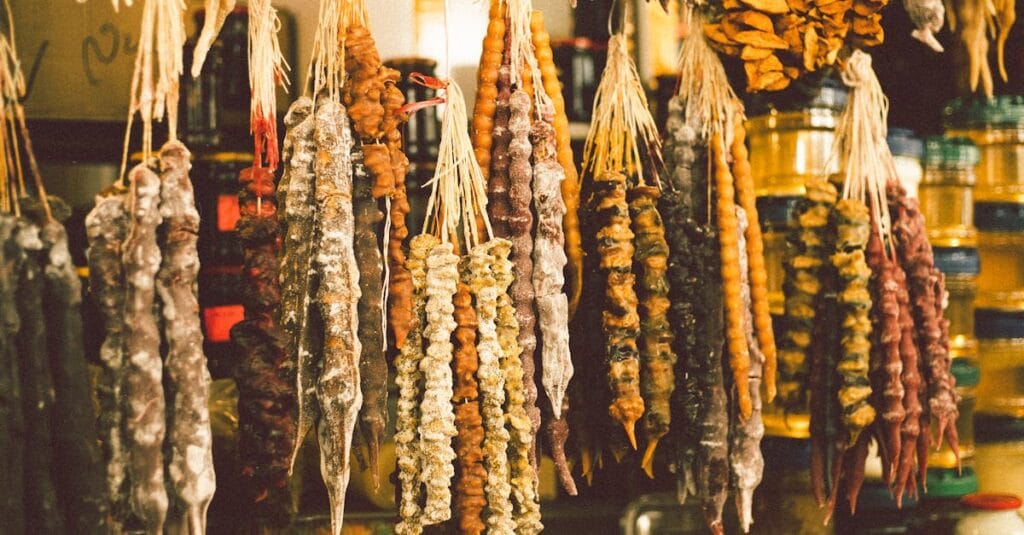
Close-up of colorful traditional Georgian churchkhela sweets hanging in a market.

What we took with us

We didn’t leave thinking about a specific dish.

Or even a specific place.

We left thinking about the experience of sitting at that table.

About how food can create space — for conversation, for connection, for time to unfold without pressure.

About how something as simple as wine and bread can become part of something much larger.

And maybe that’s what stayed with us.

Not what we ate.

But how it felt to be there.

Read More Stories