
Whether it’s a short exchange at a café or a longer conversation that...
Read More
Buenos Aires Through Its Streets: Between European Influence and Local Identity
- Argentina
- Architecture
- Culture
- March 4, 2026
A city that feels familiar — at first
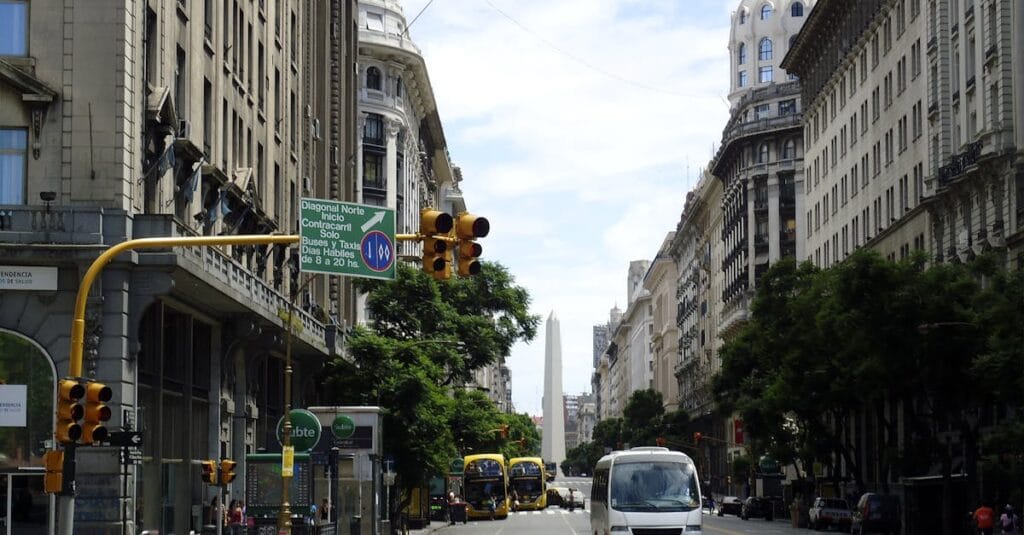
Walking through Buenos Aires for the first time can feel unexpectedly familiar.
Wide avenues. Elegant façades. Balconies with iron details. Buildings that resemble something you might expect to find in Paris or Madrid.
For a moment, it almost feels like a European city.
But that impression doesn’t last in a simple way.
Because the longer you walk, the more you notice that this familiarity is only part of the story.
Influence without imitation
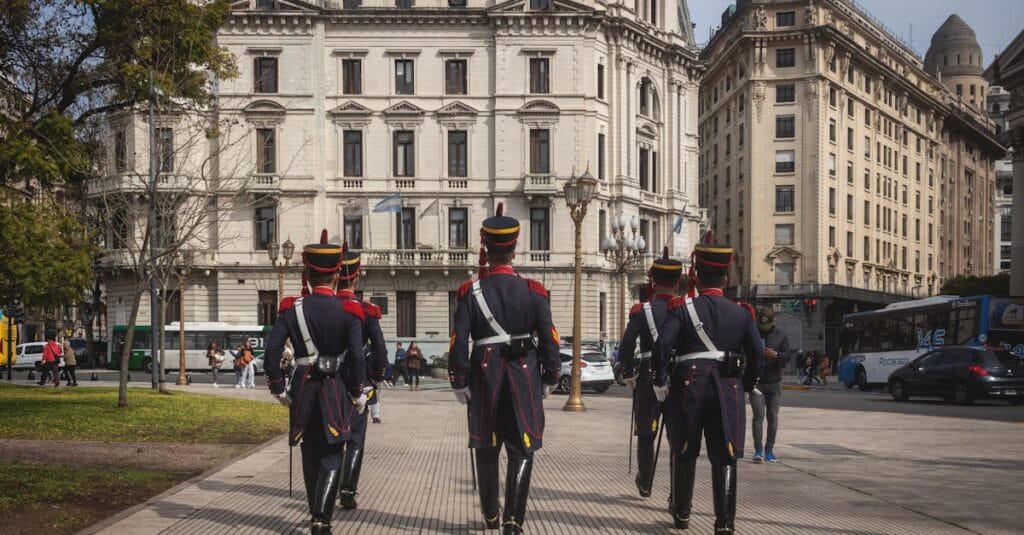
The European influence is clear.
It shows in the structure of the city, in the design of buildings, in the way certain areas feel organized and intentional.
But it doesn’t feel like imitation.
It feels like adaptation.
These influences arrived through history — through migration, through cultural exchange, through the desire to build something that reflected a certain idea of modernity.
And over time, they became part of something else.
Something local.
Streets that change character
Buenos Aires doesn’t feel consistent in the way some cities do.
It changes from one neighborhood to another.
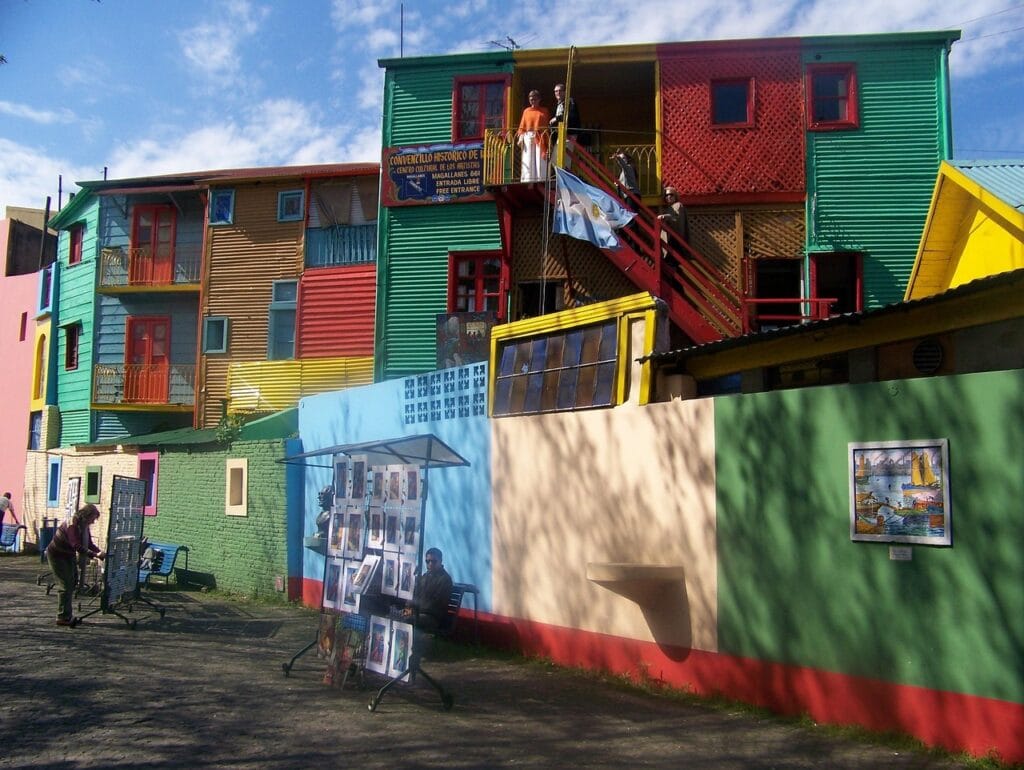
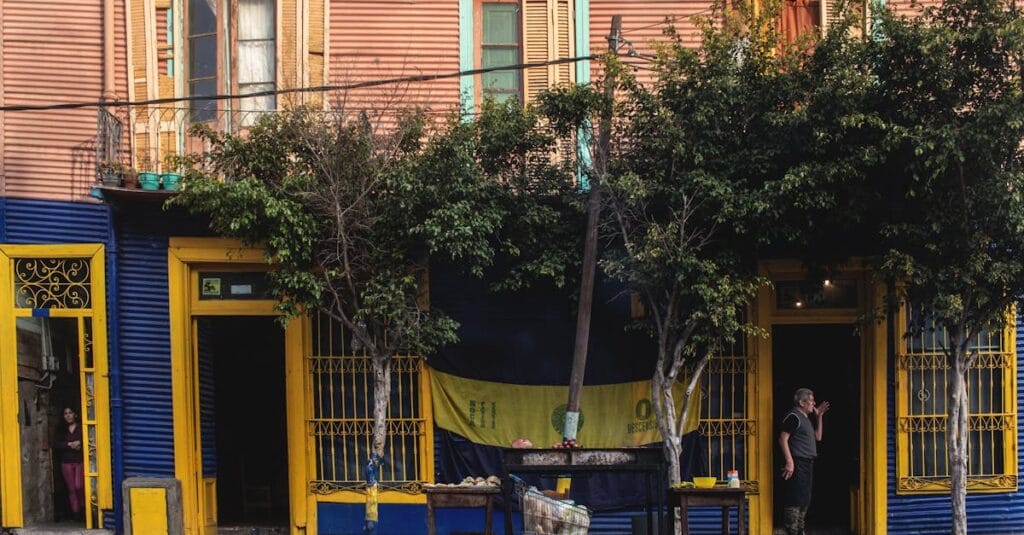
La Boca feels colorful, expressive, almost theatrical.
San Telmo carries a sense of age, with cobblestone streets and older structures.
Palermo feels more contemporary, shaped by cafés, shops, and newer spaces.
Each area has its own identity.
And moving between them feels like moving between different versions of the same city.
Architecture shaped by history and movement
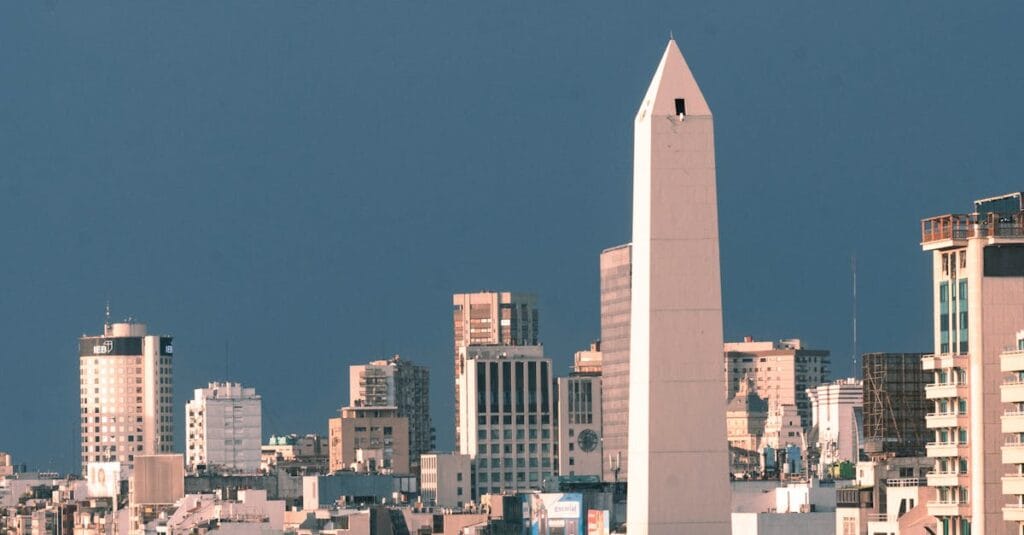
Like many cities shaped by migration, Buenos Aires reflects movement.
People arrived, brought their ideas, their styles, their ways of building — and left traces that are still visible today.
But those traces didn’t remain untouched.
They were adapted, worn, reshaped by time and use.
Buildings show this clearly.
Some are carefully maintained. Others carry marks of age. Many exist somewhere in between.
And together, they create a city that feels layered rather than uniform.
The role of the street in daily life
What makes the streets feel alive isn’t just the architecture.
It’s the people.
Sidewalk cafés spill into public space. Conversations happen outside shops. People walk, pause, interact, and continue.
The street becomes more than a place of movement.
It becomes a place of interaction.
A space where daily life unfolds in visible ways.
A balance between structure and spontaneity
There’s a contrast between structure and spontaneity.
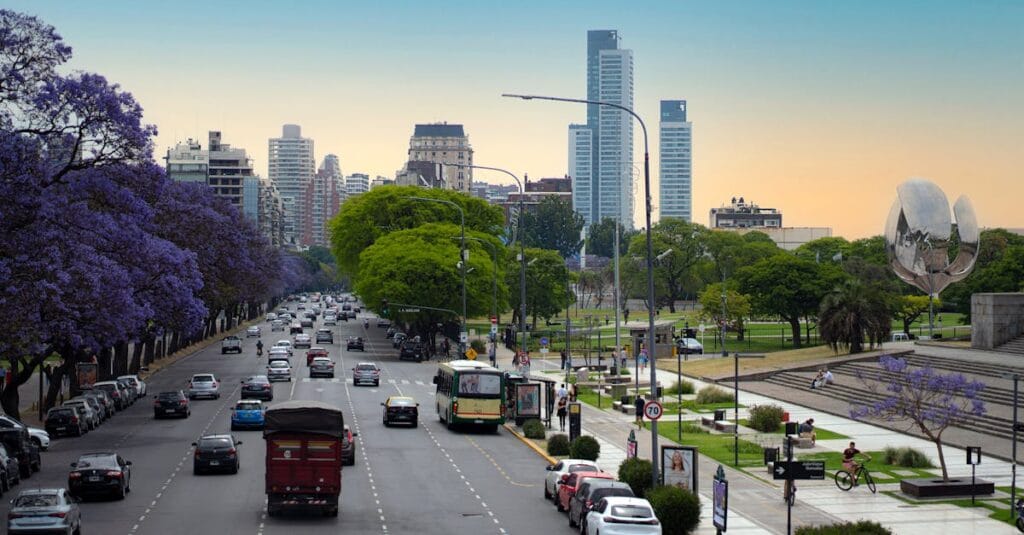
Some parts of the city feel organized, almost formal — wide avenues, clear lines, a sense of order.
Others feel more fluid.
Smaller streets, unexpected details, moments that don’t follow any obvious pattern.
And both exist at the same time.
You move between them without thinking about it.
Imperfection as part of identity
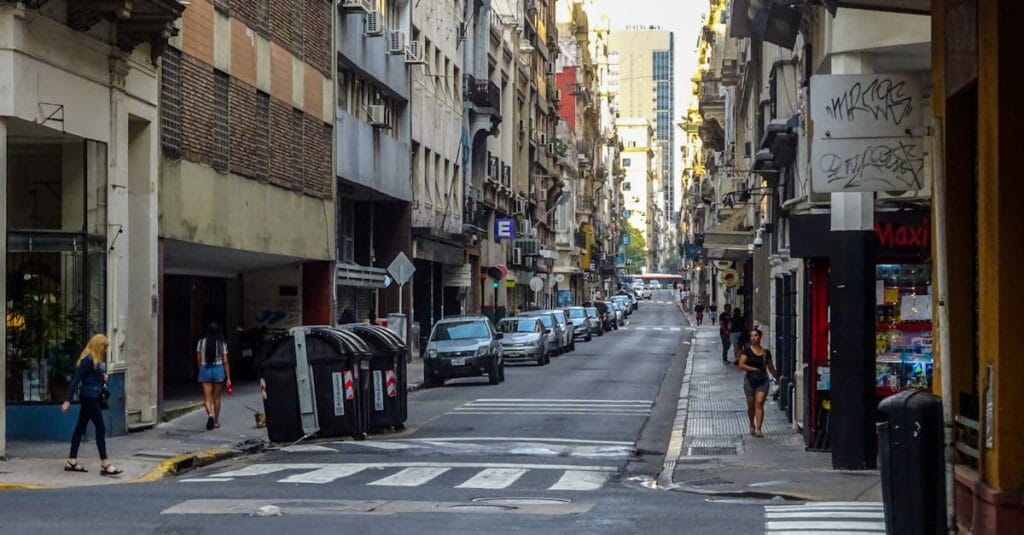
Buenos Aires isn’t polished.
There’s graffiti, worn surfaces, buildings that feel unfinished or aging in visible ways.
But that doesn’t take away from the city.
It adds to it.
It creates a sense that the city isn’t trying to present itself in a perfect way.
It’s simply existing.
And that makes it feel more real.
A city that doesn’t resolve into one idea
By the end of it, Buenos Aires doesn’t settle into a single identity.
It’s not fully European.
Not fully something else.
It exists somewhere in between.
And that in-between quality is what defines it.
What we took with us
Buenos Aires isn’t a city you understand through a single perspective.
It’s a city shaped by influence, by movement, by layers that don’t fully merge.
European architecture is part of it.
But so is everything that has happened since.
And what remains is something more complex.
Not a copy.
Not a contrast.
Just a city that has become itself over time.
Read More Stories

What Roman Food Is Really About: Beyond Pizza and Pasta
Pasta. Pizza. Maybe a few familiar names — carbonara, cacio e pepe, amatriciana....
Read More
Eating in Barcelona: Markets, Meals, and Conversations
Just a general idea: to move through the city slowly, stopping where it...
Read More