
There are crowds, constant movement, layers of activity — but everything seems...
Read More
Inside Parisian Streets: Where Architecture Meets Everyday Life
- France
- Architecture
- People
- January 16, 2026
Walking without a destination
Some of the most interesting parts of Paris don’t appear on any list.
They’re not landmarks. They’re not destinations. You don’t arrive at them with a sense of having reached something important.
You just… walk into them.
A turn away from a busy boulevard. A quieter street. Fewer people. No obvious reason to stop — and yet, something changes.
The pace slows down. The noise fades slightly. The city feels less like a place you’re visiting and more like a place where people actually live.
And that’s where things start to become interesting.
Buildings that aren’t just background
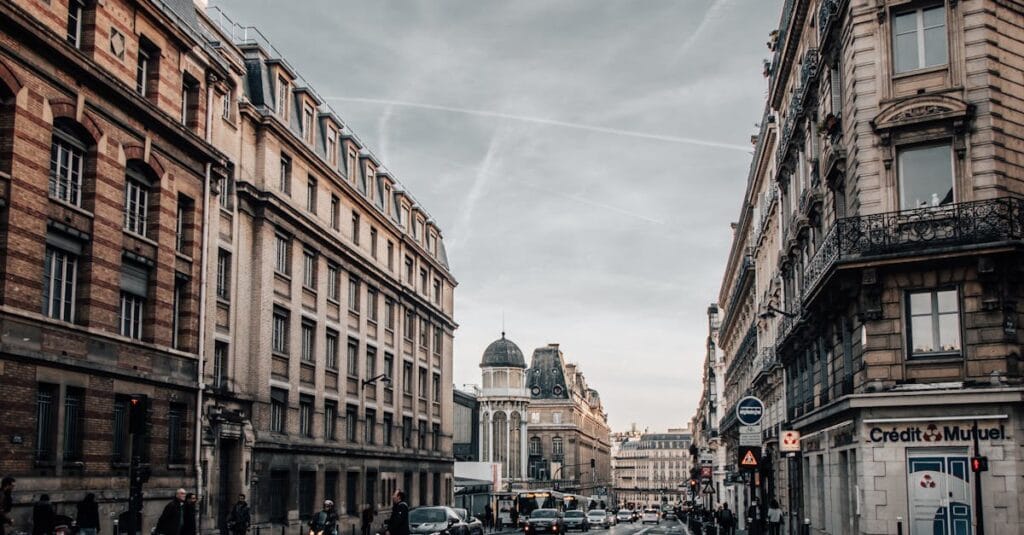
At first, Parisian architecture can feel almost too perfect.
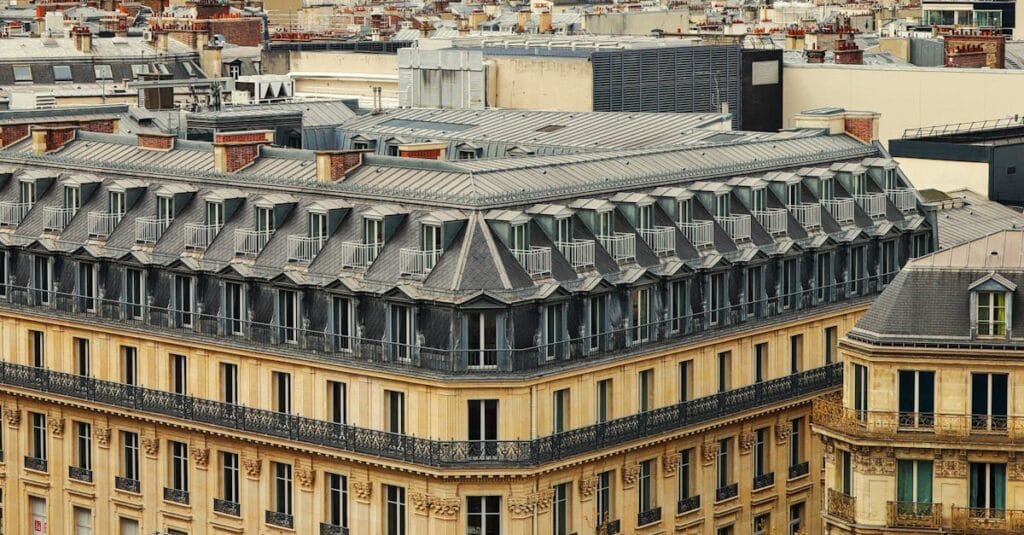
The symmetry. The height of the buildings. The balconies, evenly spaced. The soft colors of the façades. Everything looks designed to be seen.
But when you spend more time on these streets, the buildings stop feeling like a backdrop.
They start to feel like part of everyday life.
Windows open slightly in the morning. Someone waters plants on a balcony. Laundry hangs discreetly in a courtyard you almost missed. A door opens, closes, and life continues behind it.
The architecture isn’t just something to admire.
It’s something people live inside — and shape, in small ways, every day.
The rhythm of a neighborhood
If you stay in one place long enough, patterns begin to appear.
A bakery that fills up at the same time every morning.
A small shop where the owner seems to know everyone who walks in.
People passing by with purpose, following routines you don’t fully understand but can somehow recognize.
There’s a rhythm to it.
Not something structured or obvious, but something you feel over time. A quiet consistency in the way the day unfolds.
And the street — shaped by its buildings, its corners, its small details — becomes the stage where all of this happens.
Conversations that change perspective
At some point, observation turns into interaction.
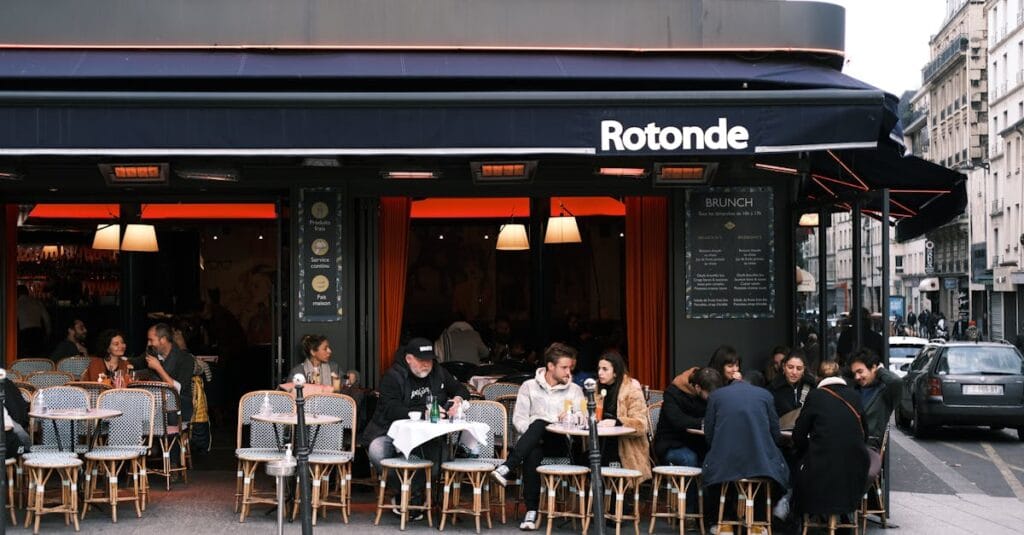
A short conversation at a café.
A question asked in a small shop.
A moment of hesitation followed by a few exchanged words.
Nothing dramatic. Nothing planned.
But enough to shift the experience.
Talking to people — even briefly — changes how a place feels. It stops being a setting and starts becoming something more personal.
You hear about routines, frustrations, small preferences. What people like about their neighborhood, what they would change, what they don’t think tourists ever notice.
And slowly, the city becomes less abstract.
Spaces between public and private
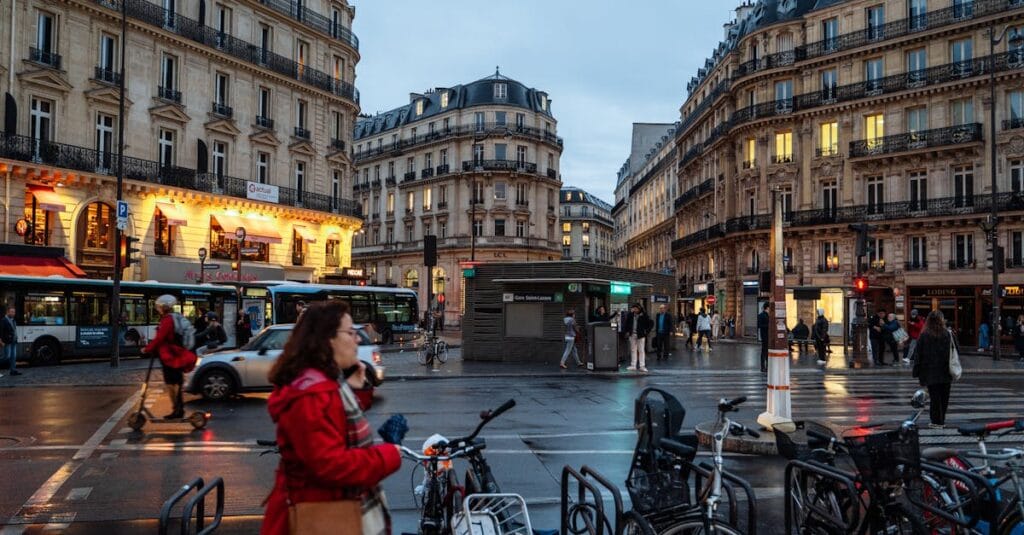
One of the most interesting things about Parisian streets is how they blur the line between public and private space.
From the outside, everything looks uniform. Clean façades, aligned windows, structured streets.
But just behind that surface, there are layers you don’t immediately see.
Hidden courtyards.
Narrow passages.
Entrances that reveal entirely different spaces inside.
You don’t always have access to them — and maybe that’s part of what makes them feel intriguing.
They suggest that there’s always more happening than what’s visible from the street.
Architecture shaping behavior
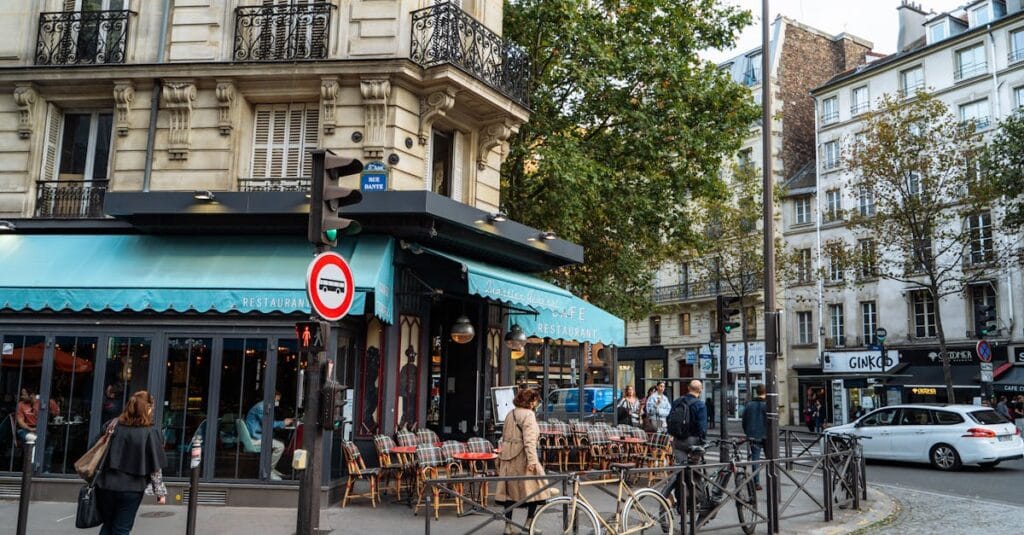
The more time you spend walking, the more you notice how architecture influences behavior.
Narrow sidewalks bring people closer together.
Cafés spilling onto the street create natural pauses.
Corners slow movement, forcing small adjustments in direction and pace.
Even the way chairs are placed — facing outward — changes how people interact with the space around them.
You’re not just moving through the city.
You’re moving with it, shaped by its design in ways that feel subtle but constant.
Not everything is polished
It’s easy to think of Paris as perfectly maintained.
But that idea doesn’t hold up everywhere.
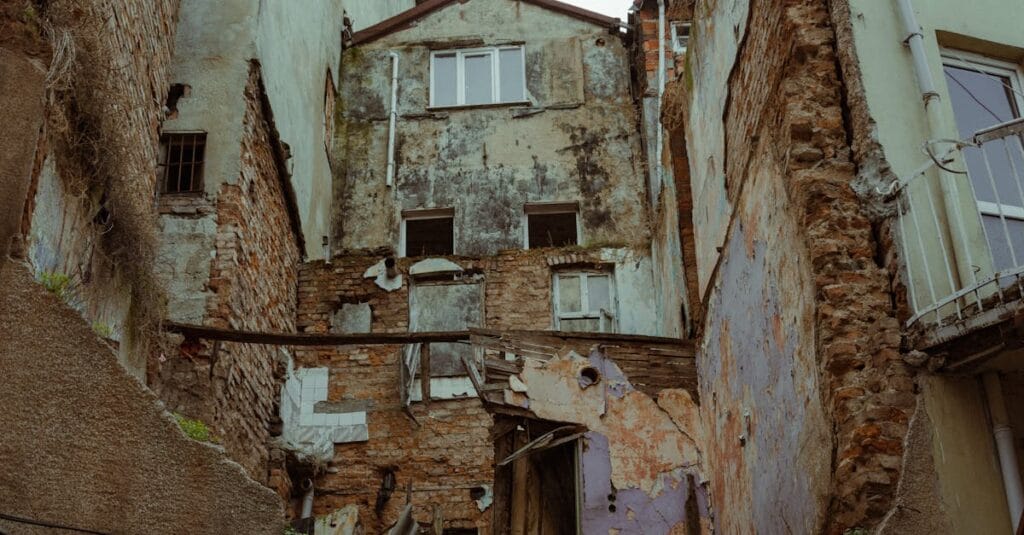
Some streets feel worn. Paint fades. Walls carry marks of time. There’s graffiti, small imperfections, signs that the city isn’t just preserved — it’s lived in.
And those details matter.
They break the illusion of perfection and replace it with something more real.
Something that feels less like a postcard and more like a place where life actually happens.
Staying long enough to notice
If you move too quickly, you miss most of this.
The streets blur together. The buildings look the same. The experience becomes visual, not personal.
But if you slow down — if you walk without a goal, stop without a reason, stay in one place longer than planned — things start to change.
Details appear. Patterns emerge. The city becomes more than something you’re looking at.
It becomes something you’re experiencing.
What we took with us
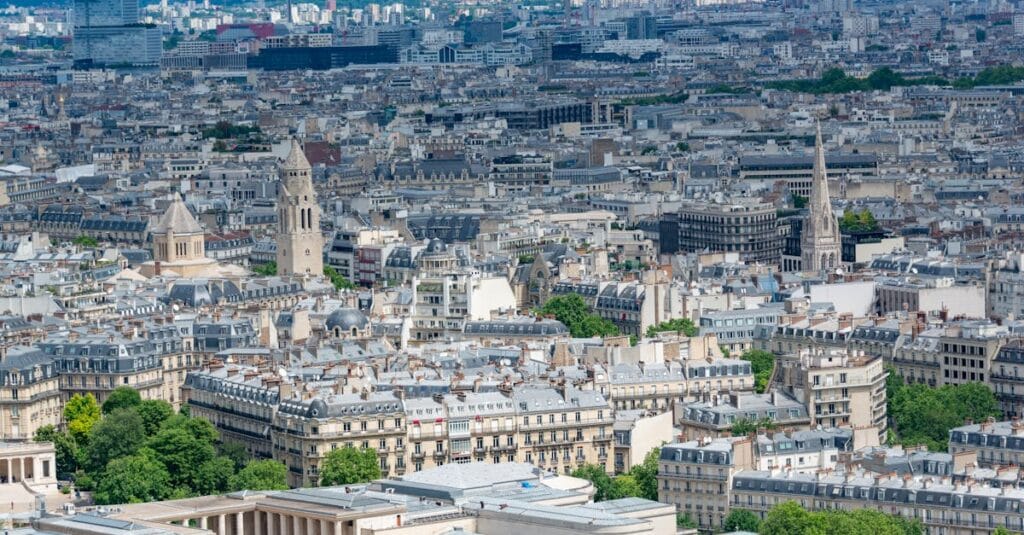
Paris isn’t just shaped by its architecture.
It’s shaped by how people live within it.
By the routines, the conversations, the small interactions, and the quiet moments that happen every day, mostly unnoticed.
The buildings matter. The design matters.
But what gives them meaning is everything that happens around them.
And maybe that’s what we started to understand.
That a city isn’t defined by what it looks like.
But by how it’s lived.
Read More Stories
Inside the Medina: Navigating Morocco’s Living Labyrinth
Streets curve, split, reconnect. Corners appear unexpectedly. Pathways narrow to the point...
Read More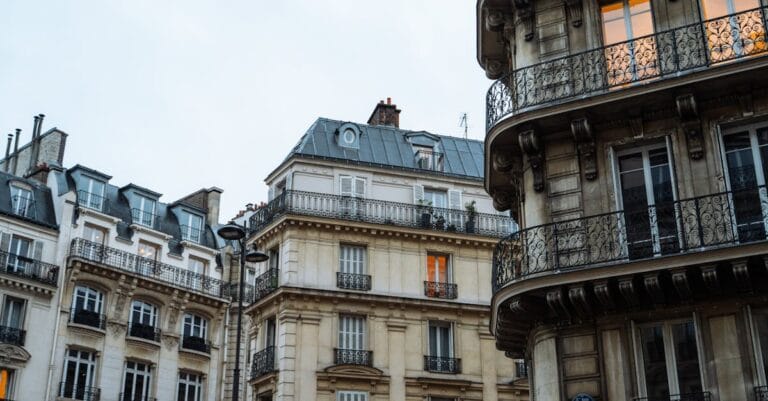
Inside Parisian Streets: Where Architecture Meets Everyday Life
One of the most interesting things about Parisian streets is how they...
Read More