
Whether it’s a short exchange at a café or a longer conversation that...
Read More
Tbilisi in Layers: A City Between Past and Change
- Georgia
- Architecture
- Culture
- March 6, 2026
First impressions don’t settle
Tbilisi doesn’t give you a clear first impression.
It feels like several places at once.
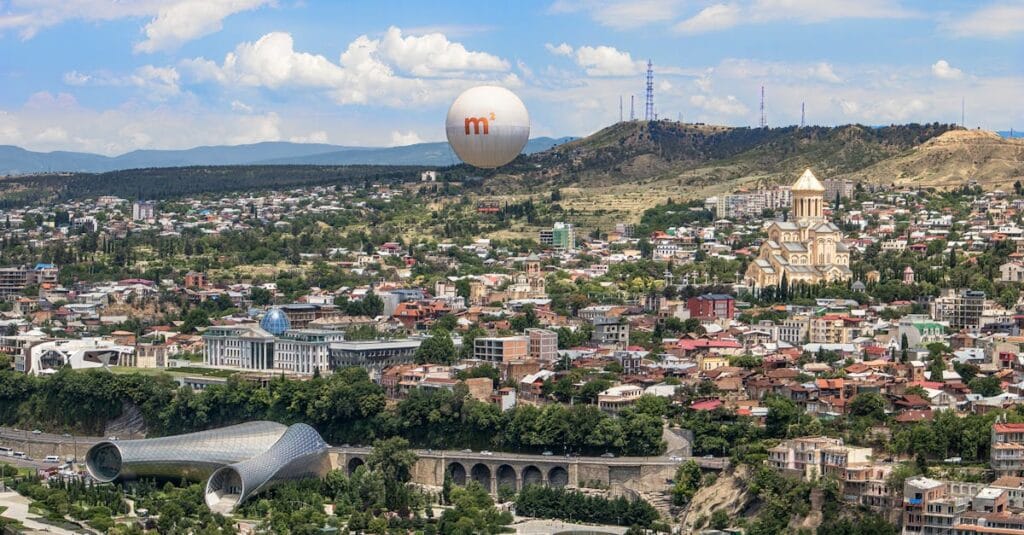
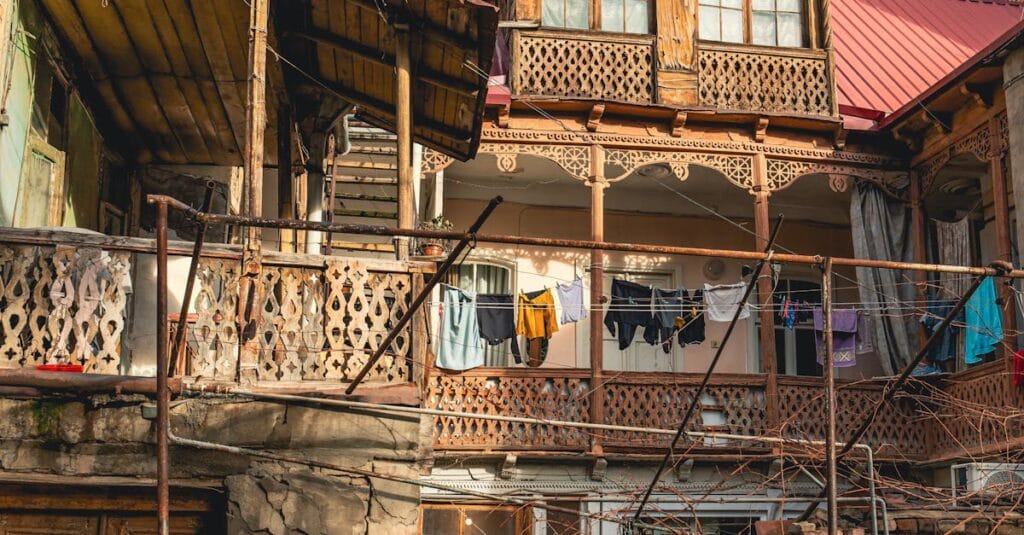
Old wooden balconies leaning slightly forward. Brightly colored houses stacked along the hills. Glass and steel structures appearing in the distance. Streets that feel both familiar and unfamiliar at the same time.
Nothing fully aligns.
And yet, nothing feels out of place either.
You don’t immediately understand the city.
You move through it, noticing pieces — fragments of something larger that takes time to come together.
A city shaped by everything it has been
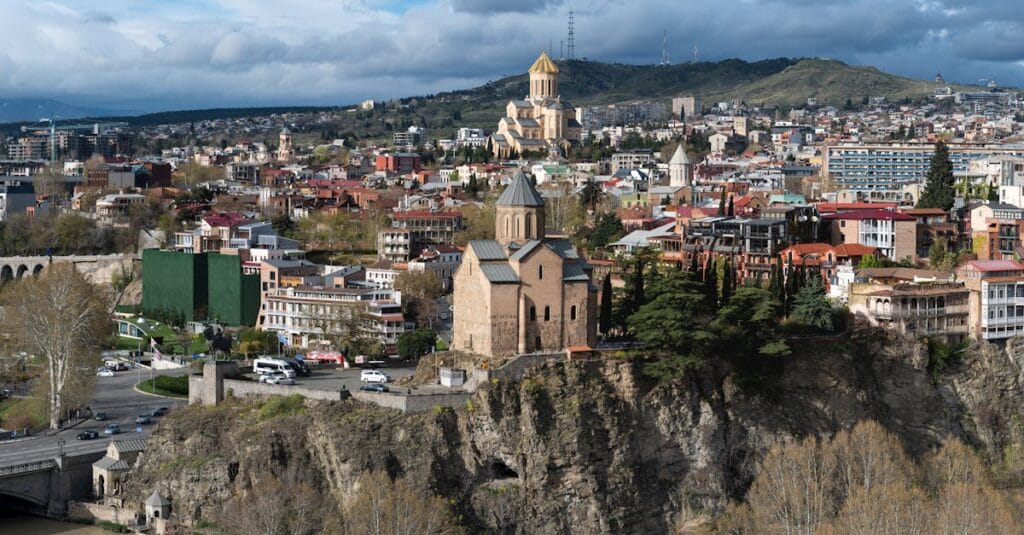
Tbilisi carries its history visibly.
Not in a polished, preserved way, but in a way that feels present.
Buildings show age. Surfaces are worn. Details aren’t always maintained or restored.
But that’s part of what makes the city feel real.
Its past isn’t hidden or curated.
It’s layered into the streets, into the structures, into the way everything looks slightly imperfect, slightly unfinished.
And that imperfection feels honest.
Old and new, side by side
What stands out most is the contrast.
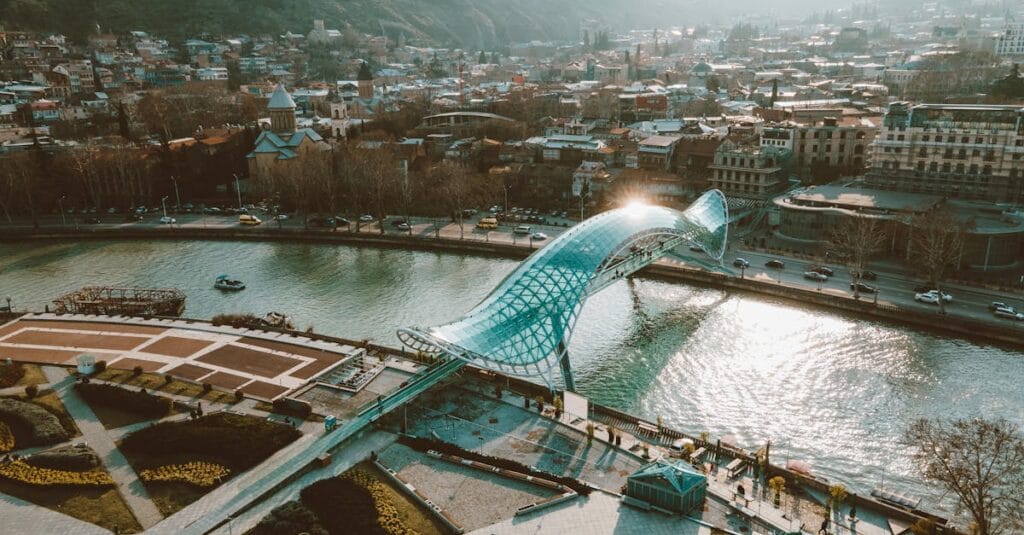
Modern buildings appear suddenly — sometimes bold, sometimes unexpected — next to structures that feel decades or centuries older.
The Bridge of Peace stretches across the river in a way that feels almost futuristic. Nearby, older neighborhoods continue as they always have.
There’s no attempt to blend everything into one style.
The contrast is visible.
And instead of feeling disruptive, it becomes part of the city’s identity.
Daily life continues through it all
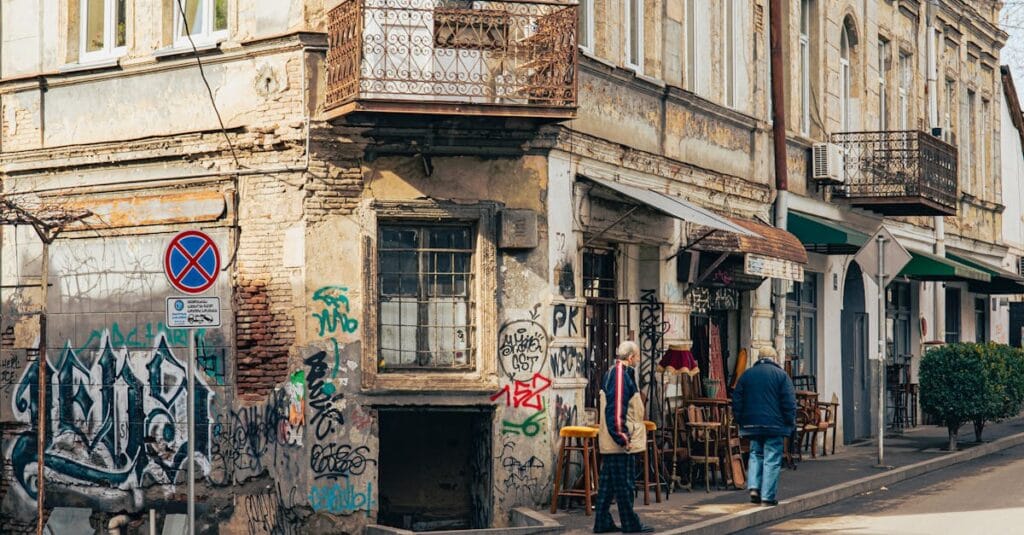
What makes Tbilisi feel grounded is how life continues within all these layers.
People move through the city without stopping to analyze its contrasts.
They shop, talk, sit, walk — following routines that feel familiar to them, even if the surroundings feel complex to you.
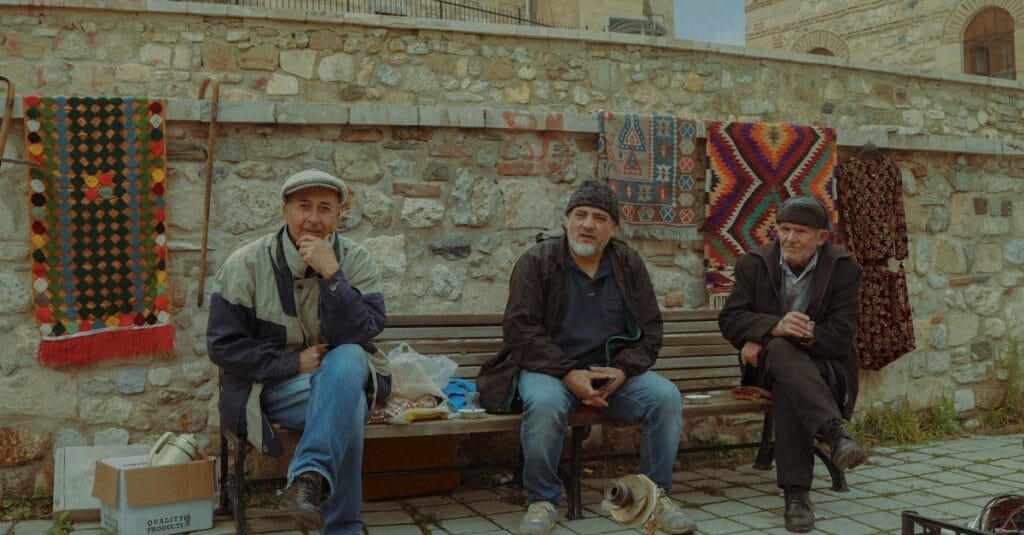
A small market on a quiet street.
A conversation happening outside a building that looks like it’s been there forever.
Someone sitting on a bench, watching the day pass.
Nothing feels staged.
Everything feels lived in.
Traditions that are still present
Tradition in Tbilisi doesn’t feel distant.
It’s still part of daily life.
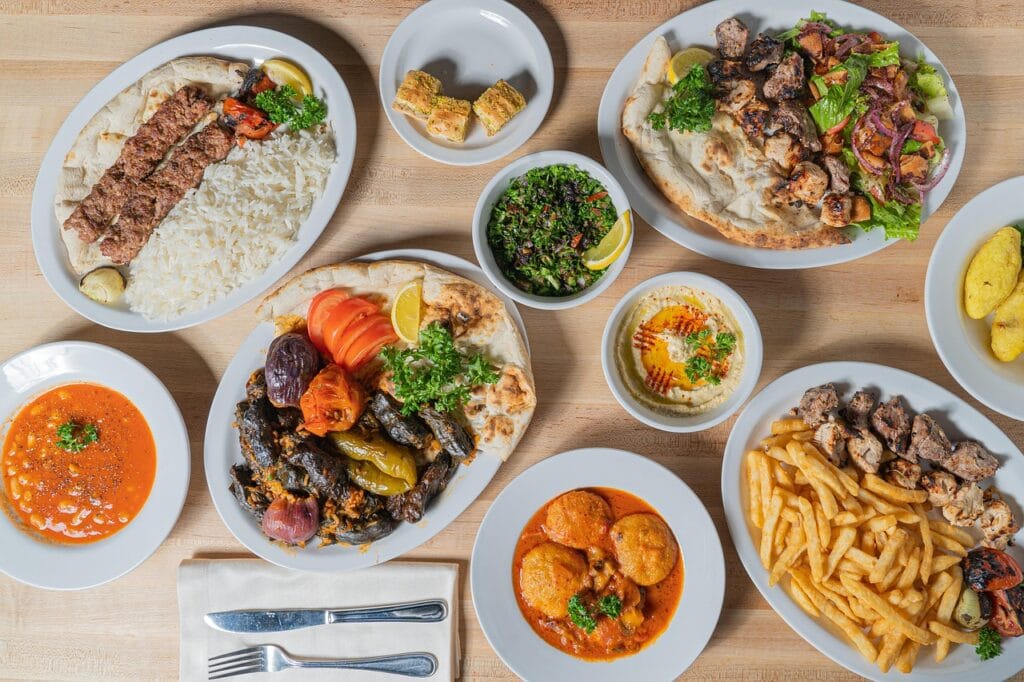
You see it in food, in gatherings, in the way people interact. The idea of a supra — a traditional feast — isn’t just something reserved for special occasions.
It reflects a broader way of connecting.
Long tables. Shared food. Wine poured continuously. Conversations that stretch over time.
Even outside of these settings, there’s a sense that tradition hasn’t been replaced.
It has adapted.
Change is visible, but not dominant
Tbilisi is changing.
You can see it in new cafés, in updated spaces, in the presence of younger crowds shaping parts of the city in different ways.
But the change doesn’t erase what’s already there.
It exists alongside it.
New ideas appear, but they don’t fully replace older ones.
And that creates a balance that feels unstable at times, but also interesting.
You’re not looking at a finished version of the city.
You’re looking at something still evolving.
The feeling of something in between
There’s a sense that Tbilisi exists in between things.
Between past and present.
Between tradition and change.
Between different cultural influences.
It’s not fixed.
And that makes it harder to define, but also more interesting to experience.
You don’t feel like you’ve understood it completely.
But maybe that’s not the point.
Imperfection as identity
Tbilisi isn’t polished.
And it doesn’t try to be.
There are cracks, unfinished spaces, contrasts that don’t fully resolve.
But those imperfections don’t take away from the experience.
They define it.
They make the city feel real, present, and unfiltered.
Staying long enough to feel it
Tbilisi isn’t a place you understand quickly.
It takes time.
Time to move through its streets. To notice its contrasts. To feel how different elements come together without fully merging.
And even then, it doesn’t become completely clear.
But it becomes familiar.
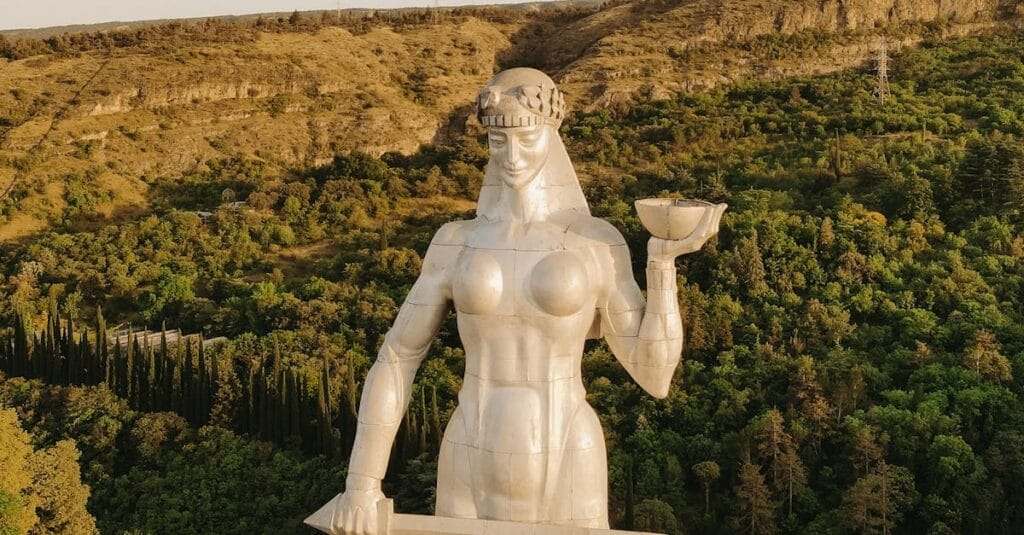
What we took with us
Tbilisi isn’t defined by a single identity.
It’s defined by its layers.
By everything it has been, everything it is, and everything it’s becoming.
Old and new don’t compete here.
They coexist.
Sometimes in harmony. Sometimes in tension.
And maybe that’s what makes the city feel the way it does.
Not finished.
Not defined.
But alive.
Read More Stories

What Roman Food Is Really About: Beyond Pizza and Pasta
Pasta. Pizza. Maybe a few familiar names — carbonara, cacio e pepe, amatriciana....
Read More
Eating in Barcelona: Markets, Meals, and Conversations
Just a general idea: to move through the city slowly, stopping where it...
Read More