Cairo Beyond the Pyramids: Daily Life, Chaos, and Rhythm

What you expect — and what you find

Before arriving in Cairo, the image is clear.

The pyramids. The desert. Something distant, historical, almost separate from everyday life.

And those images exist.

But they don’t define the city.

Because Cairo isn’t something you observe from a distance.

It’s something you enter.

And once you do, everything changes.

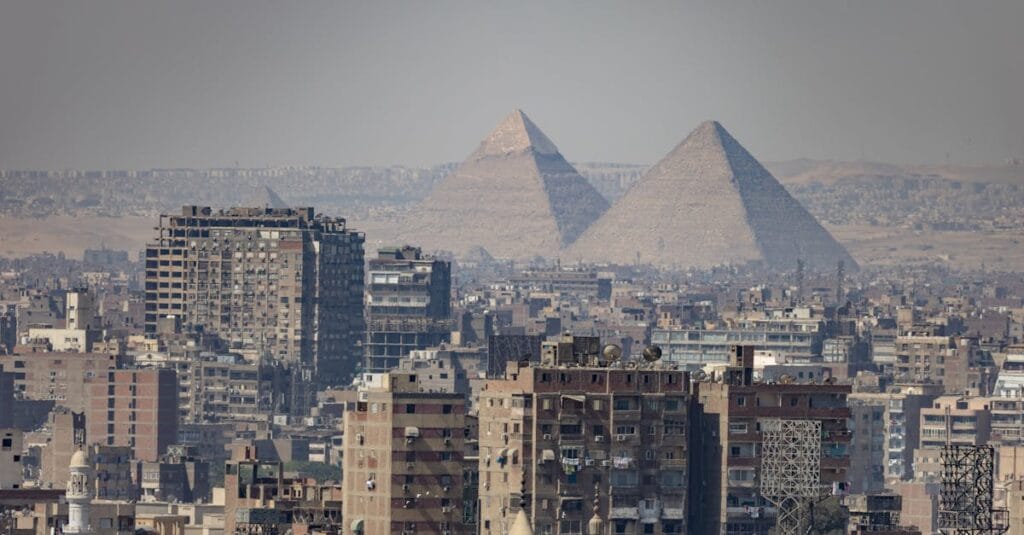
Aerial view of Cairo, Egypt, showcasing urban buildings with the iconic Pyramids of Giza in the background.

A city that moves constantly

Cairo doesn’t slow down.

Traffic fills the streets. Cars move in ways that don’t always seem structured, but somehow work. People cross between vehicles, adjusting their pace without hesitation.

There’s noise. Movement. Layers of activity happening at once.

At first, it feels chaotic.

But after a while, you start to notice something else.

A rhythm.

Not obvious, not organized in a way you can easily explain.

But present.

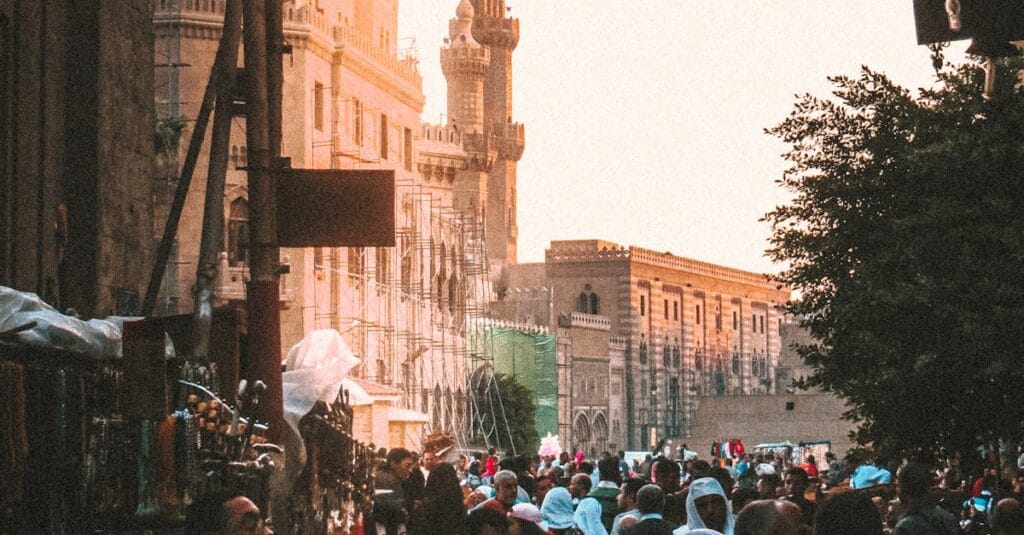
Crowd of people walking on street surrounded by walls of medieval quarter of Cairo

Finding rhythm inside chaos

The chaos isn’t random.

People know how to move within it.

They anticipate, adjust, respond.

A car slows slightly. A pedestrian crosses. Someone calls out. Someone answers.

Everything happens quickly, but not without awareness.

And over time, you begin to move with it.

Not controlling it.

Just adapting to it.

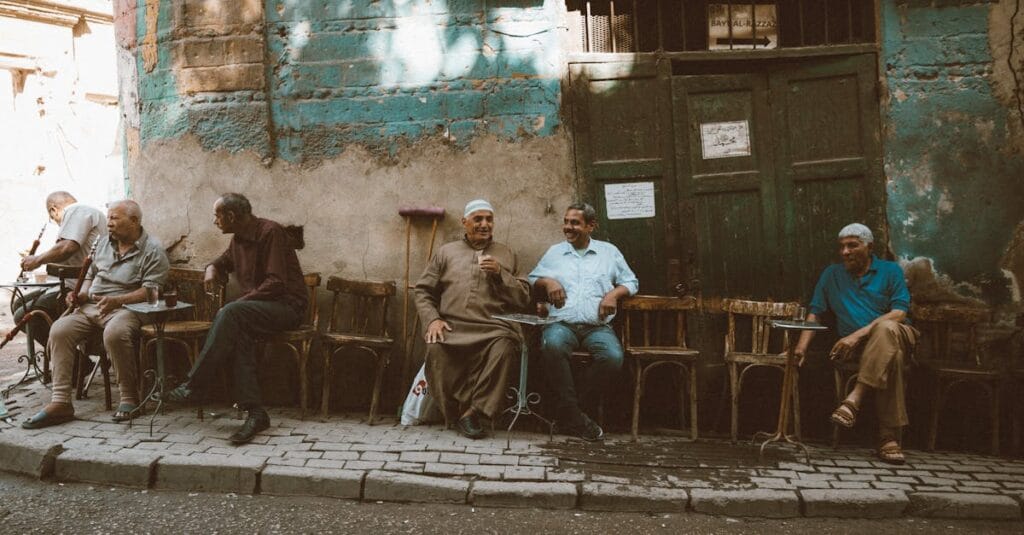
Local men enjoy a casual gathering outside a café in Cairo's historic Al-Darb Al-Ahmar district.

Streets as shared space

In Cairo, the street isn’t just for movement.

It’s for living.

People sit, talk, eat, sell, watch.

Shops open directly onto sidewalks. Conversations happen in public. Food appears in places that don’t feel separate from everything else happening around them.

There’s no clear boundary between private and public life.

Everything overlaps.

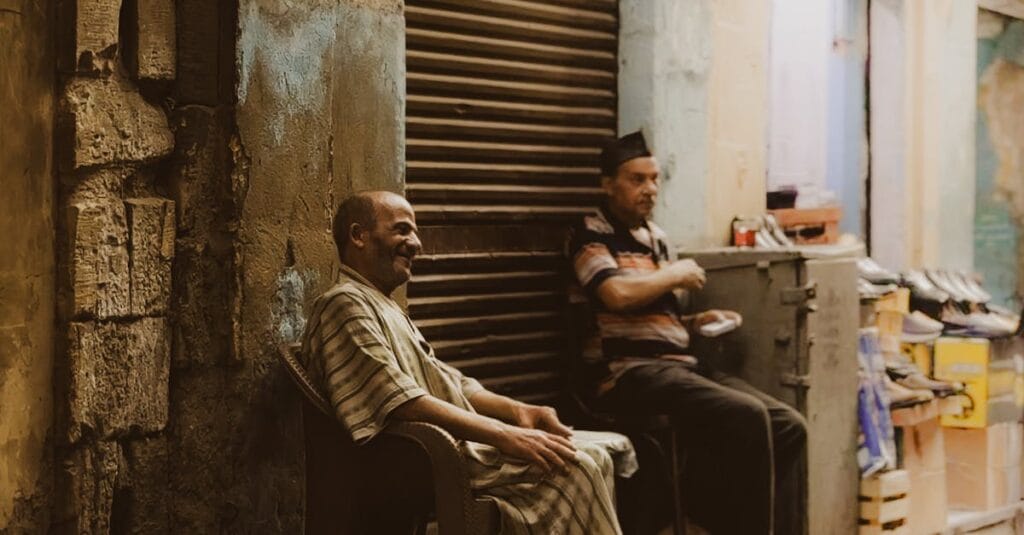
Capturing the essence of daily life in Cairo's bustling streets, showcasing local culture.

Conversations in passing

Interactions happen constantly.

Short conversations. Quick exchanges. Moments of connection that don’t last long but feel natural.

You ask a question. Someone responds. Another person joins in.

Nothing feels formal.

But nothing feels distant either.

Even brief interactions carry a sense of openness.

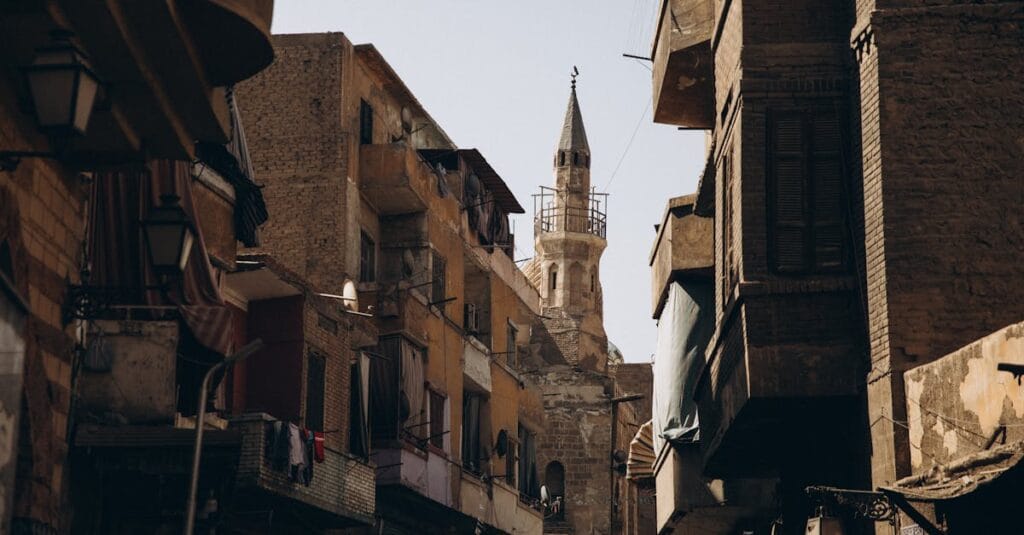
Narrow street in Cairo featuring historic Islamic architecture and urban life.

A city shaped by density

Cairo feels close.

Buildings rise next to each other. Streets are filled. Spaces are shared.

There’s little separation.

And that closeness shapes everything.

How people move.
How they interact.
How they experience the city.

Nothing feels isolated.

Everything is connected through proximity.

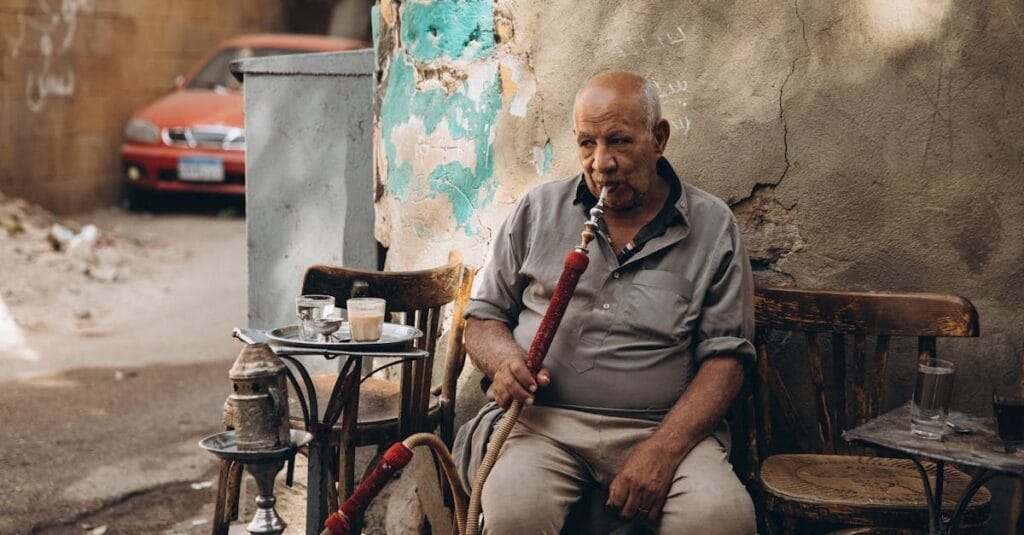
An elderly man sits outdoors enjoying shisha in Cairo, Egypt, reflecting local culture.

Moments of pause within movement

Even in a city that moves constantly, there are moments of pause.

Someone sitting with tea.
A quiet corner away from the main street.
A view of the Nile where everything feels slightly more still.

These moments don’t last long.

But they stand out.

Because they exist within everything else.

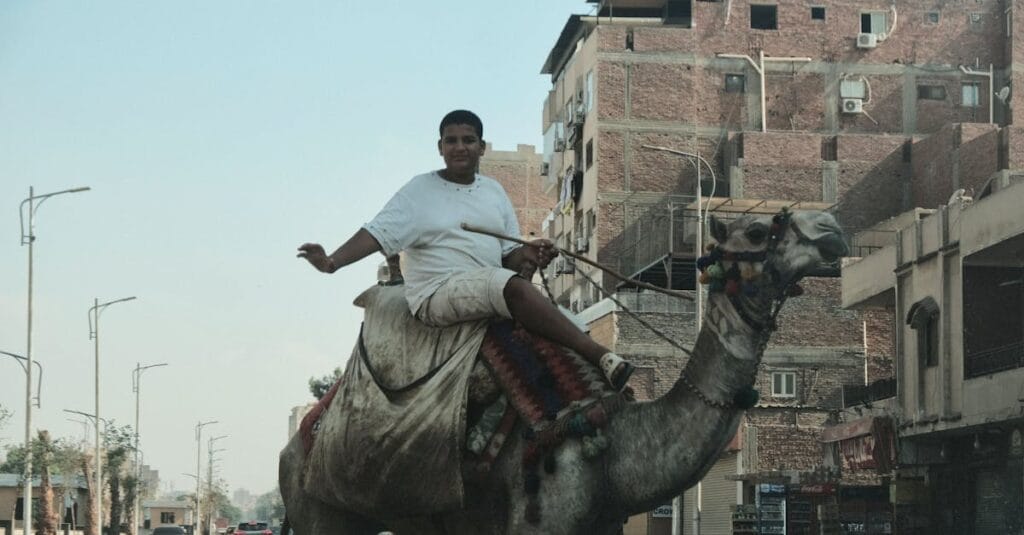
A young man rides a camel through the streets of Cairo, showcasing traditional and modern life coexistence.

Not everything is easy to define

Cairo doesn’t simplify itself.

It doesn’t present a single identity.

It’s layered, complex, sometimes overwhelming, sometimes calm.

You don’t fully understand it.

But you experience it.

And that experience stays with you more than any clear definition.

A rhythm that becomes familiar

By the end of it, the city feels different.

Not because it has changed.

But because you have adjusted to it.

The noise feels less overwhelming. The movement feels more predictable. The rhythm becomes something you recognize.

And once you recognize it, the city feels more familiar.

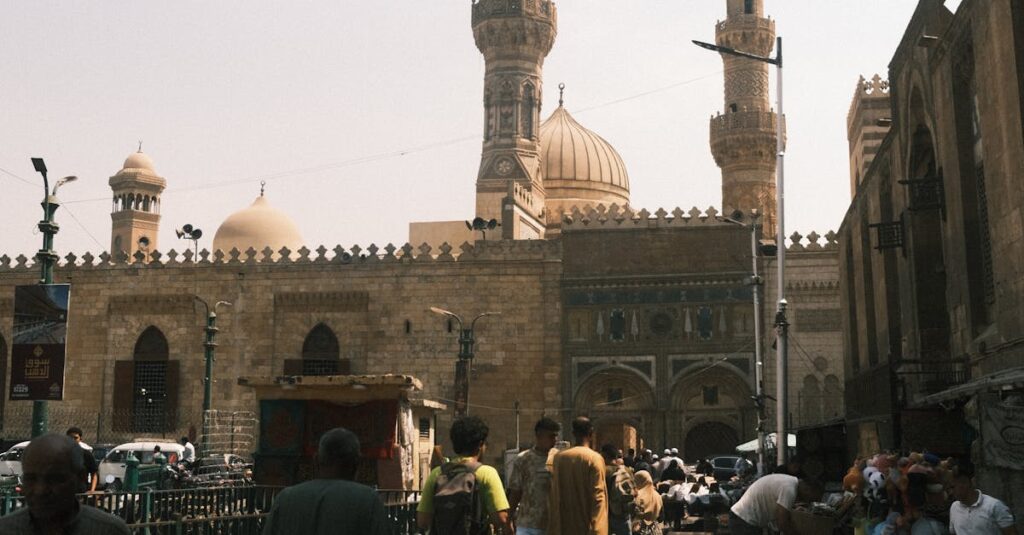
Street market scene near a historic mosque in Cairo, showcasing Egyptian architecture and local vendors.

What we took with us

Cairo isn’t defined by its landmarks.

It’s defined by its movement.

By the way people navigate space.
By the way life unfolds in public.
By the way chaos and rhythm exist at the same time.

It’s not a city that asks you to understand it.

It’s a city that asks you to experience it.

And maybe that’s what stays with you.

Not a single image.

But the feeling of being inside something constantly in motion.

Read More Stories