

Driving through the United States feels like entering a space where distance matters,...
Read More
A city that never fully pauses
Bangkok doesn’t feel still.
Even in moments that seem quieter, there’s always something moving.
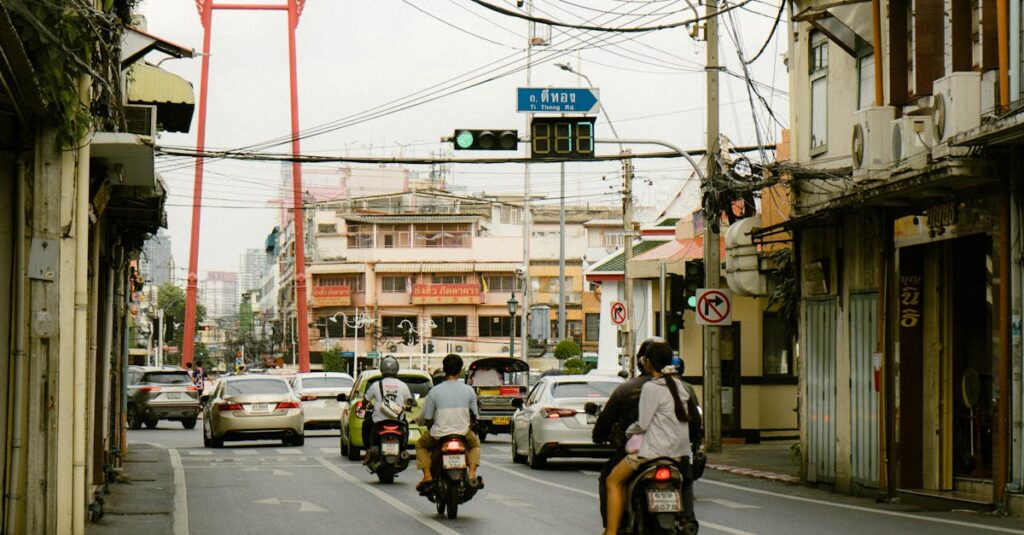
Traffic fills the streets — cars, tuk-tuks, motorbikes weaving through spaces that don’t seem designed to hold them all. Sidewalks shift between walking paths, food stalls, and places to stop.
Everything overlaps.
Nothing fully separates.
And that constant motion becomes the city’s baseline.
Movement as a shared rhythm
At first, the movement feels chaotic.
Too fast. Too dense. Too unpredictable.
But then you start to notice patterns.
People anticipate each other. Motorbikes slow slightly. Gaps appear where they didn’t seem possible.
It’s not structured in a visible way.
But it works.
And once you begin to move with it, rather than against it, the city starts to feel different.
Streets that do everything at once
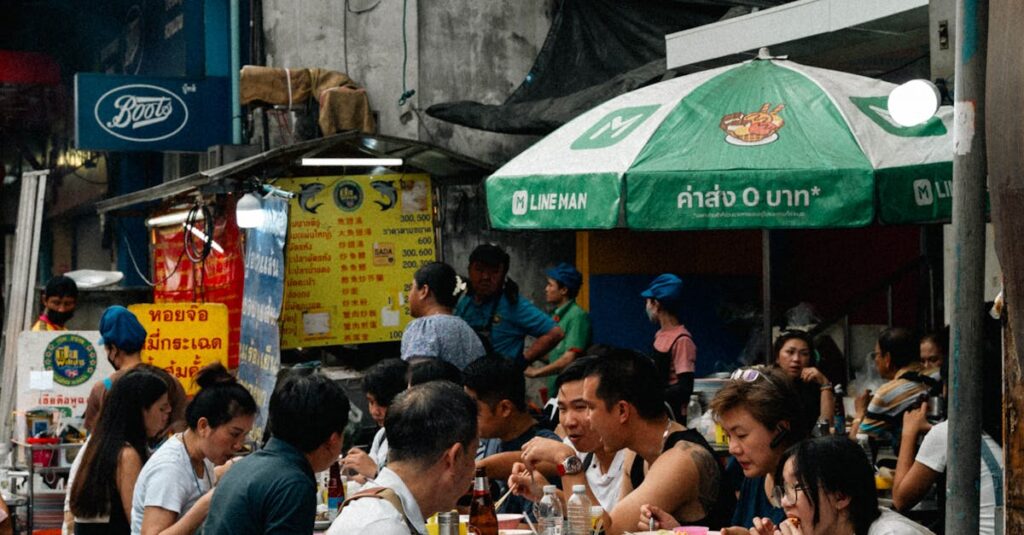
In Bangkok, the street isn’t just for getting from one place to another.
It’s for everything.
Cooking. Eating. Selling. Waiting. Talking.
A single stretch of sidewalk can hold all of it at once.
You don’t step into a separate space for food or conversation.
It happens where you are.
People within the movement
What stands out most isn’t the movement itself.
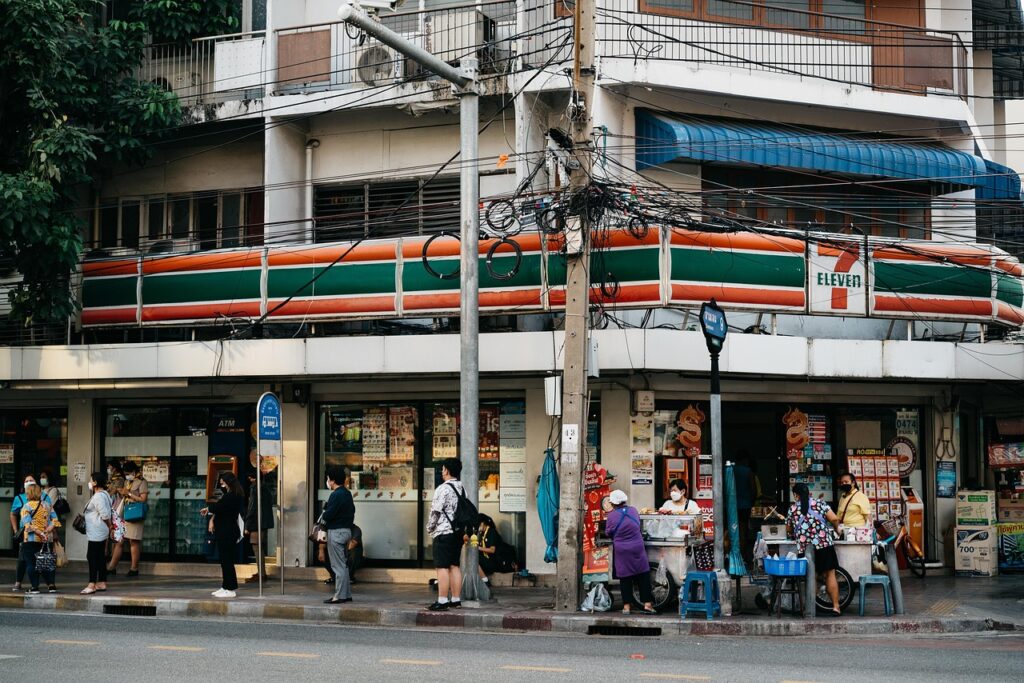
It’s how people exist within it.
Someone preparing food with full focus, even as everything moves around them.
A conversation happening at the edge of a busy street.
A moment of stillness that exists without interrupting anything else.
People don’t stop the city to create space.
They find space within it.
Energy that shifts through the day
Bangkok’s energy isn’t constant.
It changes.
Mornings feel slower, more focused.
Afternoons bring intensity — heat, traffic, movement.
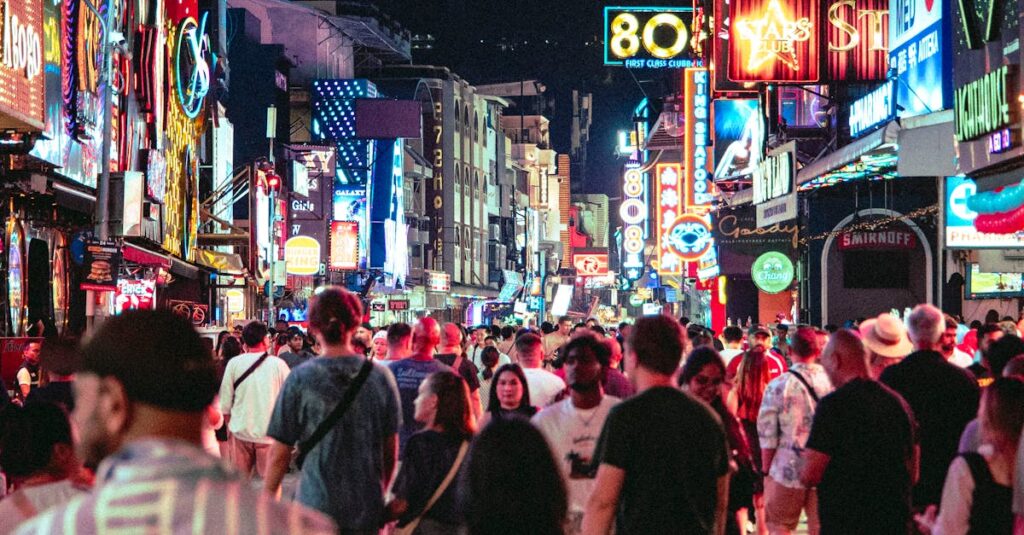
Evenings open into something else entirely.
Night markets appear. Lights change the atmosphere. The city becomes more social, more open.
But it never fully stops.
It just shifts.
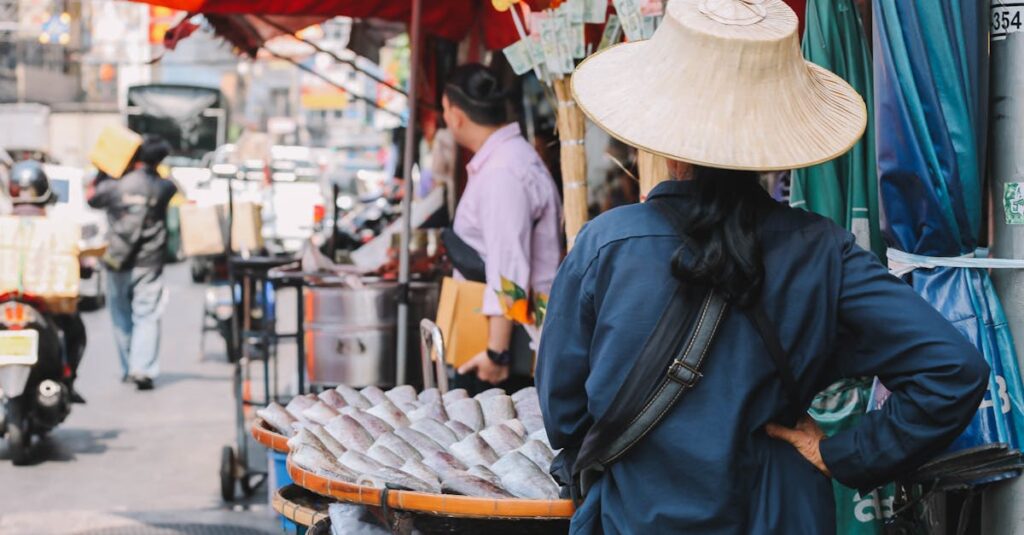
Conversations in passing
Interactions are brief, but constant.
A quick exchange while ordering food.
A short conversation that begins and ends naturally.
A shared moment without expectation that it will continue.
Nothing feels forced.
But nothing feels distant either.
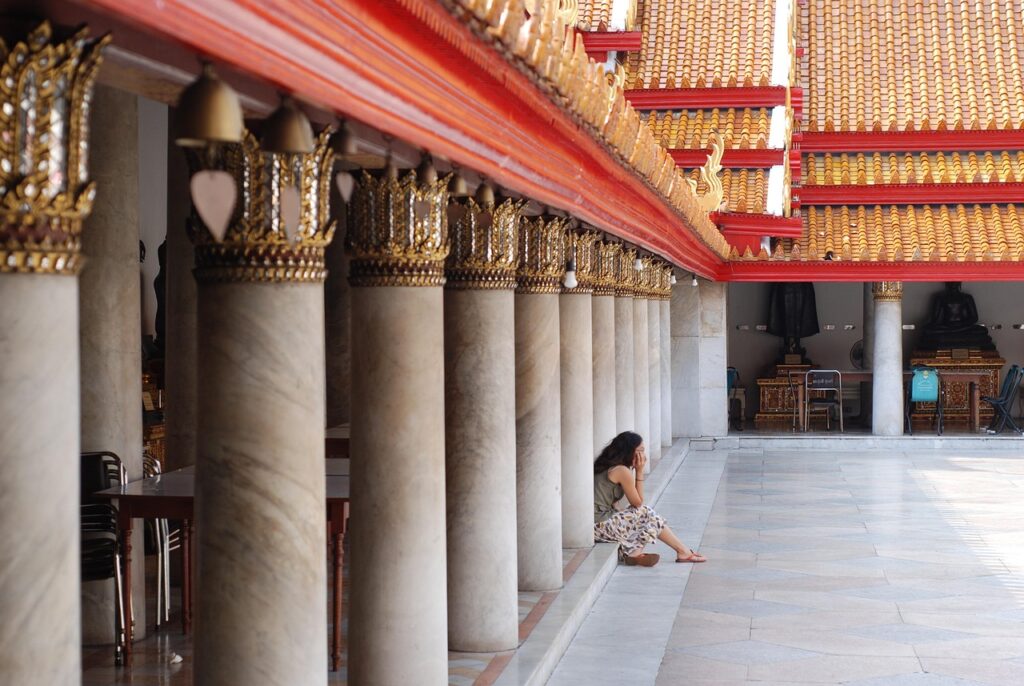
Finding calm within movement
Even in a city defined by motion, there are moments of calm.
A temple.
A view of the river.
A quiet space that feels separate, even if only for a moment.
These places don’t remove you from the city.
They balance it.
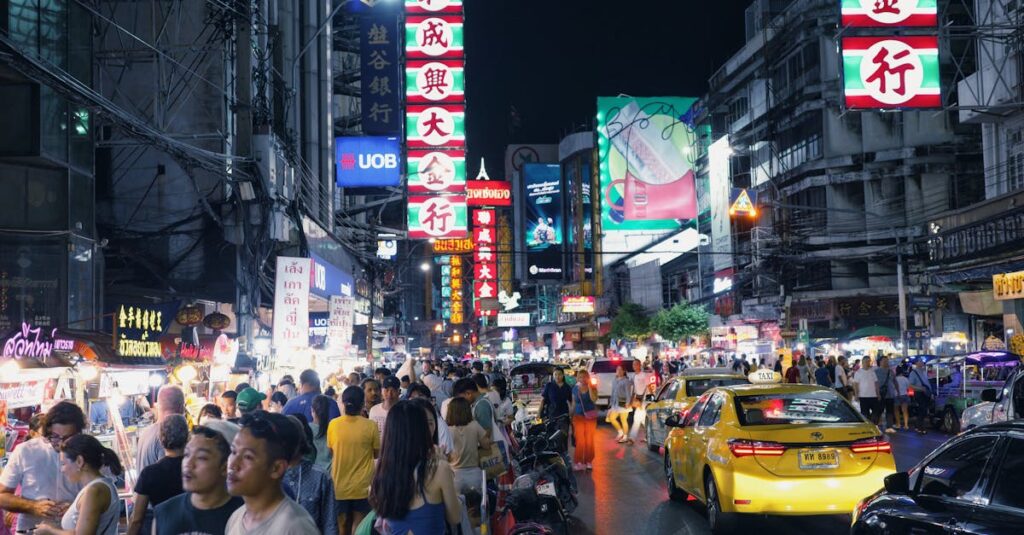
Not everything needs to be controlled
Bangkok doesn’t feel controlled.
It feels organic.
Things don’t always follow a clear structure.
But they don’t need to.
Because the city functions through adaptation, not strict order.
And that creates a different kind of experience.
One that feels more immediate.
A rhythm you begin to follow
After some time, the city feels less overwhelming.
Not because it has changed.
But because you have adjusted.
You begin to anticipate movement. To understand timing. To follow the flow instead of resisting it.
And once that happens, Bangkok feels different.
Not chaotic.
Just fast.
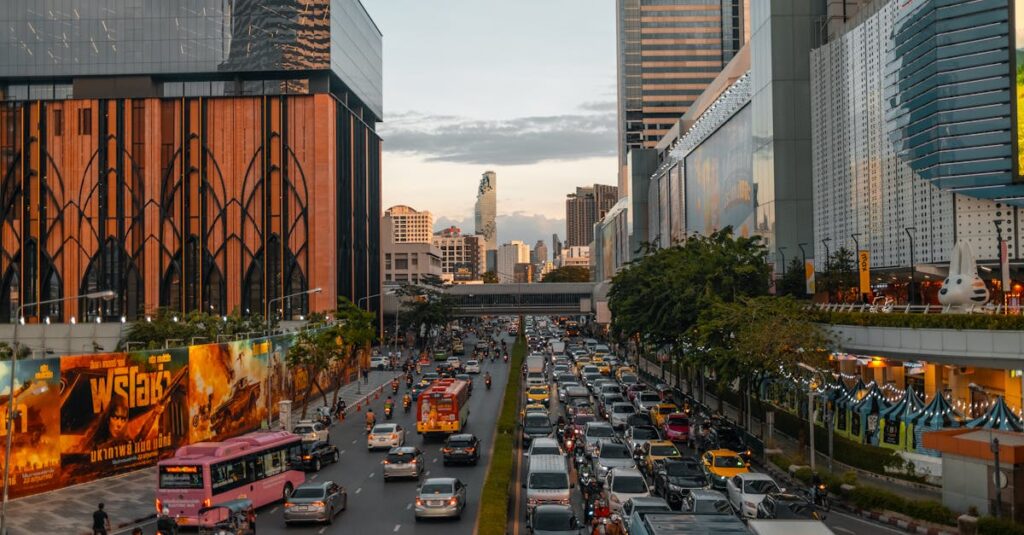
What we took with us
Bangkok isn’t defined by stillness.
It’s defined by movement.
By the way everything happens at once.
By the way people exist within that movement.
By the way energy shifts, but never disappears.
It’s not a city you slow down.
It’s a city you learn to move with.
And maybe that’s what stays with you.
Not a single place.
But the feeling of being part of something constantly in motion.
Read More Stories
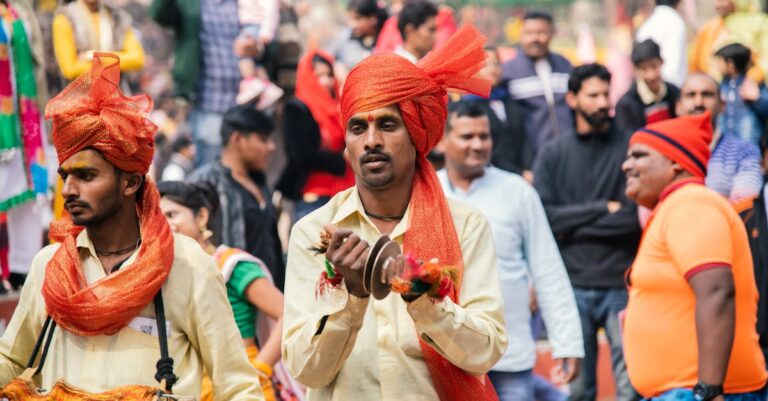
Color, Chaos, and Culture: Experiencing Daily Life in India
India doesn’t give you a single first impression. It gives you many, all...
Read More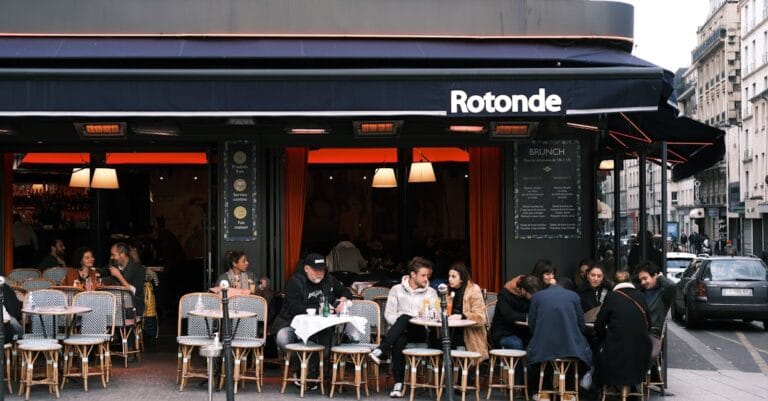
Paris Beyond the Cafés: What Dining Really Feels Like in the City
Exploring café culture, long lunches, and what dining actually means in daily Parisian...
Read More